



















If I transfer the vibes that now govern political and business choices to the world at large, I would say that the current vibe is that we are waiting for a huge event. We are in a time of suspension, expecting something to burst, for good or ill.
The AI bubble is a good example – will it be pricked, when and with what consequences? Next, has World War lll already begun, and how will it develop (we already have hybrid attacks on Europe, wars in the balance in Ukraine and the Middle East)? After that, there are significant elections looming, with unpredictable consequences, whose results we are all awaiting – for instance, in Israel, the US mid-terms, and next year in France.
The legal profession, or at least its regulation, resonates with the same vibe. We are waiting for something big to happen – with a beneficial effect, we pray.
This was on display in the Law Society’s AGM last week. I am not concerned here with the details of the Solicitors Regulation Authority’s COLP/COFA proposals, against which it seemed that everyone was united because of their unacceptable impact on small and medium-sized firms. Nor is this about whether a motion of no confidence in the SRA should have been put to the meeting, on which the meeting was split.
Rather, the vibe buzzing about the room, I thought shared by everyone even if not explicitly spoken aloud, was that our current regulatory structure is not fit for purpose. Some felt that we should give it one last chance under its new management, particularly since a new SRA chair had just been appointed that day, in the hope that what had clearly not worked so far might somehow revive. Others said that the new management, at least under the new chief executive, had itself put forward the COLP/COFA proposals, and so should be given no further chances.
This vibe has not emerged from nowhere. Obviously, everyone was familiar with the SRA’s recent massive failures. But the vibe has its echoes in other parts of the regulatory structure, too, as witnessed by recent reports.
Richard Lloyd led an independent review into the Legal Services Board, which reported in July of this year. He said that the LSB has lost its way, and the first recommendation of the report (actually Recommendation 1B) was that, in the longer term, the MoJ should carry out a comprehensive review of the regulation of legal services, with a new framework to be developed by 2029, and implementation during the next parliament.
In the same month, the Legal Services Consumer Panel, established by the Legal Services Act 2007 to represent the interests of consumers of legal services and to provide advice to the LSB, produced a report called ‘A Regulatory Framework for the Future’. It opened with this statement:
‘The current regulatory framework is no longer fit for purpose. It cannot protect consumers consistently, cannot govern modern risks, and cannot meaningfully improve access to justice.’
It repeated this in the body of the report in different language: that the regulatory framework for legal services in England and Wales is structurally incapable of delivering the statutory objectives set out in the Legal Services Act 2007, and that a framework that cannot deliver its own statutory objectives is not a framework in need of review, but one in need of replacement – and so on.
So the vibe is widespread. The Lloyd report and the Legal Services Consumer Panel’s report were focused elsewhere (on the LSB and consumers respectively), whereas we solicitors see the impact of the regulatory structure on ourselves. The structure is failing everywhere.
The anger expressed by some members at the AGM last week was the proof. The Law Society got it in the neck from some because it is the only accountable body for solicitors in the set-up. It got it in the neck even though it opposed the COLP/COFA rules strongly and worked hard to have them paused and reconsidered. It got it in the neck even though the Internal Governance Rules and their guidance, both published and enforced by the same failing LSB, truss up the Law Society tightly and make it almost impossible for it to hold the SRA to account.
The system is absurd, meaning that anger is directed at parts which are not responsible for the disasters. It seems everyone now agrees that this cannot and should not continue.
To return to the overall world-vibe: we are all now waiting for something big to happen, whether for the AI bubble to burst, the wars to morph into broader conflict or – much better – to cease, the upcoming elections to cause significant changes. And solicitors, indeed lawyers in England and Wales more broadly, are waiting for a new, more sensible and more accountable regulatory structure to be built in place of what is not working.
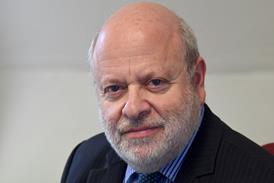
Jonathan Goldsmith is Law Society Council member for EU & International, chair of the Law Society’s Policy & Regulatory Affairs Committee and a member of its board. All views expressed are personal and are not made in his capacity as a Law Society Council member, nor on behalf of the Law Society








No comments yet