






















How can contempt law be adapted for the digital age? Sian Harrison reports on a growing challenge to the justice system
The low down
There was a time when a judge could simply instruct jurors to refrain from viewing newspaper or broadcast coverage of their case. Moreover, experienced court reporters were closely acquainted with the law on contempt and the fact that it was a strict liability offence. But in our internet and social media age, established media feel the competition for public attention from less responsible players. Some appear to push the boundaries of the law on contempt at a time when the number of experienced court reporters has fallen dramatically. Online armchair warriors and generative AI have added to the challenges facing the Law Commission as the body completed its contempt review.
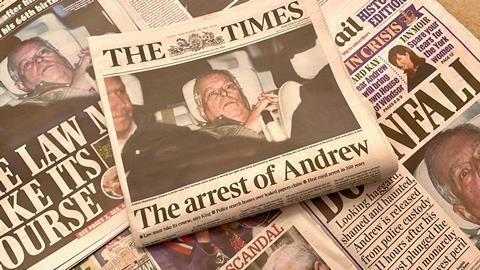
The online frenzy which followed the arrests last month of Andrew Mountbatten-Windsor and the peer Peter Mandelson, each on suspicion of misconduct in public office, was remarkable in its ferocity.
We have come to expect fevered commentary around high-profile cases in an era where everyone is a publisher and everything is ‘content’. But what set apart the avalanche of chatter around these two prominent arrests, linked to the latest FBI release of files relating to the paedophile financier Jeffrey Epstein, was that even established media outlets seemed to play fast and loose with contempt risk.
Following the former prince’s arrest, for instance, Reuters conducted a vox pop in which members of the public freely expressed their somewhat prejudicial views on him and his alleged behaviour. National newspapers splashed on that photo – with the Sun screaming the headline ‘NOW HE’S SWEATING’ from its front page – and ran dozens of articles inside on his downfall.
Both Mountbatten-Windsor and Mandelson deny any wrongdoing, were released under investigation and have not yet been charged with any crime.
Not for the first time amid such a media storm, as an experienced court reporter and co-editor of McNae’s Essential Law for Journalists, I began to receive questions. ‘Has something changed with contempt and I’ve missed it?’, asked one beleaguered lecturer whose job is teaching media law to would-be journalists. ‘What do you think of THIS?’, was the reaction from others.
Leaving aside the fact that the more serious risk at this early stage was likely one of privacy, a risk which would arguably be negated by the overwhelming public interest, any potential trial remains hypothetical (at the time of writing) and some way distant.
Yet some online commentators went so far as to insist that the response to these two arrests would finally finish off whatever was left of contempt legislation, especially given that it would not apply elsewhere around the world and this was a truly global story.
While this latter view was perhaps a wild exaggeration (and certainly an outlier), most of these concerns were well founded based on the letter of the law. Proceedings are ‘active’ at the point of arrest, and while this is often pushed to the point of charge in practice, there remains a contempt risk beforehand.
Media organisations would of course have carefully weighed both the contempt and privacy risks before publishing, but to many it appeared they were prepared to push the envelope further than usual. So, have we reached the point of no return for the Contempt of Court Act 1981 in our internet age, or does it still protect the right to a fair trial?
Different landscape
To understand more about this much-maligned act, one needs to recall an era of economic turmoil, with only three television channels and a dominant newspaper industry – its presses still whirring on a Fleet Street teeming with packs of journalists.
Despite noisy online criticism of the act from some quarters as a barrier to free speech, the legislation was in fact born out of a need to shift the balance in favour of the Article 10 right to freedom of expression in the wake of a 1979 ruling by the European Court of Human Rights.
In a case brought by The Sunday Times, after the paper was blocked from detailing the horrors of the thalidomide scandal at a time when settlement negotiations were ongoing, the court ruled that the injunction was a violation of that right.
The act therefore simplified the existing morass of legislation and common law by posing the essential question at its core: is there a ‘substantial risk of serious prejudice’ which would interfere with the fundamental right to a fair trial?
Over the intervening decades, this question has been planted firmly in the minds of journalists, editors and lawyers through training and experience. It is at the forefront of minds when it comes to making decisions on publication, striking fear in the heart of every young journalist because of its ‘strict liability’ test (there is no public interest defence).
The law is designed to shield juries from prejudicial material, but it is acknowledged that it can never create a hermetically sealed environment where jurors are not exposed to any publicity.
'As commentary online and on social media continues to evolve, so too must the safeguards designed to ensure juries remain impartial'
Jessica Sobey, Stokoe Partnership
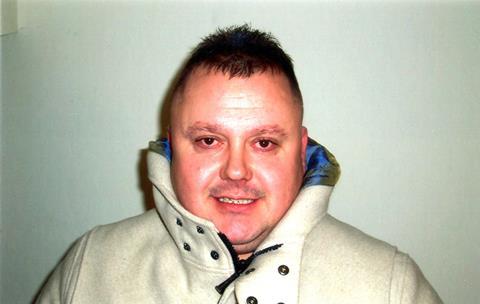
At its worst, such material could derail a trial. In 2011, a judge discharged the jury from considering an outstanding count of abduction in the Levi Bellfield case following heavily prejudicial reporting after Bellfield’s conviction for the murder of Milly Dowler.
There is heavy reliance on the so-called ‘fade factor’– the time between the initial steps of arrest or charge and the trial – to mitigate the potential harm of a juror having seen an errant article or social media post at the time of a defendant’s arrest or charge.
The risk is at its highest during a trial. Judges routinely attempt to guard against contempt risk by warning jurors not to do their own research. Criminal defence solicitor Nick Brett, partner at London firm Brett Wilson, thinks a series of cases in the early 2010s where jurors were prosecuted, and in some cases jailed, drove home the point about outside research.
Brett also highlights the ‘very high bar’ required for publicity to derail a trial. It is notable that there have been no recent cases where it has been successfully argued that adverse reporting has rendered a fair trial impossible.
But what of the inadvertent risk of a juror seeing prejudicial material while doomscrolling? ‘Judges give very strict warnings to jurors when they’re empanelled about the importance of not looking at social media, and what the consequences are, and I think people do take it seriously,’ Brett tells the Gazette.
Jessica Sobey, a barrister at Stokoe Partnership, London, agrees that courts are taking a ‘more proactive approach’ to the ‘dramatically increased’ risk posed by social media. ‘The challenge the courts face is in preserving open justice while protecting the integrity of the trial process,’ she says. ‘As commentary online and on social media continues to evolve, so too must the safeguards designed to ensure juries remain impartial.’
When juries disappear
The Courts and Tribunals Bill has been roundly criticised for its omissions, including the lack of any meaningful impact assessment on curbing jury trials. But there has been little discussion about how it will affect court reporting.
If the restriction of jury trials remains intact after the bill’s passage through parliament, around half of all cases which get to court will no longer be heard in front of 12 ordinary people who swear an oath to return a true verdict based on the evidence before them.
As judges and magistrates are generally considered to be above persuasion by press reports, this will, in theory, remove the need for the ‘chilling’ effect of the Contempt of Court Act. The act is premised on the existence of a jury and safeguarding its verdicts. It will also mean there will – again, theoretically – be no cause for the strict pre-trial reporting restrictions imposed by section 8C of the Magistrates’ Court Act 1980.
We do not know how the government will choose to handle this, because it has not been considered in the bill. Will it be open season on a defendant’s previous convictions? Will it all work in a similar way to the High Court, where it is accepted that a judge cannot be prejudiced by publicity, but certain documents only become available on being read into the court record?
There is a strong hint in the Law Commission’s recent announcement that it will now present the second part of its review on contempt next spring, instead of later this year, and that this will also be accompanied by a draft bill. But if that bill is to contain provisions which could fundamentally reshape court reporting and journalism more widely, nothing can happen until we know which parts of the Courts and Tribunals Bill have survived.
Explosion of comment and speculation
Others have grave concerns about the efficacy of the act in the time of social media commentary which is often prejudicial, ill-informed and in some cases, blatantly mendacious. It is also wildly uncontrolled.
Sayra Tekin, general counsel of the News Media Association, which represents publishers across the UK, refers to an ‘accountability gap’ between professional publishers and social media posters. The latter group is often impossible to police, in contrast to media organisations and journalists, which are readily identifiable and more easily sanctioned. However, Tekin believes ‘the act is doing a very good job of holding the line when it comes to safeguarding the fairness of trials’.
However, media lawyer Ellen Gallagher, partner at London firm Hamlins, is unbridled in her criticism of some major media outlets’ ‘deeply concerning’ reporting on high-profile cases, considering them to have ‘blatantly flouted the law’.
She highlights the 2023 ruling of Mrs Justice Collins Rice in WFZ v BBC, where the judge imposed an injunction to prevent the identification of a man under investigation for alleged sex offences.
Collins Rice said identifying the man would ‘beyond any doubt, detonate an uncontrolled explosion of personal comment and speculation on the allegations themselves, in both mainstream media and especially online, of which the claimant would be the epicentre and which he would be powerless to stem or withstand’.
She concluded: ‘The risk that the course of justice in the criminal proceedings will be seriously impeded or prejudiced is substantial and manifest.’
Gallagher tells the Gazette: ‘If the mainstream media sticks two fingers up at the law on the flawed basis that the public interest outweighs privacy rights, and ignores the law of contempt, what hope do ordinary citizens have against armchair warriors who identify arrested individuals on social media with impunity and interfere with the proper administration of justice?’
Restricted by caution
On the other side of the scales, journalists are often left in difficulty when it comes to reporting on cases where judges impose ‘belt and braces’ reporting restrictions. A social media storm can have the effect of shutting down some courtroom reporting.
Emily Pennink, Old Bailey Correspondent for the Press Association, says: ‘The internet is often used as justification for applying for additional reporting restrictions to avoid the risk of prejudicial material leaking in to the public domain. I have heard lawyers say they are mainly concerned about information being posted online by bloggers or members of the public with no legal or formal journalistic training.’
Pennink was at the Old Bailey throughout the trial of Constance Marten and her partner Mark Gordon for the manslaughter of their baby daughter. Fears of contempt were repeatedly raised by their lawyers, who argued that Gordon’s previous convictions being widely available online made a fair trial impossible.
A defence application to dismiss was rejected, but a postponement order under section 4(2) of the act was imposed to prevent further damaging disclosures. When the order was eventually breached, it was not by a blogger or a member of the public, but by an online newspaper.
‘Fortunately, these kinds of errors are extremely rare,’ Pennink observes, ‘and professional court reporters tend to be pretty scrupulous to avoid the nightmare of being hauled in front of an angry judge and risking jail and/or a hefty fine.’
This underlines another possible complication for the 1981 act: shrinking numbers of journalists means fewer court reporters with the knowledge needed to avoid calamity, and those who are regularly covering courts face an increasing burden of being on guard for contempt risks.
Tekin says: ‘The greatest challenge for trained journalists is often not the law itself, but the lack of accurate or timely information from courts about reporting restrictions, and the resulting risk of inadvertent contempt. That said, responsible journalists and publishers are acutely aware of these risks and, in practice, act with a high degree of caution to avoid crossing the line.’
Reform on the cards
Given the ‘uncontrolled explosion’ of prejudicial content on social media, without any of the safeguards of more traditional publishing, calls for reform have been circulating for some time.
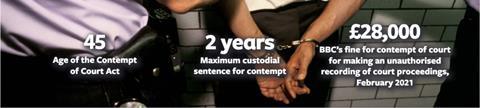
Last year, the Law Commission unveiled part one of its recommendations for revamping contempt law for the digital age. This first set of proposals includes moving the point at which proceedings become active from arrest to charge – something which would better reflect the way this issue has generally been treated by the media. But part two, which was due this year and will address sanctions and procedure, has now been delayed until 2027.
When part two comes, it will no doubt include a draft bill to accommodate whatever changes are necessitated by the Courts and Tribunals Bill making its way through Parliament.
That will have to reflect, as things currently stand, a changed reality with fewer jury trials, and therefore – in theory – fewer cases where pre-trial reporting can cause prejudice.
There have also been calls from journalists for the public to be given better education on courts. Rachel Howarth, a lecturer in journalism at the University of Salford who is researching the impact of social media on the act, notes: ‘Journalists believe they should be able to continue with their jobs without interference from the general public, and that there should be better education and policing when it comes to social media usage.’
AI finale
Whether the 1981 act can continue to hold the line as the artificial intelligence revolution picks up pace will depend on a whole range of factors. But for Brett, it remains crucial.
‘I’m a strong believer that the Contempt of Court Act remains necessary,’ he says. ‘If we didn’t have it, then jurors would be able to do all manner of research and it would influence their decisions.’
What is not in question is the principle. The right to a fair trial is what separates our justice system from the rule of the mob. Mountbatten-Windsor and Mandelson are entitled to the same presumption of innocence as anyone else who finds themselves under investigation. The
online commentary that greeted their arrests suggested that many people have forgotten that. The Contempt of Court Act, for all its imperfections, exists to remind them.
Sian Harrison is a freelance journalist and co-editor of McNae’s Essential Law for Journalists








No comments yet