




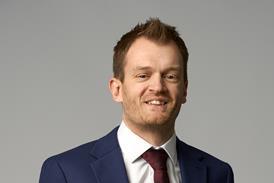
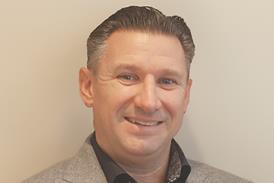








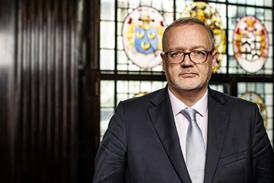




Who? Tom Snelling, partner at Signature Litigation, London.

Why is he in the news? Led the team for Renault, one of five car manufacturers defending claims in the ‘dieselgate’ group litigation. In a 369-page judgment published this month following the first substantive liability trial, Lady Justice Cockerill rejected many of the allegations brought by the 1.6 million claimants, finding that not every calibration or emissions-control strategy amounted to a defeat device.
Thoughts on the case: ‘The scale of the case was near unprecedented: over 1.6 million parties; thousands of pages of submissions; dozens of highly technical expert reports and witness statements; and (so far) over 100 days in court. The claimants alleged that certain diesel vehicles were equipped with “prohibited defeat devices” which inappropriately reduced the effectiveness of the vehicles’ emissions-control systems outside regulatory testing conditions, resulting in higher emissions of nitrogen oxides (NOx) during normal vehicle use. As well as questions about the meaning of the relevant emissions legislation, the High Court had to grapple with the ‘Brexit Britain’ phenomenon: namely, whether post-Brexit decisions of the Court of Justice of the European Union should be followed by our courts.
‘The recent detailed ruling reflects the fact that the allegations made against our clients were, I felt, always misguided, and intellectually incoherent. The claimants’ case was built, gelatinously, on the false assumption that Renault vehicles contained a “cycle recognition device” like that at the heart of “VW Dieselgate”. This ignored engineering reality, doubling down instead on what Lady Justice Cockerill has now called a “dream car fallacy”. Having worked on this case for six years, it means a huge amount professionally and personally that Her Ladyship said that “the parties have responded admirably to judicial ‘encouragement’ to co-operate and assist the court”.’
The claimant firms were approached for comment.
Dealing with the media: ‘The long shadow cast by VW Dieselgate meant that this case was always bound to garner extensive interest. It was also a ‘trial run’ of the principle of “open reporting”, a lodestar of the Commercial Court Transparency Pilot. Before trial, a specific protocol was put in place that governed access by journalists, NGOs and other ‘non-parties’ to documents referred to during hearings.’
Why become a lawyer? ‘It was mainly a consequence of recognising that I was unlikely to achieve a successful career in musical theatre. After that hammer blow, I decided I wanted to be a litigator. It gave some scope for drama outside the theatre.’









No comments yet