





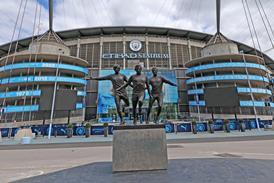
















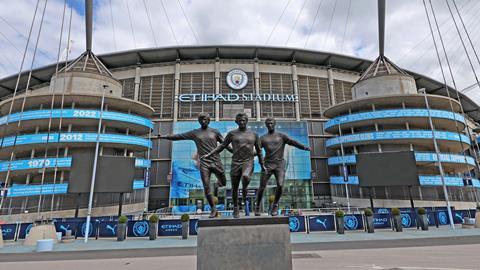
The Premier League’s case against Manchester City brings elite sport and high-stakes litigation into sharp collision. So far, public attention has focused on potential sanctions and rival claims.


However, could the dispute eventually reach the boardroom or back office?
The starting point is reassuring for those inside the club. The findings concern Manchester City Football Ltd, not individuals. Its legal personality is separate from its directors, shareholders and employees, who are not ordinarily liable merely because they made decisions or carried out the actions concerned.
There are, however, limited routes to personal liability for a company’s actions. This article considers two, both pointing towards a dark future for the club:
1. A shareholder-led claim for breach of directors’ duties; and
2. Conspiracy claims brought by rival clubs or players against individuals.
Scenario 1: breach of directors’ duties
The findings raise an obvious question: did the directors involved breach their duties to the company? Directors must act within their powers, exercise independent judgement and reasonable care, skill and diligence, and act in good faith to promote the company’s success.
The Premier League Disciplinary Commission concluded that City entered into ‘sham’ commercial arrangements, misstated its accounts, concealed its true financial position from auditors and football regulators, and breached spending limits. Directors knowingly authorising or implementing such arrangements might struggle to show an honest belief that they promoted the club’s success. They might separately be accused of failing to exercise reasonable care, skill and diligence. Simply following instructions without independent judgement could raise further questions.
Any assessment would require examining who knew what, when, which decisions they made or approved, and the group company to which each owed duties. The court would consider the information and advice available, their honest beliefs about promoting the club’s success, and whether they exercised the care and skill reasonably expected in their roles.
Any allegation would be personal and fact-sensitive. Directors might deny involvement or knowledge of inaccuracies, invoke reasonable reliance on advice or assurances, or assert a good-faith belief that their decisions were lawful and in the company’s interests. Shareholder authorisation or ratification could also raise difficult arguments.
Then there is enforcement. Duties are owed to the company, which ordinarily decides whether to sue. If those controlling it will not act, a shareholder may seek the court’s permission to bring a derivative claim on its behalf. The shareholder steps into the company’s shoes, with any recovery ordinarily belonging to the company, not itself.
That immediately raises a potentially important question. How high up the ownership chain did decisions go? If the conduct reflected shareholder instructions, knowledge or oversight, those involved might resist having the company investigate and sue its directors, exposing their own conduct to scrutiny.
That said, City has several minority shareholders whose knowledge may differ. If one, feeling aggrieved or accountable to its investors, sought to launch a derivative claim, it would represent a public rupture approaching internal civil war. It might also signal investors losing faith in protecting or recovering their investment by other means.
Scenario 2: Conspiracy
The second scenario alludes to an equally dark future. Suppose the findings survive appeal. Suppose claims by rivals or players gather momentum, seeking compensation for relegation, lost league positions, missed European qualification, performance bonuses or other losses. Suppose their value raises genuine questions about City’s ability to pay. Claimants may then look beyond the club, asking whether individuals can also be brought within the net of liability.
One possibility is unlawful means conspiracy, a familiar claim in the civil fraud practitioner’s toolkit. Broadly, it requires an agreement or understanding between two or more people, concerted action involving unlawful means, an intention to injure the claimant and resulting loss.
The commission found that City used ‘sham’ commercial arrangements to inflate its revenues and reduce its reported costs, misstated its accounts and concealed its true financial position from football regulators. A rival club might seek to allege that particular individuals agreed to implement those arrangements, using breaches of contract, directors’ duties or other unlawful acts to evade the financial rules and obtain a sporting advantage at the expense of competitors.
The hurdles would be considerable. Conspiracy claims are complex. It would not be enough to show that individuals participated in wrongdoing or that harm to others was foreseeable. A claimant would need to establish that the relevant individuals acted pursuant to an agreement, that the alleged unlawful means were used to inflict the loss and that injury to the claimant was intended, whether as an end in itself or as the means by which the desired competitive advantage would be secured.
This begs the question: why pursue individuals? There is a clear pathway for claims against the club (see Burnley v Everton). However, claimants would be more likely to widen the net if the weight of claims raised doubts about the club’s ability to meet judgments.
On that view, conspiracy claims against individuals would be more than another litigation front. They could signal that rivals no longer regard City as a sufficient or reliable source of recovery, calling the club’s solvency into question.
Conclusion
Personal claims remain hypothetical. The commission’s findings do not establish individual civil liability and may be overturned on appeal.
Nevertheless, at its bleakest, this story may not end with sanctions or compensation claims against the club. But rather with civil action against individuals at its heart, with destructive consequences.
Keith Oliver is a partner and Edward Irwin of counsel at Peters & Peters, London








No comments yet