













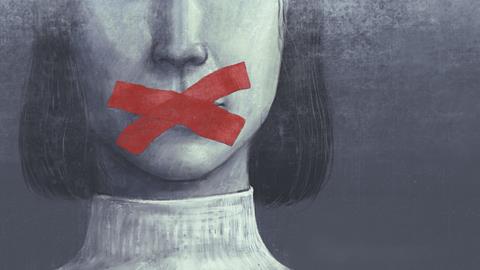
Eschewing defamation law, the rich and powerful are finding alternative ways to thwart scrutiny of their private behaviour. Sian Harrison examines the use of privacy and harassment injunctions – and the alleged misuse of NDAs
The low down
Injunctions obtained by celebrities are in the news. It is argued that their existence, working in concert with non-disclosure agreements (NDAs), is used to frustrate fair reporting of allegations of sexual harassment and assault. With applicants leaning heavily on privacy and harassment law, is there a danger of courts being manoeuvred into providing the rich and powerful with alternative remedies to defamation law? It is no surprise that a differential in wealth and connections means parties are not fairly matched in the law’s processes. But there are fewer ‘superinjunctions’ than keyboard warriors imagine. Previous controversies led to changes in the approach of the courts in 2010. In 2013, libel law reforms boosted the defences available to media outlets.
Following a week in which Russell Brand was jailed for rape and sexual assault, and David Walliams was revealed to be the celebrity accused of inappropriate behaviour towards teenage girls (which he denies) as a High Court injunction was lifted, much discussion and soul-searching is under way.
The government has said it is considering measures on everything from staggering the age of consent to the treatment of sexual offence complainants in courtrooms; many have come forward from the world of entertainment to speak about the alleged abuse of non-disclosure agreements (NDAs) and other legal measures to silence victims. There is renewed scrutiny of the use of injunctions by the wealthy and powerful even to prevent reporting of allegations.
These are all important and worthwhile conversations for society at what feels like a pivotal moment for accountability among those who abuse their power to mistreat others. But it is difficult not to feel a sense of deja vu about much of this discourse.
'Threats based on little more than a client's beliefs'
Professor Richard Moorhead, University of Exeter
Hot on the heels of it emerging that Russell Brand’s lawyers sought a questionable injunction against an unrepresented woman for harassment (revealed in Dan Neidle’s post – a depressing tale, made worse by uncomfortable judges standing aside as this passes under their noses), another so-called SLAPP story…
Schillings is said to have threatened an alleged target of David Walliams. Also unrepresented. As the firm’s website’s tagline puts their modus operandii, with an archness that I am probably imagining: ‘High stakes, handled.’
These threats can be deployed based on little more than their client’s beliefs. In the moment of threatening, certain people’s beliefs take precedence over everyone else’s rights.
The thorny issue of how courts balance the competing rights of the parties before them is nothing new. In 2010, the then master of the rolls, Lord Neuberger, set up a Committee on Superinjunctions.
This was a response to public outcry about the use of both superinjunctions – where the existence of the injunction itself cannot be revealed – and regular injunctions, of which many were anonymised.
These came about largely as a result of developing privacy law being based on courts attempting to strike the right balance between the right of individuals to a private and family life, enshrined in Article 8 of the European Convention on Human Rights, and the Article 10 right to freedom of expression enjoyed by the media and the public.
The furore arose on the back of the kind of ‘kiss-and-tell’ stories then beloved of the tabloid press being blocked by the courts to protect privacy in the sexual relationships of celebrities. Ryan Giggs, subject of one such injunction, was nevertheless named on social media and eventually in parliament by Liberal Democrat MP John Hemming as being the footballer involved in an affair with a reality TV star.
In the wake of this episode and the committee’s various recommendations, the number of privacy injunctions both applied for and issued plummeted. As Neuberger said in his foreword, the recommendations were designed to ‘ensure that exceptions to the principle of open justice will only be allowed when they are strictly necessary in the interests of justice, and that when allowed they will go no further than is strictly necessary’. Superinjunctions, moreover, would only be granted in ‘very limited circumstances and... for very short periods of time’.
'Left free to damage others' lives'
Senior legal professional, anonymous
I had little choice but to sign an NDA to settle expensive and stressful legal proceedings that I reluctantly commenced.
Speaking up about bullying, harassment and discrimination was the right thing to do, but it was terrifying going up against a well-funded and powerful institution. I was represented by a junior lawyer from a regional firm and faced the global practice heads from several international law firms. To say there was a power imbalance would be an understatement.
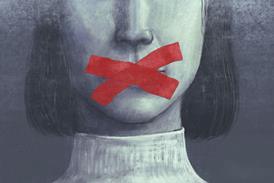
The NDA I signed was onerous and included me having to destroy all the evidence relating to my case, including messages from my harasser. The NDA removes my ‘voice’ – I can’t share my experiences with family, friends, or my professional network.
It leaves an unexplained gap on my résumé because, like so many others who speak up about harassment and discrimination in a work setting, I ended up having to leave as part of my settlement. Speaking about what happened to me would be a helpful way of dealing with it and giving me a sense of closure, but legally, these experiences must remain inside my head.
My employer benefited hugely from the silence that my NDA gave them. They did not have to face the public spotlight that would have resulted if the details had been made public, which is no small thing, as they invest heavily in protecting their reputation. Someone told me recently that she was aware of two further incidents at the same place, so it seems as if they learned nothing from their experience with me. The lack of transparency the NDA provided has left them free to keep damaging others’ lives.
When you are one person against a deep-pocketed and experienced adversary, you have very little leverage. The threat of public scrutiny is one of the few tools in your armoury, and an NDA removes that, which is why they are so often invoked.
Regulators are keen to stop these behaviours, but they are overworked and underfunded, and rely heavily on whistleblowers to support them. But too many private legal avenues remain that can frustrate this process and disincentivise people from speaking up. And a lack of support from regulators means that you are largely dealing with this situation on your own.
More pertinent to the debate now is the episode involving former high street retail tycoon Sir Philip Green.
Allegations surfaced in the Daily Telegraph in 2018 that a prominent businessman had used NDAs to prevent former employees from talking about sexual harassment and bullying – claims Green strongly denied.
The High Court said it was in the public interest for Green to be named; the Court of Appeal granted a temporary injunction to hold the ring ahead of it reviewing the decision. However, before Green’s appeal could be heard, he was named in parliament – using the privilege which protects politicians from defamation – by Peter Hain.
Scouring social media platforms today, one would think there are scores of rich celebrities with secret injunctions granted by the courts to block allegations of bad behaviour. Leaving aside the fact that most keyboard warriors mistake ordinary anonymous injunctions for superinjunctions, this is simply not the case. Only a handful of injunctions are currently in force and only one (within public knowledge, at least) is against a media organisation.
'Brand contagion: questions for judges'
Dan Neidle, Tax Policy Associates
How could lawyers justify asking a court to prohibit speech that couldn’t conceivably constitute harassment – including private conversations with friends and family, and reports to the police? There are also questions for the judiciary: how could Mr Justice Jay grant an order of such breadth against an unrepresented defendant, without a trial… Did he consider the proportionality and necessity of the order?
Then there’s a bigger question. Was this a one-off? Or have other injunctions been granted, supposedly to prevent harassment, but actually silencing people even in private conversations with friends, family and the police?
Some have suggested the injunction can’t really have prevented Ms Berki from speaking to the police. We think it’s important to separate the expected legal outcome (that, probably, no court would enforce such a prohibition) from the practical effect of the injunction (rational people would obey it very strictly in the absence of a court order).
If a person claims to be the victim of a crime, the police do not act, and the person then publicises their case, then the legal remedy for the alleged criminal should be defamation. Defamation law has a rightly high hurdle before an interim injunction can be granted. It also – crucially – permits a defendant to raise the defence of truth. Harassment injunctions have neither of these limitations. That seems to us quite wrong, and creates a dangerous and ‘gendered chilling effect’, enabling the wealthy and powerful to silence true accusations made against them.
The police don’t always get it right when serious allegations are made. The prosecution and conviction of Mr Brand were not at the instigation of the police; they followed an investigation by journalists. So people who say they’ve been wronged need to be able to speak for themselves. That doesn’t mean they have a licence to harass or threaten, and anyone falsely accused can sue for libel.
But the law shouldn’t enable people to silence accusations using harassment and privacy law before any court has decided who’s telling the truth. Parliament never intended to create such a right, and it runs against 130 years of the courts’ reluctance to restrain speech ahead of publication. It is a development parliament should reverse.
For more, see taxpolicy.org.uk
But the use of NDAs and threats of legal action to silence not only legitimate reporting but also to prevent alleged victims from speaking out is a far more complex and widespread problem.

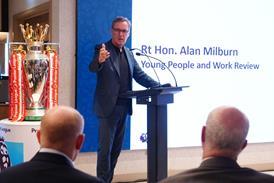
The Guardian’s reporting on Walliams (pictured), for instance, included a detail that an 18-year-old girl who had gone to his house later received a letter from law firm Schillings. The letter said she was in danger of committing a ‘serious civil offence’ and asked her to give a written undertaking within 24 hours that she would not talk about her encounter with Walliams.
A spokesperson for Schillings told the Guardian the firm was instructed to write the letter as they had understood the woman was going to ‘sell her story’, which Walliams believed was ‘an untruthful account’. Outside the oversight of the courts, these legal processes are not subject to any scrutiny, once again raising the prospect that rich and powerful interests can secure protection where ordinary people cannot.
While it is of course right that people must be able to protect themselves from the consequences of false information and allegations being published, there is also a risk that victims can face unfair and unbalanced attempts to gag them. It is notable that in the Walliams judgment, the Article 10 rights of the women who spoke to the media were also in the balance.
'The threshold for civil injunctions is especially high'
Iain Wilson, Brett Wilson
Campaigners are inevitably pointing to the Brand and Walliams cases as evidence that the law of defamation, privacy and harassment needs reform. Despite Brand’s convictions and the fact that Walliams’ quest for anonymity failed, it is understandable that questions are being asked about whether and how credible allegations were previously suppressed.
Any review of how the civil law operates in this area needs to be carried out carefully to ensure the baby is not thrown out with the bathwater. The substantive law is already finely balanced: one cannot use the courts to restrain an alleged libel ahead of a full trial on the merits, and there is a broad public interest defence (even where a defendant cannot prove an allegation is true).
While interim injunctions are available in privacy and harassment cases, the threshold is exceptionally high where the purpose of proceedings is the restraint of speech.
Only a handful of privacy injunctions are granted each year, and these tend to be in clear-cut cases involving individuals being blackmailed by a nefarious actor. Where public figures have sought interim injunctions, their efforts have often been counterproductive, bringing more attention to the allegations.
The law of harassment by publication has now developed to a point where defamation claims dressed up as harassment are almost certain to fail, although, admittedly, the courts were adopting a broader approach 10–15 years ago.
Additionally, the SRA has ramped up regulation in this area. It published a Warning Note in 2022, and in 2024 the Society of Media Lawyers introduced its own conduct guidelines (including, for instance, that ‘members should not make threats to seek orders from the court, or suggest any criminal liability arises, where there is no legal basis’).
Defendant lawyers have acknowledged that the nature and tone of correspondence from claimant lawyers has generally become more measured. Assessing how the courts and lawyers operated 10–20 years ago will be of limited value. The real issue is an inequality of arms (which, from a societal perspective, is often portrayed as an imbalance of power). The answer is not to punish claimants for having the means to instruct lawyers to assert legitimate rights, or to take away those rights, but rather to make it easier for defendants to seek legal advice.
This could be advice about responding to a pre-publication legal warning, a claim or threatened claim, or a settlement. While legal aid is likely to be prohibitively expensive for the state, if wealthy claimants are asserting weak claims, such cases are normally ripe for defendant conditional fee agreements.
There is also scope for better pro bono provision or even for claimants to offer to pay for a defendant to receive at least some independent preliminary legal advice, so they can better understand the legal position before considering whether to surrender their rights.
In wanting to ensure victims’ rights are protected, we should not disregard the rights of those who say they are victims of false allegations. Otherwise, we will slide towards a situation where trial by media becomes the norm. At its best, journalism can change society for the better. At its worst, it unfairly ruins lives. Where allegations spill on to social media, they are often limited or have no guardrails. Due process is infinitely preferable to mob justice.
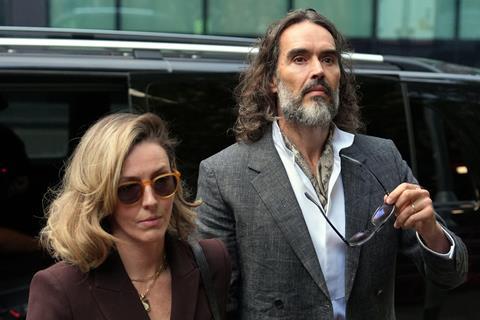
In 2023, Nina Cresswell won a libel case brought by a man she had named on social media as being responsible for sexually assaulting her. Her allegations were found to be ‘substantially true’ and also protected by the public interest defence under the Defamation Act 2013.
Her solicitor, Tamsin Allen, described the case as a SLAPP (strategic lawsuit against public participation) and said in a Guardian article that such a legal claim ‘lands like a punch’ for survivors of abuse and sexual violence.
But if the legal record on the use of privacy and harassment injunctions does not, on close inspection, exactly match the public’s perception, that does not mean that all is well for legitimate media interest in public figures. Even where the law is clear, establishing a publisher’s legal position is expensive, and as such legal threats from solicitors acting for people in the public eye undoubtedly have a chilling effect on investigation and publication.
Sian Harrison is a freelance journalist and co-editor of McNae’s Essential Law for Journalists







No comments yet