



















Head of the family law team and lead partner in London and Oxford at RWK Goodman
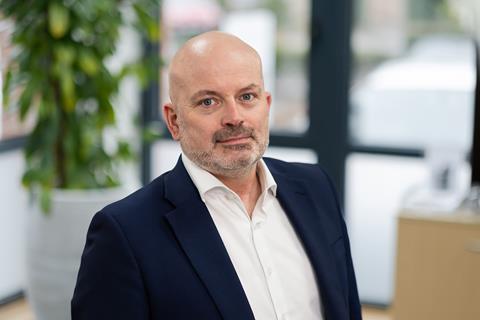
Simon Bassett recently celebrated the 30th anniversary of his starting out as a newly qualified ‘fresh-faced’ solicitor by posting a photo on LinkedIn of his office in 1996 – no computer, no mobile phone and a paper diary. ‘Bliss!’ he jokes. ‘It’s scary how quickly the time goes.’
Simon trained at Madge Lloyd & Gibson in Gloucester as an articled clerk. But he hadn’t set out to be a lawyer: ‘I left school after O-levels to join the army.’ Simon planned to attend Sandhurst Military Academy to become a Royal Engineer. ‘I got quite good exam results and they said, “Why don’t you do some A-levels?”.’ The army didn’t mind what A-levels he did. ‘I picked A-levels that were available because I left it quite late. One was law. I ended up being taught by a part-time solicitor. She was passionate and enjoyed it so much – a great teacher. I thought, “Maybe this is the career for me”. I got my law degree. I managed to get a training contract. It went from there.’
Simon didn’t specialise in family law immediately. He was asked to run one of RWK Goodman’s offices after a partner was made a judge. The partner was ‘a traditional lawyer who used to do everything’ – corporate and commercial, employment, family and personal injury – so Simon took over a mixed caseload.
‘Look at my journey. I didn’t intend to be a lawyer. I didn’t intend to be a family lawyer.’ He believes a notable difference between now and 30 years ago is the requirement to specialise early. ‘Even now, you have bespoke training contracts and you can just do one area.’ But he believes that doing other areas of law and matters ‘slightly outside your comfort zone’ builds confidence and skills.
'I remember going down the M20 dressed as Scooby-Doo in a car converted as the Mystery Machine with four other lawyers'
Simon eventually moved into family law, a specialism he has developed for more than 20 years. He believes the most fundamental change in the family law landscape is standardisation. The Family Procedure Rules came into force in 2011, providing a new code of procedure governing family proceedings. Before that, he explains, solicitors had different ways of doing things such as disclosure. However, Simon was already used to standardisation. He started his career doing personal injury work and the Civil Procedure Rules, ‘which are effectively the same thing’, were introduced in 1999. An ‘efficiency statement’ in 2022 introduced further standardisation in family proceedings. ‘You’ve got standard documents, so it’s harder to overlook things. You’ve got standard orders. It’s so much easier.’
What changes does Simon predict in the next 20-30 years? Simon notes that many litigants in person are already using AI. He foresees court orders telling litigants in person that they are not allowed to put documents into AI, given that AI is ‘open source’ and they risk breaching their duty of confidentiality.
Asked about memorable career moments, Simon cites acting during his training contract for two globally notorious serial killers. The international press took an interest. ‘Looking back, it helped me to develop confidence, resilience and self-reliance. At the time, it was really scary and regularly kept me up at night. But it helps me recognise when junior staff are taking on too much responsibility.’
He also recalls dressing up as Scooby-Doo for a charity road race from Oxfordshire to northern France. Simon’s team decided to turn their car into the Mystery Machine (original version pictured). ‘I remember going down the M20 dressed as Scooby-Doo in a car converted as the Mystery Machine with four other lawyers. You’ve got senior partners in their respective firms dressed up as the cast of Scooby-Doo. Really sensible people. We overtook a police car and saw police officers crying with laughter.’ The event raised over £1m. ‘You cannot take yourself too seriously, particularly as a family lawyer – it’s tough.’













No comments yet