





















Articles 3 and 8 of the European Convention on Human Rights will be the focus of a meeting of interior, justice and migration ministers in Strasbourg today attended by the lord chancellor and attorney general.
David Lammy is expected to reassert the UK’s commitment to the ECHR and that pulling out 'would be a fake solution that would undermine every international agreement we have signed on national and border security'. However he will argue that, to retain public confidence, the ECHR must evolve to face the challenge of mass migration.
Ahead of the meeting, prime minister Keir Starmer called on members of the Council of Europe to 'go further' in modernising the interpretation of the convention to prevent its use to contest deportation.
Lammy will announce that the government will bring forward legislation to set out how Article 8 of the ECHR, the right to a private and family life, should operate in relation to immigration rules, 'rebalancing public interest tests in favour of the British people’s expectations'.
'The definition of "family life" can’t be stretched to prevent the removal of people with no right to remain in the country,' Lammy is expected to say.
The UK is also working with 'like-minded countries' at the interpretation of Article 3, covering freedom from torture, for example in respect of prison conditions or access to healthcare, in cases of removals, deportations, or extradition. 'The threshold of "inhuman and degrading treatment" must be constrained to the most serious issues,' Lammy is expected to say.
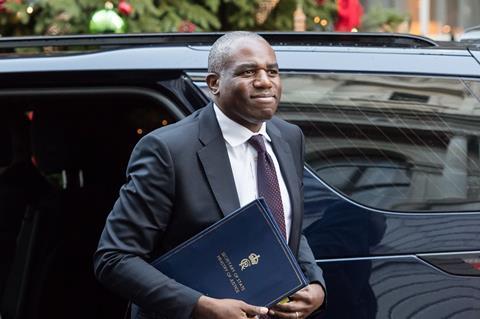
'The convention is a critical foundation of peace, stability, and security in Europe. It is a mechanism for justice, that guarantees and delivers everyday protections for every citizen in Europe. However, the convention was never intended to be frozen in time… it has endured because it has evolved,' his statement continues. 'By getting broad agreement from international partners around these proposals we can ensure the ECHR keeps pace with modern challenges and secures its long-term future.'
In a joint article for the Guardian this morning, Keir Starmer and his Danish counterpart Mette Frederiksen write that: 'The current asylum framework was created for another era. In a world with mass mobility, yesterday’s answers do not work. We will always protect those fleeing war and terror – but the world has changed and asylum systems must change with it.
'Today, millions are on the move not only because their lives are in danger, but because they want a better future. If we fail to take account of this, we would fail the needs of genuine refugees and the communities that for too long have been asked to absorb rapid change.'
This article is now closed for comment.





18 Readers' comments