






















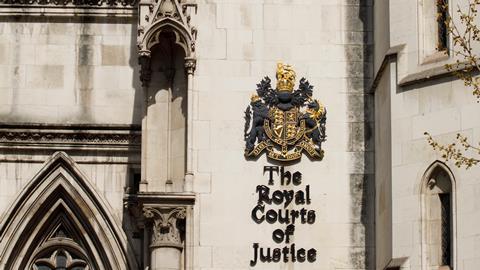
A Yorkshire firm has fought off an attempt to resurrect a £68m professional negligence claim after an appeal against the claim being struck out was dismissed. A total of 43 claimants, property investment companies in liquidation owing more than £68m, had accused Lupton Fawcett LLP, of professional negligence.
The firm, which denied any negligence or breach of duty, applied to strike out the claims on the basis that even if negligence was established, the claimants Afan Valley Ltd, would be unable to prove any recoverable loss. The claim was struck out and summary judgment against the claimants was given in 2024. The claimants appealed.
Lord Justice Nugee, with whom Lord Justice Edis and Lord Justice Holgate agreed, described the firm’s answer to the claim as a ‘very simple one’ in ‘if the [property investment] schemes had not proceeded, the claimant companies would not have been exposed to £68m by way of potential s.26 [of the Financial Services and Markets Act 2000] liabilities. But equally they would not have received the £68m which they did receive.
‘Once one includes those in the comparison, it can be seen that the claimants are no worse off as a result of being exposed to the potential s.26 liabilities. There is therefore no loss. This is the £ in £ out argument’.
The judgment in Afan Valley Ltd & Ors v Lupton Fawcett LLP said the firm’s duty of care was related to whether the schemes were collective investment schemes (CISs) and ‘not in respect of any wider questions’ adding: ‘Risk – or even certainty – that the schemes would not be profitable for a number of years had nothing to do with whether they were CISs or not.’
Read more
‘The loss which flowed from’ the commission payment to sales agents and legal and professional fees ‘is not something for which Lupton Fawcett was responsible’, the judge found.
He said the claimants’ grounds of appeal – that the judge was wrong to decide the claims should be struck out on the basis that the claimants have failed to establish any loss and that the judge was wrong to decide that the claimants’ losses were not attributable to the firm’s alleged negligence – did not fall within the scope of the firm’s duty. Referring to the third ground of appeal – that the judge was wrong in applying the test for summary judgment – the Court of Appeal did ‘not consider that there would have been any merit in the point'.
Dismissing the appeal, Nugee said: ‘There is…nothing to answer the £ in £ out argument which the judge, rightly in my view, accepted.’





No comments yet