






















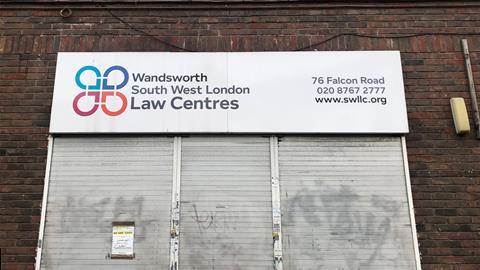
A group of London law centres has been forced to disband its employment team and warned that its housing team is at risk amid a staff exodus and external funding cuts.
South West London Law Centres (SWLLC) also revealed that it has become obliged to spend too much time trying to raise its own money as traditional sources dry up.
A consultation published by the Department for Business and Trade (as it then was) in July asked for views on whether the Access to Justice Foundation should continue receiving undistributed damages or settlement sums, or whether some or all of the cash should go to the Consumers’ Association, commonly known as Which?.
In its response, SWLLC urges the government to ensure the foundation remains the sole recipient of unclaimed class action cash. The group is becoming increasingly reliant on grant funding, both because of legal aid cuts and loss of funding from the Equalities and Human Rights Commission and local authorities.
SWLLC now also spends a ‘disproportionate’ amount of time raising its own money, chief executive Patrick Marples wrote, adding: ‘The difficulty the law centre has when it comes to raising funds doesn’t only have an impact on the numbers of people we’re able to help. It also has an impact on our ability to retain and recruit sufficiently qualified staff. The law centre has a good record of training staff, but when they qualify, we continue to lose staff to local government, to Government Legal Services [sic], and to other sectors who can pay significantly more than the law centre can afford.’
As a result, SWLLC had to ‘disband’ its employment team and is ‘currently in danger’ of losing its housing team.
Marples said the foundation is best placed to strengthen access to justice. Other potential recipients named in the consultation ‘do not have that background’.
Legal executive body CILEX also called for the Access to Justice Foundation to remain the sole recipient. CILEX chief executive Sara Fowler said: ‘The Consumer Association is an entirely different type of organisation, one that principally operates a commercial model, with only around a quarter of its income related to consumer research and promoting consumer interests. It would be a high-risk strategy at this stage to consider changing the current arrangement to an untested, unevidenced alternative.’





No comments yet