























4.15pm: Bacon closes by saying this is a 'relatively simple proposition'. Vos says the court is capable of understanding simple propositions. Court rises and we're done for the day.
4.10pm: Bacon says that CILEX relies upon the Civil Procedure Rules definition of 'representative' as an extra part of its case and a 'get out of jail' card if required. The CPR states that legal representative is an 'employee of a solicitor or firm of solicitors in private practice representing a party', and that this person can sign a statement of truth.
'That is giving permission for a task or an activity which could amount to the conduct of litigation [to be] done by an unauthorised person',' he adds.
Bacon says there have already been cases since Mazur which have been struck out by district judges on the basis they have not been signed by authorised people.
4pm: Vos has already said that proceedings will finish at 4.15pm, so we're in the final stretch now.
3.55pm: Bacon takes the judges through more cases that, he submits, show that the law and the courts have historically maintained the position that someone authorised to conduct litigation retains responsibility for it, even if they have delegated certain tasks.
He once again suggests that the court risks creating unnecessary complications by upholding Mazur, saying the system that had operated before the ruling was 'mercifully workable and operative'.
3.40pm: Bacon addresses Baxter v Doble, one of the cases relied upon by the Law Society to support the findings in Mazur. That was another case which dealt with what constituted the conduct of litigation. Mr Justice Cavanagh said that a legal business had gone ‘far beyond’ clerical or mechanical help to its client, giving ‘full assistance’ including drafting all the documents required, instructing counsel, making a court payment and corresponding with the other side.
Bacon says that while this case was only from 2023 and so is the most recent assessment of litigation conduct, the judge's conclusions were wrong and had taken the terms of delegate work 'completely out of context'.
3.30pm: Vos admits he is 'surprised' that this case is allocated for two and a half days of submissions, given that the arguments appear not to be complex (albeit they are very important, he acknowledges). Bacon agrees and says the point that an unauthorised person can work under supervision is 'mercifully simple'.
3.20pm: Bacon says the court woud be unnecessarily threatening to open the floodgates to a host of costs claims, if it rejects this appeal.
'You can rest assured, such is the nature of the business of insurers paying costs and losers paying costs, they will take these points and you will be unleashing onto the county courts a wave of satellite litigation around the facts of how managed the supervision was. It opens up a complete can of worms.'
Bacon says the court 'doesn't have to go there' and says the Legal Services Act has worked for years with firms adequately regulated without the 'completely unnecessary' change that Mazur has brought about.
3.10pm: Bacon says solicitors would not need to expressly state that tasks are delegated to unauthorised people. Instead, files could come with a statement saying that the authorised person retains responsibility for the conduct of the litigation, even if they have delegated some tasks.
3pm: Bacon cites a case from the 19th century in which the court found that a solicitor's clerk was able to carry out ltigation task. Andrews suggests he is effectively saying that an unauthorised person is being allowed to apply their own judgement and mindset to litigation acts they are carrying out.
Bacon says the whole point is that by identifying the authorised person with responsibility and accountability, this does not matter. If the unauthorised person acts unethically, for example, the courts and regulators can take appropriate action - but the key is that supervisors are still responsible.
'[Supervisors] are the person to whom blame for the frolic rests. They are the person in the crosshairs.'
2.45pm: Really getting into the practicalities of litigation and the practice of law. Bacon says that once you have identified the authorised person responsible then that satisfies the rules, even if tasks are being undertaken by someone else.
Vos asks whether that is the case when the authorised person does not know what work is being done, citing the example of a personal injury firm running hundreds of cases but employing just one solicitor.
Bacon says 'there has to be a reality' about what tasks are delegated and degree of involvement by the solicitor, adding: 'If a person undertaking work at the request of the supervisor they are not purporting to carry out litigation at all. If you take this to its logical conclusion you would be requiring the authorised person to carry physically [every] step. If that is right then the law is in a real mess as that is not how matters have proceeded historically.'
2.35pm: Another moment of levity as one of the lawyers interjects to say that the transcriber cannot hear anything being said by the judges. Vos moves his microphone but adds: 'No-one wants to hear from the judges anyway.'
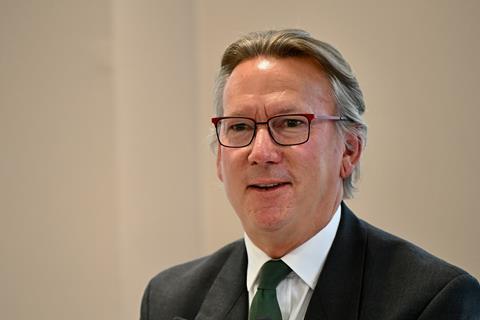
2.30pm: Bacon: 'The [Legal Services] Act doesn't provide for delegation but we would not expect it to because of course you can delegate.' He reiterates that accountability and responsibility and not able to be delegated so there is no need for a specific exemption to be issued to the person being supervised.
2.25pm: A few chuckles in the room as Vos suggests to Bacon that he is making a fairly simple point about the question of delegation being permitted.
'It is quite simple but quite complex in finding the solution,' says Bacon.
2.20pm: Both Vos and Andrews want to press Bacon on what he means by 'carrying on' litigation. Bacon says the right to carry on litigation is not able to be delegated and that the authorised person always retains responsibility. Unauthorised individuals, he adds, 'do not commit a criminal offence by responding to a request from an authorised person that they undertake tasks that amount to litigation'.
2.10pm: Bacon says Mr Justice Sheldon did not focus on the distinction between the tasks of litigation and responsibility for conducting it. He argues this distinction underpins this case. He submits that authorised individuals can delegate tasks but must retain responsibility and accountability.
He adds: 'Obviously it is necessary for the proper and effective administration of justice that there is adequate supervision in place between those delegating work to the supervisees, but this does not affect the legal proposition or the status of the person who is ultimately carrying on the conduct of litigation.'
2.05pm: Vos immediately clarifies that this hearing is not being live-streamed because, under a statutory instrument, proceedings cannot be broadcast when one of the parties is a litigant in person. This was only realised on Friday. There have baan a large number of applications to watch remotely, which are still being dealt with.
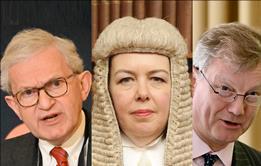
2pm: Bang on time, master of the rolls Sir Geoffrey Vos, Lord Justice Birss and Lady Justice Andrews have entered the room. Let the proceedings commence...
1.55pm: Nick Bacon KC is in place to make submissions on behalf of CILEX. The Law Society, SRA, Association of Personal Injury Lawyers and Law Centres Network will also make interventions on Wednesday and Thursday.
CILEX is represented pro bono this week by Bacon, head of 4 New Square, Helen Evans KC, Teen Jui Chow and Faye Metcalfe of 4 New Square, Iain Miller, a partner, and Stephen Nelson and Phoebe Alexander, senior associates, at City law firm Kingsley Napley and Greg Cox, managing partner of Simpson Millar.
In its skeleton, which has been seen by the Gazette, CILEX says: 'The outcome [of Mazur] runs contrary to some of the core purposes of the LSA – namely to encourage innovation and to drive down costs. There are no public interest reasons why supervisees working under supervision of authorised persons working within a regulated entity should not be permitted to carry out tasks which would otherwise be the conduct of litigation.
‘To hold otherwise risks restricting access to justice in relation to the cost of litigation services and access to law centres and the like. It would also create real difficulty for firms whose business model is constrained by fixed costs regimes (e.g. for personal injury cases).’
1.50pm: One of the reasons for the huge turnout may be that proceedings are not being live streamed. Counter-intuitively, the hearing is available to watch remotely only for those who have applied to the court - the reason being that there was such public interest in the case. There is more on that decision here.
1.40pm: Extraordinary scenes as the doors to Court 71 were just opened. What can only be described as a scrum to get into the hearing room followed, with the available seats snapped up within 30 seconds or so. There are 17 lawyers amassed in the back two rows of the legal benches, with more in the overspill room in Court 63. Julia Mazur, whose name has been attached to this mega-case, also has a seat here.
1.15pm: So what exactly has prompted CILEX to bring this appeal? The underlying case was a costs challenge involving a former client, Julia Mazur, questioning whether she should have to pay her solicitor’s bill in full. But the unintended consequences have prompted CILEX to become involved and argue that Mr Justice Sheldon's ruling was wrong.
In an email to members last week, the organisation said: 'We believe the issues raised by the judgment go to the heart of access to justice, fairness and diversity within the legal profession, and the efficient operation of the legal system.
'We are appealing because clarity and certainty are urgently needed – for our members, for employers and consumers, and for the justice system as a whole. Regulation must be clear, proportionate and focused on protecting the public, while properly recognising the expertise and authorisation of talented legal professionals.'
1.10pm: It’s already filling up in the public area outside court 71, with a mixture of interested observers and teams of lawyers. One group has brought not only lunch but a whole tub full of cupcakes. Alas, court rules prevent me from taking a picture of this impromptu picnic.
1.05pm: A quick reminder of the runners and riders in this congested field. The appeal itself is brought by the Chartered Institute of Legal Executives (CILEX), seeking to overturn the ruling of Mr Justice Sheldon last September. In short, the ruling affirmed the position as apparently set out in the Legal Services Act that only authorised individuals could conduct litigation, even supervision. The only problem? That the legal sector – often under pressure to reduce costs by the government and the courts – had relied for many years on the input of legal executives, paralegals and trainee solicitors to conduct litigation under supervision. Mazur effectively said that any firms operating in such a way were doing so unlawfully.
CILEX is due to open submissions at 2pm.
1pm: Welcome to our live coverage of the Mazur appeal from the Royal Courts of Justice. We are one hour from the start of the most eagerly-awaited case for the legal profession in years.
This article is now closed for comment.
LIVE: Court of Appeal hears submissions in crucial Mazur case
Follow our live reporting from The Royal Courts of Justice here…
 Currently
reading
Currently
reading
LIVE: Court of Appeal hears submissions in crucial Mazur case
- 2
- 3
- 4







37 Readers' comments