























The Ministry of Justice has cautioned against proposed statutory safeguards to limit the use of creative or artistic expression in criminal proceedings – telling peers yesterday that the government will await the outcome of a Crown Prosecution Service consultation before deciding next steps.
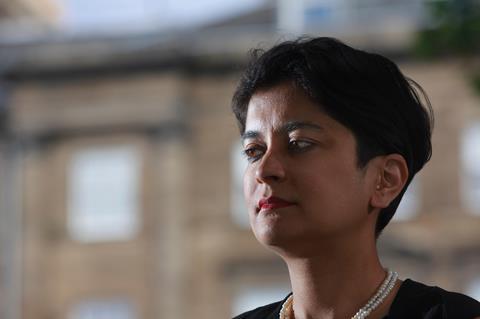
Human rights lawyer Baroness Chakrabarti (Shami Chakrabarti) tabled an amendment to the Victims and Courts Bill which imposes stringent requirements for creative and artistic expression to be admissible in evidence amid concern that the use of rap and drill music by prosecutors is unfairly sweeping young black boys and men into the criminal justice system.
Several lawyers, including London Criminal Courts Solicitors’ Association president Jason Lartey, Criminal Bar Association chair Riel Karmy-Jones KC and civil liberties barrister Leslie Thomas KC, urged justice secretary David Lammy to back the proposed safeguards, which were debated in the Lords yesterday. Their intervention was coordinated by campaign group Art Not Evidence, supported by legal thinktank Justice.
However, justice minister Baroness Levitt (Alison Levitt KC) told peers that while she understood the concerns, the amendment as currently drafted is ‘unduly restrictive’. The amendment ‘would, in effect, frustrate the ability of the Crown to adduce relevant and probative evidence before the court, with the potential consequences of frustrating justice for victims in some serious cases’, she added.
Read more:
The CPS is currently sifting through responses to its consultation on ‘gang’ related offences guidance and musical expression in evidence. Levitt said the government would await that outcome ‘and announce next steps in due course’.
During the debate, Chakrabarti pointed out that in the case of the ‘Manchester 10’, a nine-second video clip of someone identified as one of the defendants, with drill music playing in the background, was used as evidence of his gang membership. The Court of Appeal later found that the man had been misidentified.
Conservative peer Lord Bailey of Paddington (Shaun Bailey), who has a background in youth work, told peers that the content of drill and rap music can be horrific ‘but, unfortunately, it is also very entertaining. Many young people will listen to it just by association. The music is entertaining, people party and you have no other choice. So, for someone to view your output as an individual through your membership of that genre is a very slippery slope’.
If you ask a teenage black boy to describe parliament as he would to his friends, ‘it will sound like a gunfight’, Bailey added.
This article is now closed for comment.





10 Readers' comments