























MPs have been told that a form of mandatory pro bono could have a transformative effect on access to justice.
Dr Liz Curran, associate professor at Nottingham Law School, told the Commons justice committee on Tuesday there is a ‘big missed opportunity’ in the UK presently by not taking the lead from other countries to compel big firms to offer free legal assistance.
Curran was involved in her native Australia with setting up pro bono provisions, ensuring that firms with government contracts must provide an amount of approved pro bono services.
She said the reform had brought about a ‘shift in culture’ in the legal profession by mandating a form of meaningful pro bono. She advocated applying this in the UK, where an estimate 3.8 million people have unmet legal needs.
‘There are a number of large law firms that do not do pro bono work,’ said Curran, who also stressed that law centres would not function without the free help of lawyers. 'If you are going to get large amounts of government work, for instance the amount of money spent on a range of public inquiries, I don’t think it is too much to ask… for something to be given back.
‘There is real potential. I know that the government has an appetite to do this and I would encourage them. There are fantastic models around the world in America, Canada and Australia.’
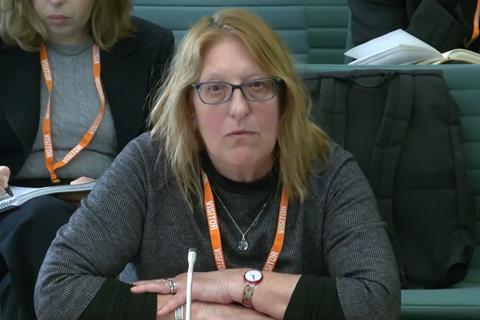
The justice committee is currently looking at all aspects of access to justice issues and asked Curran about whether the current legal regulatory framework is adequate for ensuring needs are met.
The professor said the current system of having 11 regulators in the same form was a ‘dog’s breakfast to put it mildly’.
‘Having 11 regulators who don’t communicate with each other, who don’t share their data and who seem to focus on micro-managing and miss opportunities for early intervention to really protect consumers is part of the problem.’
She also said there was an ‘overemphasis on the commerciality of law’ which came at the cost of good practice and client interests.
’The problem here is we have a really siloed, fragmented system that serves lawyers rather than the consumer. ‘The thing we can’t ignore is there is this power imbalance between consumers and their lawyers,’ added Curran. ‘There is a feeling [consumers] are disempowered by the whole process. More needs to be done to have more transparency and [more] use of plain English, which lawyers do not like because it justifies them charging for the opaque language they use.’
Tom Hayhoe, chair of the Legal Services Consumer Panel, also gave evidence to the committee and endorsed the point that legal regulation is not adequately protecting clients.
‘We are keen to see the Ministry of Justice review the regulatory structure and framework,’ said Hayhoe. ‘If one was reinventing the [Legal Services] Act I suspect you would have a single regulator with maybe some specialist interest groups.’
This article is now closed for comment.





35 Readers' comments