




















A solicitor who has been fined over multiple drink drive convictions said his three-hour daily commute combined with long working hours led to him relying on alcohol.
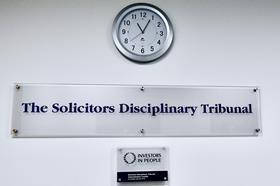
The Solicitors Disciplinary Tribunal said it took a ‘compassionate approach, one grounded in the particular and individual circumstances of this case rather than a mechanical application of principle’ in sanctioning Vipul Kapoor.
Kapoor, admitted in 2009, admitted the allegations against him which included three drink driving convictions between 2017 and 2020 and failing to promptly report his convictions to the SRA. In relation to the third conviction, Kapoor was also alleged to have driven a vehicle whilst disqualified and without insurance and was also found to be in possession of cocaine. Kapoor was alleged to have failed to promptly reported his convictions for the offences to the Solicitors Regulation Authority.
Kapoor has been abstinent since December 2023, the tribunal heard.
The SDT judgment noted evidence from Dr Anthony John Wilkins, a consultant general adult and forensic psychiatrist, who said Kapoor had been ‘psychologically and in all likelihood physically, dependent on alcohol’ at the time of the first two convictions and ‘probably at the time of the third’. That dependency had not arisen in isolation, the judgment said. ‘A confluence of significant life stressors’ including ‘the pressures of a promotion that brought with it a punishing three-hour daily commute…had collectively precipitated his decline’.
Read more
The tribunal found the allegations proved. Considering sanction, the three-person panel took into account Kapoor had no prior regulatory findings, was now alcohol-free and ‘taking active steps to remain so’.
The SDT said: ‘It reminded itself that the purpose of sanction is not punitive; its primary purpose is to protect the public from harm and to maintain public confidence in the reputation of the legal profession.
‘[Kapoor] bore full personal responsibility for his conduct. Whilst he was an experienced solicitor at the relevant time, that experience was pertinent only in relation to his failure to report promptly to the regulator; it was not a factor bearing upon his decision to drive a motor vehicle. His culpability was, however, aggravated by the repeated nature of his offending.’
Finding a £15,000 was an ‘appropriate sanction’, the SDT acknowledged that a tribunal ‘minded to impose a suspension could not have been criticised for doing so. That course was plainly open to it’.
The SDT said ‘it elected to look beyond the bare chronology of his conduct and to have regard to the man standing before it’.
The tribunal ‘was satisfied that the respondent was genuinely remorseful, that his offending was rooted in a period of serious alcohol dependency now firmly in the past, and that the steps he had since taken towards recovery were both meaningful and sustained’.
It added: ‘The fine imposed reflected not a diminution of the seriousness with which his conduct was viewed, but a considered and humane judgment that the public interest was adequately served without the imposition of a sanction that would, in all likelihood, have brought an otherwise unblemished professional career to an end.’
Kapoor was also ordered to pay £10,688 costs.
Please note: Anonymous comments will no longer be permitted on this site from 1 June. Please see our revised site terms here