























A charity dedicated to the wellbeing of solicitors is facing a major funding crisis after firms’ contributions suddenly reduced. The Gazette understands that donations to The Solicitors’ Charity made through residual client balances (RCBs) have halved so far this year, forcing the organisation to consider potential new sources of funding.
Meanwhile uncertainty over the future of client accounts presents an even bigger risk to the future of a charity that has existed for more than 160 years. In 2025, unclaimed client balances formed 57% of the charity’s funding, generating more than £1m of the income of £1.8m.
Anita McCallum, director of impact and development with The Solicitors Charity, said: ‘It’s difficult to know what is going to happen. The budget paused any changes to the use of interest on client accounts, but the future of client accounts and RCBs is still unclear. We fear, though, it is just a matter of time before there are very significant changes made.’
Read more
Law firms can donate any client balance of £500 or under to charity without needing Solicitors Regulatory Authority approval, providing they have made reasonable attempts to identify the money’s owner and return it to them. SRA authorisation is required for residual client balances over £500.
In the past, many law firms have opted to gift residual client balances to The Solicitors Charity - formerly known as the Solicitors Benevolent Association - which carries indemnity insurance on donations so that funds can still be paid back if required.
But those donations appear to have shrunk this year. It is possible that some firms have chosen to support other causes rather than risk the perception they are keeping the money within the profession. Equally, cash-strapped charities may have identified residual client balances from law firms as a source of income and effectively moved onto The Solicitors Charity’s turf.
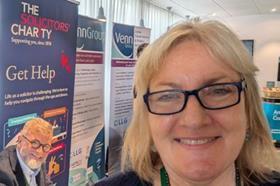
One key challenge for The Solicitors Charity is the misconception that it receives regular levy funding from the profession and the perception that members of the legal profession do not need charitable support.
McCallum said the work done by the charity is ‘substantial’ and growing all the time, particularly given the number of firms that have suffered financial issues. She gave the example that this year the organisation helped to pay the mortgage for a solicitor who was made redundant and could not afford to keep a roof over his family’s head.
In 2025, the charity made nearly 1,000 awards to around 250 clients, provided more than 5,600 hours of case-management support and made grants of about £1.27m, including a six-figure grant to support wellbeing charity LawCare.
McCallum added: ‘The charity’s approach is deliberately broad, focused on the whole person. It supports emotional, physical, professional and financial wellbeing, recognising that distress is often driven by practical pressures such as debt, rent arrears, ill-health, caring responsibilities, redundancy or professional transition.
‘The bottom line is that we may not be able to be as generous going forward and must make our financial and other wellbeing support more time-limited and bounded.
‘What would help us in the short term is understanding why RCB income is so diminished this year. I would urge compliance officers in firms to let us know so that we can plan accordingly for 2027 and future years to ensure solicitor wellbeing services can be maintained.’





No comments yet