


















A century ago last week, Chancery Lane witnessed ‘quite a number of young men’ emerging from the headquarters of the ‘Devil’s Own’ Territorial regiment, bearing truncheons. They were newly sworn-in members of the Special Constabulary, deployed under the Emergency Powers Act 1920 to prevent a breakdown in society during the strike which paralysed transport, the docks and other essential services for nine days from 4 May 1926.
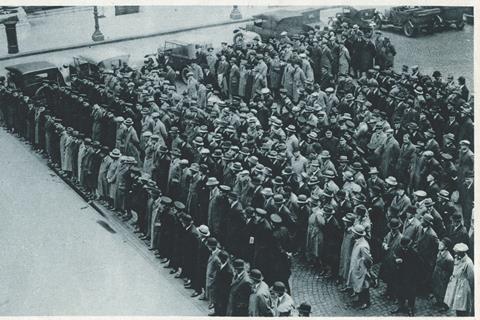
Given the location of the Devil’s Own’s HQ, and its links to the legal profession, we can assume that many of the specials were lawyers or clerks. They were not the only members of the profession doing what they saw as their patriotic bit to beat the strike. At least one of the 10 civil commissioners appointed to run the country under emergency powers was a solicitor. Meanwhile, the attorney general’s son, Quintin Hogg (later Lord Hailsham), helped run a fleet of Renault lorries to collect refuse.
Legal London played one more small part in the drama: W.H. Smith’s HQ in Carey Street, at the back of the Royal Courts of Justice, was the distribution centre for the British Gazette, the emergency daily newspaper edited by chancellor of the exchequer Winston Churchill (allegedly given the job to distract him from more drastic action).
The last use of the Emergency Powers Act 1920 was by the Heath government in the early 1970s. Though Obiter would not rule out a future administration turning to that page of the statute book again.





No comments yet