























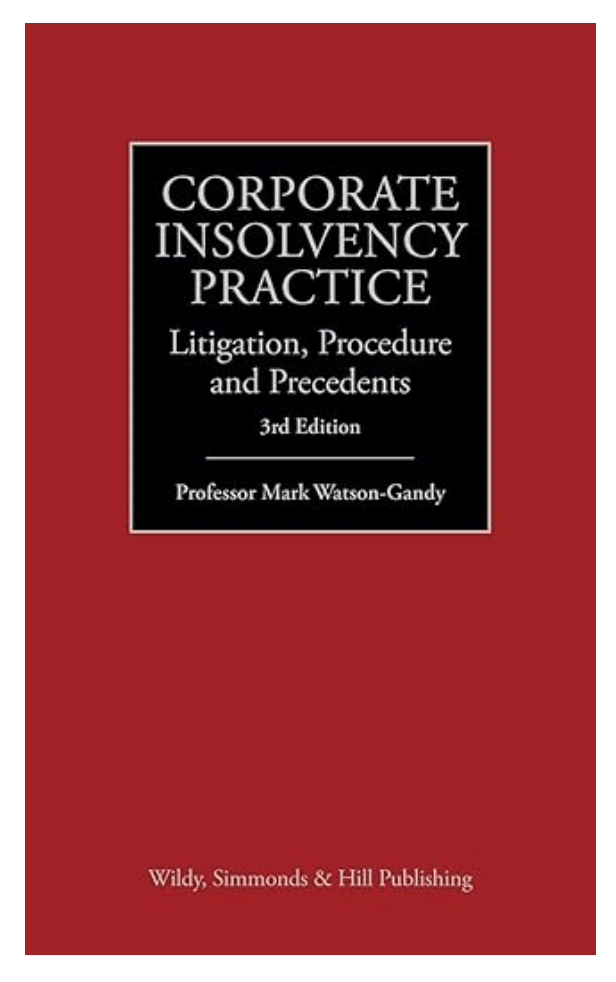
Corporate Insolvency Practice: Litigation, Procedure and Precedents (3rd edition)
Professor Mark Watson-Gandy
£145, Wildy, Simmonds and Hill Publishing
There are many situations in which an application to court is required in corporate insolvency proceedings. Stipulations and guidance are to be found in various sources. Anyone new to insolvency law may find it daunting to be involved in what is sometimes thought of as a niche area of law – despite thousands of corporate insolvencies occurring every year.
This book brings together legislation, practice directions and insights from common law, resulting in an invaluable guide for practitioners at all levels. It starts with the basics: making and responding to applications when insolvency procedures are instigated. It then moves on to the suite of typical applications by or against insolvency officeholders.
There is a helpful ‘toolkit’ section at the end covering general points, ensuring that the practitioner is up to date with the court’s expectations. Essential details are provided, such as the cost of each type of application and how advocates are expected to dress at a hearing. While the focus is on corporate insolvency, there are some useful comparisons with personal insolvencies.
This is valuable to those who work in both fields. The text is peppered with copies of court forms and precedents, which are completed with examples rather than just blank documents. The sample names (‘Wingitt & Fudge’ is a personal favourite) add a nice touch of humour to the text.
The procedure relating to a company moratorium, introduced by the Corporate Insolvency and Governance Act 2020, is not included in this book.
This might be a suitable area to cover in a future edition, particularly as it is not well-trodden ground for practitioners.
Rachel Lai is a partner at Menzies LLP in Cardiff and co-author of Insolvency Practitioners Appointment, Duties, Powers and Liability








No comments yet