




















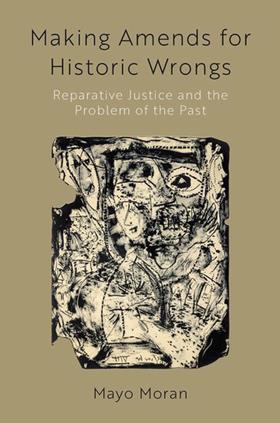
Making Amends for Historic Wrongs: Reparative Justice and the Problem of the Past
Mayo Moran
£25.99, Oxford University Press
★★★★★
I do not recommend you read this book; I implore you. When you are packing for your holidays, please leave out the novel and include this.
Injustice has been with us since the serpent in the Garden of Eden did not get due process, never mind a fair trial. Why does it repeat with endless ingenious-to-crude variations?
History warns us that as often as not, the greater the scale of the injustice, the greater the tendency to forget. Similarly, the more the personal hurt, the greater the desire for vengeance. Henry V murdered his prisoners after Agincourt, a war crime on a par with any committed by the Wehrmacht. What do we remember? His heroic speech and his own untimely death. The long-lasting consequences of the current war in and around the Middle East are likely to be vengeance, pure and applied.
This book, which is deliberately written in non-technical terms, gives an overview of major injustices, such as the Holocaust, and more minor ones, such as the Benin Bronzes. It charts the dramatic change in attitude initially brought about by the Nuremberg criminal trials and the subsequent realisation that the law and its offshoots could be used to right other wrongs that had always been thought beyond the reach of victims and their advocates. We now have civil claims, truth and reconciliation commissions, and a much greater governmental and judicial desire to find solutions as well as the occasional prosecution. We also still have lawyers fighting tenaciously to protect their morally unworthy defendant clients. Most of us will admire their efforts while being encouraged by their failures.
One of the great benefits of the common law is that it has seeded in other fields and another is that the new plants send their own seeds back to us. This book originated in Canada, but its message is universal and its example is a tribute to the common law and its lawyers. The messages are at least as significant and some are as profound as they come.
The format comprises an introductory overview and then case studies covering specific incidents. The detail is necessary and sufficient for its purpose – and memorable. This is not a textbook, though it applies textbook standards as far as possible. The range is from the likes of the first German genocide – in south-west Africa in the early years of the 20th century – to the restoration of Oscar Wilde’s library card to his grandson.
A word of caution. Although the arguments of perpetrators and their supporters are mentioned, the fair-minded reader might need to put rather more effort into seeing their point of view than that of the victims.
Michael Freeman is a retired Shropshire solicitor







No comments yet