






















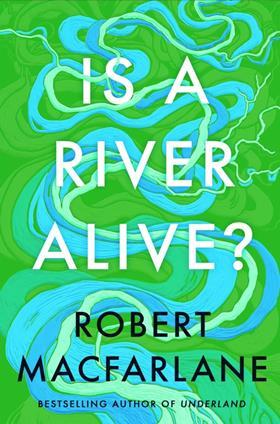
Is a River Alive?
Robert Macfarlane
£11.99, Penguin Random House
★★★★✩
At a time when the protection of our rivers is paramount, Robert Macfarlane’s book enters the public discourse. Taking a case study approach, the book considers three rivers facing different challenges; mining in the Los Cedros region of Ecuador, pollution in the Adyar river of India and dam installation on the Mutehekau Shipu in Canada.
Through writing in a travel-book style, Macfarlane depicts the lives of those who are both affected and fighting on behalf of the rivers. By drawing on similarities between the different cases, the book questions on both theoretical and practical levels the overarching question set out in its title. This writing style allows the book to be very accessible, providing a great introduction to the topic and its surrounding issues.
Regarding its discussion on legal topics, Macfarlane recognises the challenges faced by conferring legal rights to non-human entities, raising the questions of who should be entitled to speak on behalf of rivers and how do we prove that it is what the river wants, if rivers are recognised as living beings.
Furthermore, Macfarlane understands the law to be something which can be changed and this is highlighted throughout his book as he provides examples of legislative, judicial and social action, acknowledging that 'Change brought from below is often the most durable'. He argues that through everyday people taking action and changing their attitudes, it will be possible to bring about robust and longer-lasting reform to how rivers and other non-human beings, like forests, are treated by the legal system.
Robert Macfarlane is a Fellow of Emmanuel College, Cambridge and has written several books on similar topics.
Michael Smith is a fourth-year law (study abroad) LLB (Hons) student at Lancaster University








No comments yet