






















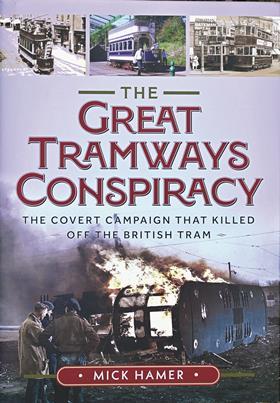
The Great Tramways Conspiracy: the covert campaign that killed off the British Tram
Mick Hamer
£29.99, Pen & Sword Books
★★★★✩
Members of the thriving legal community in Leeds will not need reminding that theirs is the largest city in Europe with no mass transit system. This is extraordinary because Leeds was the city that ushered in the electric tram age, in 1891: the first to be powered by overhead wires.
In The Great Tramways Conspiracy, veteran transport journalist Mick Hamer sheds new light on the forces that led to the UK’s 20th century scrapping of almost all cheap, convenient and zero-emission electric trams to make more room for the private motor car.
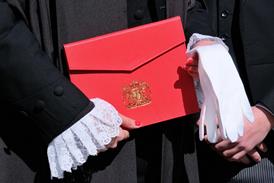
The title’s ‘conspiracy’ stands up – and it was based in legal London. Just over the road from the Royal Courts of Justice an apartment in the elegant King’s Bench Walk was the boiler room for a covert campaign apparently funded by the petroleum industry. Hamer’s research reveals that, in the 1920s a short-of-work barrister Ernest Harold Davenport teamed up with a former MI5 officer to conduct a national letter-writing campaign about the supposed inconveniences caused by ‘obsolete’ tramways.
Nowadays we call it ‘astroturfing’ – the practice of impersonating a national campaign by bombarding the media with supposedly spontaneous grassroots messages. A century ago, the targeted media were local newspapers, most of which were happy to run near-identical letters knocking the (name inserted) municipal tram system.
The technique did not always work. Hamer discovers that a letter on the topic to the Newark Advertiser prompted the newspaper’s diary column to point out that ‘Newark has its fishing lines, clothes lines and marriage lines, but no tram lines’. The Derby Daily Telegraph also detected foul play.
On a national level, however, the anti-tram campaign succeeded. Just a stone’s throw from Chancery Lane is evidence in the shape of the still derelict Kingsway Tram Tunnel.
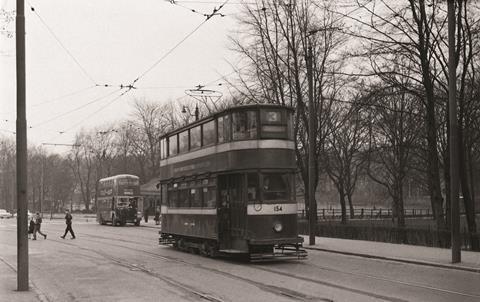
Leeds’ municipal tramways lasted longer than most, closing only in 1960. It was another three decades before the pendulum began to swing the other way, with the revival of trams in Manchester and South London.
Will Leeds get its trams back? The jury is very much out: one obstacle is a planning system weighted against the laying of trackways, which cost at least twice as much per kilometre as in France.
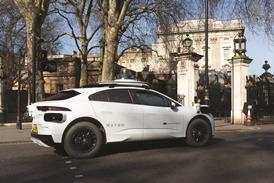
What Hamer does not mention is that the AI age offers an alternative: driverless smart electric pods traveling on predetermined road routes, ideally with a floating population of human conductors to check fares and deter antisocial behaviour.
No doubt the overseas manufacturers of such systems are eyeing up UK opportunities.
Watch out for the astroturf.
Michael Cross is news editor at the Law Society Gazette












No comments yet