























Just Mercy: A Story of Justice and Redemption
Bryan Stevenson
Spiegel & Grau, 2014
★★★★★
Bryan Stevenson began his legal career representing people with little money, little influence and, in some cases, almost no hope. As founder of the Equal Justice Initiative in Alabama, he went on to challenge wrongful convictions, excessive punishment and the assumption that some lives matter less than others.
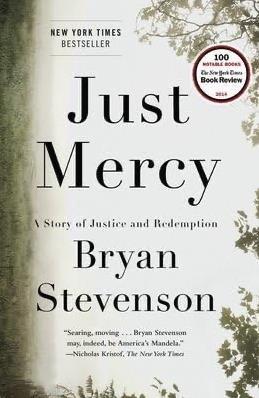
His memoir, Just Mercy, is an extraordinary account of what happens when one lawyer refuses to look away. First published in 2014, it examines capital punishment, racial prejudice and the devastating consequences of injustice. Yet its greatest achievement is not simply exposing the failures of the American criminal justice system: it is revealing the human lives concealed beneath legal proceedings, convictions and sentences.
When conviction becomes certainty
At the centre of Stevenson's narrative is Walter McMillian, a Black man convicted of murdering a young white woman in Alabama. Despite substantial evidence supporting his innocence, McMillian was sentenced to death, while unreliable testimony, suppressed evidence, and racial prejudice helped sustain a conviction that should never have occurred.
Stevenson recounts the years spent challenging McMillian's conviction, confronting not only weaknesses in the evidence but institutional resistance to acknowledging error. What makes this account so unsettling is how readily a legal conclusion, once reached, can become more difficult to challenge than the evidence on which it rests.
McMillian was eventually exonerated. Yet Stevenson refuses to present his release as an uncomplicated victory. Years of imprisonment, separation from family and psychological suffering cannot be undone by a successful appeal. For lawyers, the distinction is fundamental. A conviction does not make evidence infallible, and correcting an injustice does not necessarily repair the harm it has caused.
Defending the person, not the offence
Although McMillian's story anchors the book, Stevenson also introduces children sentenced to die in prison, people experiencing serious mental illness, and defendants whose histories of abuse, deprivation and trauma receive little meaningful consideration.
Some are innocent. Others have committed serious offences. Stevenson does not confuse these circumstances or suggest that accountability should disappear. Instead, he challenges the notion that wrongdoing extinguishes a person's humanity or entitlement to fair treatment.
This is one of the book's most important lessons for criminal practitioners. Defending an accused person is not an endorsement of the alleged conduct. It is a commitment to ensuring that the state's considerable powers are exercised lawfully, fairly and on the basis of evidence.
Stevenson's compassion is never presented as a substitute for legal rigour. Rather, it informs his understanding of the people whose lives depend upon it.
The cost of caring
Perhaps the book's most affecting passages are those in which Stevenson acknowledges the psychological burden of his work. He describes exhaustion, grief, frustration and the consequences of repeatedly witnessing suffering that cannot always be prevented.
His account offers a particularly valuable insight into criminal practice. The expectation that lawyers remain objective is entirely reasonable. The expectation that they remain psychologically untouched is not.
Stevenson does not romanticise professional endurance. His persistence is remarkable precisely because the work is frequently exhausting, the obstacles considerable and the outcomes uncertain. Some clients cannot be saved. Some injustices cannot be corrected. Yet he continues.
His writing is restrained, humane and remarkably free of self-congratulation. He allows the experiences of those he represents to carry the emotional weight, rather than placing himself at the centre of their suffering.
A lesson beyond the courtroom
Although Just Mercy concerns the American criminal justice system, its questions are relevant wherever lawyers assess evidence, challenge established conclusions or represent vulnerable people.
How readily do legal institutions acknowledge mistakes? When does confidence in a conviction become resistance to reconsidering it? And how do practitioners maintain both professional objectivity and the humanity necessary to recognise the consequences of their decisions?
Stevenson does not offer simplistic answers. Instead, through the accumulated experiences of his clients, he demonstrates why procedural fairness, intellectual humility and persistent scrutiny remain essential to the administration of justice.
Just Mercy is an exceptional and deeply affecting book. It is also an uncomfortable one, particularly for readers accustomed to viewing legal outcomes as the natural conclusion of a functioning system. Stevenson reminds us that justice cannot always be measured by a verdict, a sentence or even a successful appeal.
A decade after publication, its lessons remain remarkably contemporary. This is not simply a book about a lawyer who changed lives, but about the lives that might have remained forgotten had he chosen not to act.
And perhaps that is its most enduring message: the law may provide the machinery of justice, but it still depends upon people with the courage to challenge it, the compassion to see those it has failed, and the tenacity to keep fighting when walking away would be easier.
Rebecca Ward MBA is director of Barristers’ Health (mental health and strategy for the legal profession)






No comments yet