














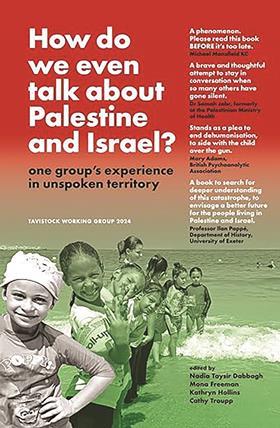
How do we even talk about Palestine and Israel? One group's experience in unspoken territory
Editors: Nadia Taysir Dabbagh, Mona Freeman, Kathryn Hollins, Cathy Troupp
£14.99, TWiG
★★★★★
This courageous book is unique and essential. It is unique because it reaches across a seemingly impossible divide and essential because it opens doors which would otherwise remain firmly closed.
Although written in the wake of 7 October 2023, with a focus on Palestine-Israel, the message is ever more urgent and relevant to the continuous warmongering among the megalomaniacs who believe that the route to peace is born out of the barrel of a gun.
For lawyers who care about the rule of law, international treaties, the Rome statute and the institutions of international law, all of which are being wantonly ignored, bypassed and derided, this endeavour by a truly diverse group of mental health professionals restores faith and hope. It reintroduces a much-needed dimension of humanity and, above all, sanity.
It is a collection of epistles by those who understand the undercurrents of bigotry and prejudice from the perspective of those who are not the perpetrators but incessantly end up as the innocent targets. While such innocents are owed a duty of care and have protected non-combatant status under international humanitarian law, none of this is respected. They are treated unlawfully as collateral damage by the belligerents.
The daily horror for ordinary citizens in Gaza cannot be overstated, nor can it be framed by the events of 7 October. Similarly, the horror for Israeli citizens near the border cannot be limited to one weekend either. An important springboard is a recognition of the historical context for both.
Towards the end of the book is an extremely important eight-page historical timeline; divided into two columns with opposing observations about the significance of the dates, many of which are the same. The roots of understanding and conversation begin with this basic perspective. The mistake is for this to become an excuse and then a justification set in stone, rather than an explanatory precursor for a different world order. Children lie at the heart of our future, and their voices are routinely shut down or out.
But not with this group – who listen carefully and create a group dynamic about the experiences they confront, rather than individual or isolated analysis, exposition of theory or hypothesis. Ninety minutes every two weeks, when experiences would be shared and conversation was possible. However deep-seated and different the perspective, group discussion shed light on behaviour and decision-making, an approach cultivated during the second world war.
The most telling aspects of this book are the tales and poems derived from children who regularly see more than we do, who grasp grief in its raw state. The magnitude of their assimilation is a lesson to be heeded. It is at this point that empathy and compassion must pre-empt the corruption of hatred. Concepts expanded in a chapter entitled ‘Cycles of Insecurity’ provide useful insights for everyone, especially practitioners involved in areas of conflict and reconciliation.
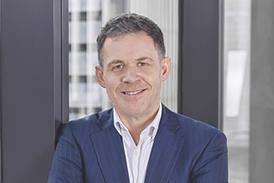
Michael Mansfield KC, Nexus Chambers, Red Lion Square, London, is an author/ broadcaster/ commentator on civil liberties and human rights. He is president of the Haldane Society







No comments yet