






















Scotland Yard’s Supergrass Years: The Flying Squad’s War Against Armed Robbers
Dick Kirby
£25, Pen & Sword
★★★★✩
I remember working in the Midlands in the 1980s and the reactions of local lawyers when a supergrass arrived at court for a trial. Streets would be closed while a motorcade of police vehicles escorted the former suspect who had turned Queen’s evidence. The police said witness security was at risk, but the cynical felt the display was for show.
This book is written by a former officer who spent years with Scotland Yard’s Serious Crime Squad and the Flying Squad. He is an established author and media expert on crime and the police.
This reads like a fast-paced thriller. Most of it is set in the 1970s and 1980s, telling the tales of organised crime and crooks who tried to strike deals when arrested. Turning Queen’s was not a safe option and there was a special supergrass wing in at least one prison. Some, if not most, were given new identities and police protection. Some met with a violent and sudden death.
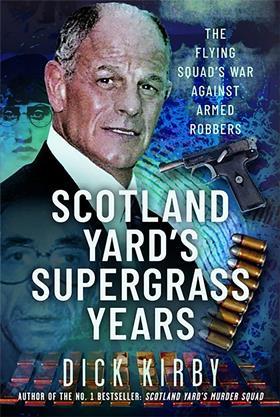
This book describes a period in criminal history pre-Police and Criminal Evidence Act and the Crown Prosecution Service. There is a strong feeling that this was the age of real coppers doing proper police work. There are vivid descriptions of the characters on both sides of the fence. Police officers have an unmistakable look about them: the steely and impassive, searching gaze.
The history of Scotland Yard’s Flying Squad is interesting. The Criminal Investigation Department was founded in the 1870s based on the Paris Sûreté, which in turn had been founded at the turn of the century by an ex-convict who recruited a team of 24 ex-criminals. It takes a thief to catch a thief. After the first world war, there was a crime wave in London leading to a ‘mobile patrol experiment’, later referred to by the Daily Mail as ‘flying squads of picked detectives with motor transport’. ‘Mobile patrol experiment’ does not have the same ring to it. These offences were accompanied by shocking and pointless violence.
The number of armed robberies increased again in the 1970s, leading to pressure to get convictions. Supergrasses offered evidence to convict others and clear up unsolved crimes, but was their evidence reliable?
Why did all this come to an abrupt end? I suppose the era of wage snatches is gone, as few places hold large amounts of cash. Bank raids are less common as there are fewer banks and they hold less cash too. Some courts and judges became wary of evidence offered in this way. The temptation to exaggerate and add imaginary crimes in return for a new life in retirement must have been significant.
This book is an informative and exciting read, and a great tribute to the officers who worked at Scotland Yard.
David Pickup is a partner at Pickup & Scott Solicitors, Aylesbury






No comments yet