























AI in Criminal Law
Dr Áine Josephine Tyrrell and Ben Douglas-Jones KC
£50 Bloomsbury
★★★★✩
AI in law continues to make legal headlines, and not always for the right reasons. In ANPV and another v Secretary of State for the Home Department (App No UI-2025-00373 & UI-2025-00374) in September 2025, Judge Blundell made excoriating criticisms of a barrister who had presented the court with false authorities. It was clear that the barrister had used AI, which had generated cases that did not exist.
Using a free general AI for legal work is presently a very bad idea, evidently. Lawyers are better advised to look for reliable, informed sources such as this new work for criminal practitioners. Unusually for a legal textbook, it is produced in an A4 format. It is written in an accessible style and intended to provide practical guidance rather than theoretical reflection.
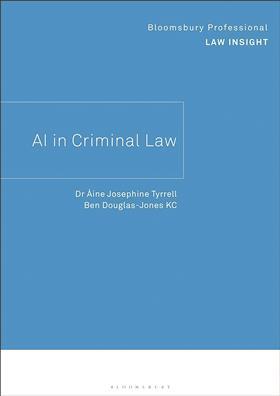
The book is divided into three parts: (i) an introduction to AI and data protection for lawyers; (ii) the two sides of AI in crime – how it is being used by criminals and in crime detection and prevention; and (iii) AI in legal practice, crucially including guidance on how to use it when preparing skeleton arguments, advice and submissions, along with conferencing, transcription, translation and talks. The third section also includes a discussion of AI and judges, who already have access to Microsoft’s Copilot. The final chapter looks at the future of AI in criminal law, necessarily involving much speculation.
Practitioners will find much value throughout, from choosing which AI to use, ensuring data protection (a very daunting area), and using AI for summarising evidence, drafting submissions and otherwise saving all lawyers’ most precious commodity – time. The more input and parameters given by the user at the outset, the more likely AI is to provide sound work. To that end, the book gives practical examples of the sorts of prompt to use when setting AI legal tasks.
Returning to the ANPV case, just as concerning as the barrister’s inept use of AI was the fact that (as the judge found) he was simply not competent at reading cases. As students become more reliant on AI (despite the rearguard action of any legal academics still attempting traditional teaching), that vital skill may be eroded further, meaning future lawyers will lack the skills to know when AI is wrong. That may yet prove the greatest danger of all to the profession.
James Wilson FRHistS is an independent legal author. His most recent book is Lord Denning: Life, Law and Legacy (Wildy, Simmonds & Hill, 2023)









No comments yet