

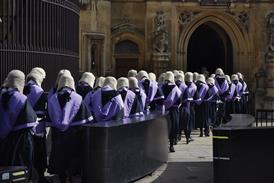





















All lawyers know that the criminal courts derive some of their authority from pomp and circumstance. That is why barristers wear wigs and judges climb into fancy robes. Justice must be seen to be done – in technicolour, where necessary, to engender public confidence.

Part of that public ritual is now deemed to be attendance by convicted criminals at their sentencing. Once viewed as a legal technicality, this has become an emotive public policy issue as victim support has climbed the political agenda. Especially when notorious murderers decline to enter the dock.
Last week's announcement that ‘cowardly killers who dodge sentencing’ will face new prison punishments is likely to meet with near universal approval, at least in principle. The government has already changed the law so offenders who refuse to attend sentencing can face a fine or up to two years’ additional imprisonment for contempt of court. ‘But for murderers already facing decades behind bars, this can offer little deterrent,’ says the MoJ. Killers who refuse to face their victims’ families at sentencing ‘could now be stripped of privileges or kept in cells for weeks on end under tough new rules’.
Few will oppose this, wherever they sit on the political spectrum. But one wonders how ‘tough’ these measures really are.
Try and assume the mindset of a convicted killer. Loss of prison privileges for almost three months and cellular confinement for ‘up to’ three weeks may not appear especially daunting. You will be inside for a very long time and may even prefer isolation at the outset. No social visits for ‘nearly’ a month seems almost tokenistic. See you on the other side.
Of course, many people want refuseniks dragged into their sentencing hearing by force. ‘No measure can guarantee prisoners attend their sentencing hearing,’ says yesterday’s government press release. Really? Section 1 of the Victims and Courts Act 2026, which has not yet been brought into effect, will allow custody officers to use ‘reasonable force for the purpose of delivering the offender to the courtroom’.
A layperson might struggle to reconcile those two statements. Perhaps all depends on what counts as ‘reasonable force’ – and the potentially perilous ramifications of using it.









No comments yet