
















Here is a feel-good tale, at a time of year when feel-good tales are expected as part of the seasonal background, along with tinsel and carols.
The story plays out against the latest buzz phrase of ‘civilisational erasure’, which is certainly not very Christmassy.
Those who are mentally strong enough to follow every zig and zag of the news will know that the latest version of the US National Security Strategy, published last week, announced that the current US administration believes that various European countries risk becoming majority non-European, and that, therefore, Europe faces civilisational erasure. The US government sees it as part of its national security strategy to cultivate resistance to Europe’s current trajectory.
This fear mostly focuses on what is seen (by believers in erasure) as an Islamic threat to European identity.
My feel-good story features similar notions of civilisational erasure, but the fear this time has arisen within an Islamic government. We appear now to be in a state of affairs where we need to keep ourselves alert wherever we go in the world, to avoid civilisational erasure by someone else.
Step onto the stage, Tunisia. Last year its President, while addressing Tunisia’s national security council, called for urgent action to halt the flow of sub-Saharan migrants. He said that the undeclared goal of successive waves of illegal immigration was to turn Tunisia into a purely African country without affiliation to Arab and Islamic nations; it was a criminal arrangement made to alter the country’s demographic structure. In this set-up, we merely have different groups in the roles of erasing or being erased.
What has this to do with lawyers? Well, a short while later the topic was being discussed on TV, and Sonia Dahmani, a well-known Tunisian lawyer and commentator, made a sarcastic comment in response to another commentator who echoed the sentiment of sub-Saharan migrants wanting to settle in Tunisia. She was asked whether the migrants would stay and conquer Tunisia. Sonia Dahmani replied: ‘What kind of extraordinary country are we talking about? The one that half of its youth want to leave?’
On social media, some thought this joke was degrading to Tunisia. Two days later she was summoned to appear quickly before a judge, without any reason being given. She refused to go without notification of a reason – although media reports said it was for spreading false information with the aim of undermining public safety and for incitement to hate speech. The judge ordered her brought to the court, and the day after that she was violently arrested by masked police in the premises of the Tunisian Bar itself.
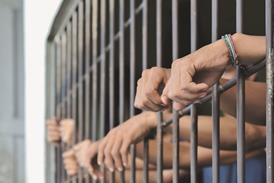
She was initially sentenced for insulting Tunisia and spreading false information intended to harm it. Since her arrest she has faced 5 separate court proceedings and has been convicted 3 times, with further trials being planned and a potential total sentence of 24 years.
Not surprisingly, there was protest at her imprisonment both locally and abroad. The European Parliament, among many others, passed a resolution calling for her immediate and unconditional release, and denouncing her current conditions, ‘including inadequate medical care, limited communication with her family and legal counsel, and delayed hearings, alongside multiple cases aimed at extending her detention’.
One of those which stood by her was the Council of Bars and Law Societies of Europe (CCBE), the pan-European voice of European lawyers through their member bars, which awarded Sonia Dahmani its annual human rights award for 2025.
I was there on 27 November for the award ceremony, which took place during a CCBE Plenary Session in Paris in the presence of representatives of all European bars, including those from the UK. (You can get out your hankies now.) Sonia Dahmani’s sister, who represents her abroad during her incarceration, was on stage for the presentation, and about to start her speech, when a lawyer in the audience shouted out: ‘She’s been freed!’
Unbelievably, Sonia Dahmani had just been released from prison. Her sister was in tears, and then rang Sonia from her mobile phone. Sonia answered the call, the sisters exchanged some excited words, after which the sister on stage held up to the audience the video of Sonia on her screen, apparently on a bus being driven to freedom. With the phone facing the audience, all the European lawyers in the room stood up and gave Sonia Dahmani a long standing ovation. There was not a dry eye in the house, certainly not from the sister on stage who was overcome with happiness.
Of course, it is not yet over for Sonia Dahmani, her release being conditional and court proceedings still outstanding.
But the Christmas message – yes, from an Islamic country – is clear: good things are possible, and maybe just as importantly, that one of the potential responses to claims of civilisational erasure is to make a joke.








3 Readers' comments