





















Over the past few months I've attended a few events about the Windrush immigration scandal, renamed by victims and campaigners as the 'Windrush Home Office scandal'.
An event in parliament last summer highlighted lawyers' extraordinary efforts to help victims secure compensation. King’s Legal Clinic hosted The Promise, a play that offered a unique take on the scandal by involving the audience in the drama from start to finish. Baroness Floella Benjamin hosted an event in parliament last autumn unveiling the Windrush Justice Inquiry Report, a blueprint to shape a community-driven, trauma-informed 'People's Inquiry'.
But it's the most recent event that I attended that I want to talk about here: the second Windrush Justice Symposium, where I witnessed what a community-driven, trauma-informed event inquiry looks like.
The venue, the Bernie Grant Arts Centre in North London, felt significant. Bernie Grant, one of the first black MPs, elected to parliament in 1987, fought tirelessly against racism and discrimination. The agenda for the day was carefully worded. ‘You are invited to take part in ways that feel right for you: listening, speaking, writing or stepping out at any time,’ it began.
This was the second symposium, designed to build on themes discussed at the first symposium hosted by London South Bank University in January. Campaigner Patrick Vernon OBE stressed that no one was expecting victims to share their lived experience - the purpose of the second symposium was to look at how people’s lived experiences can be used to design a process that gets to the truth and brings accountability.
Everyone in the room - victim-survivors, family members, campaigners and lawyers - helped set ground rules for the day. These included respectful listening (‘one mic, one voice at a time’), speaking in plain language, and focusing on the facts.
One of the workshops explored what justice means to those who have been affected and the pathways that matter most now. Responses included an apology from a place of understanding, legal aid, healthcare, housing, transparency and accountability. Justice also looks like responsibility, an acknowledgment of harm, trauma support, correcting historical erasure and compensation. Suggested pathways included a criminal investigation and the courts, a statutory inquiry, reports, archives and educational reform.
Another workshop explored survival mechanisms that have helped people get through the hardest moments and support measures people would like to see put in place. Music, we discovered, was a common coping mechanism, as was exercise and community engagement. Suggested support measures included a compensation eligibility flowchart, assistance through advocacy, taking part in consultations and parliamentary events, and a streamlined centralised system to help people.
It was an emotionally heavy day, but one that never felt overwhelming. Wellbeing practitioners were always available when needed. A quiet space was made available at all times. The atmosphere was one of respect, support and community. That was undoubtedly down to the incredible team at the Windrush Justice Clinic and a brilliant team of student volunteers.
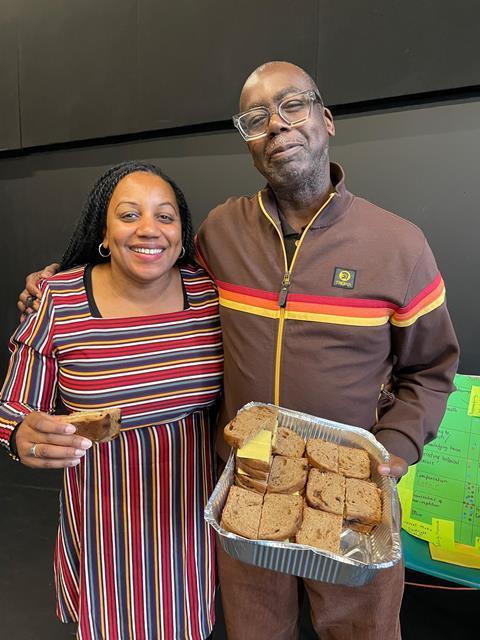
And I end with three beautiful moments that made this symposium particulary special: amazing performances by musician Joel Marquis-Kumba (also known as Grimm Dreamurr) during lunch and to close the day; and Patrick’s homemade bun and cheese. Bun and cheese, an attendee told me, is a Jamaican sweet and savoury treat traditionally eaten during Easter. For those who want to learn more, here's a BBC article about my new favourite food.













No comments yet