
























A landmark case on the alleged theft of gold gaming tokens stakes out more legal ground on the unfamiliar terrain of digital assets
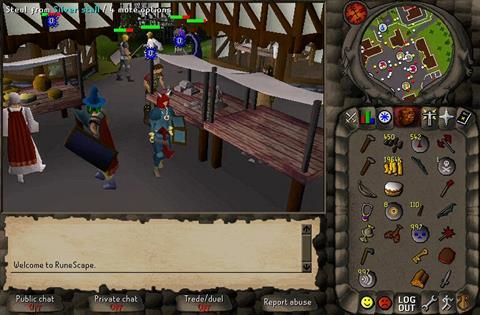
Ordinarily, a person who allegedly used their programming skills to appropriate gold worth £543,123 from their employer might struggle to argue that their conduct was lawful. But what if the ‘gold’ existed only as tokens for use within a computer game?
The question led to a landmark Court of Appeal case. Its ruling in R v Lakeman in January was cited last week at an event to mark the publication of a practical guide to applying a new legal regime for digital assets.
In Lakeman, the ‘gold pieces’ were tokens accumulated by players of Old School Runescape, an online role-playing game. Although forbidden under the game’s rules, the tokens are widely traded for cash in the real world. The prosecution alleges that Andrew Lakeman, a content developer at the game’s developer, hacked into 68 players’ accounts and stripped them of gold pieces valued at £543,123. Among other indictments, he was charged with theft under the Theft Act 1968, which he denies on the ground that the gold pieces were not property within the meaning of the act. A preparatory hearing on the question agreed, with the judge finding the gold pieces were not rivalrous – use by one person did not prejudice their use by another – and thus constituted ‘pure information’.
On appeal, however, Lord Justice Popplewell ruled that physical existence is not a necessary ingredient of property. The virtual gold pieces ‘are real functional things distinct from the code which creates them’. He continued: ‘They are capable of being subject to dishonest dealing which deprives their possessor of their use and value. It would be surprising and unsatisfactory if such dishonest dealing did not amount to the offence of theft.’ The judges allowed the appeal; the case is due to go before the Crown court in Cambridge in September. The Gazette understands that the defendant has pleaded not guilty to all five charges in the indictment.
‘The judgment’s analysis of what constitutes property has implications far beyond gaming,’ said Flavia Kenyon of 33 Chancery Lane chambers, who appeared for the Crown Prosecution Service. Kenyon was among the speakers at an event last week to mark another landmark in the development of the law around digital assets: the latest statement from the UK Jurisdiction Taskforce, set up under the MoJ-funded LawtechUK initiative, to ensure that England and Wales remains the jurisdiction of choice in the digital economy.
'[Virtual gold pieces] are capable of being subject to dishonest dealing which deprives their possessor of their use and value. It would be surprising and unsatisfactory if such dishonest dealing did not amount to the offence of theft'
Lord Justice Popplewell, R v Lakeman (Appeal)
The statement stems from a Law Commission report in 2023 on digital assets, which pointed to the need to protect ownership of a third category of ‘thing’. The recommendation was enshrined in law through the Property (Digital Assets etc) Act 2025. The measure states briskly that, ‘A thing... is not prevented from being the object of personal property rights merely because it is neither (a) a thing in possession, nor (b) a thing in action.’
The legislation makes no attempt to define a third-category thing, leaving its boundaries to be developed through the common law. It also decided that property rights should be defined by control, rather than possession. ‘Control is the core of the issue – it’s the bridge that takes the law of England and Wales into the digital realm,’ said Professor Sarah Green of the University of Bristol, who as law commissioner steered the work on digital assets.
Green is among the authors of the UK Jurisdiction Taskforce Report on Control of Digital Assets, which sets out to turn theory into common-law practice. It is a ‘practical explanatory guide’ to assist court users and the judiciary, covering the basics of blockchain and other crypto-based technologies (including an excellent explanation of the principle behind dual-key encryption) and smart contracts. It also looks ahead to the world of quantum computing, which threatens to compromise today’s security protocols.
It has been a busy year for the taskforce, set up in 2019 under the chairmanship of the master of the rolls. Next up will be its report on tortious liability for harms caused by AI. This is expected to appear ‘this side of the summer’. With self-driving car operators due to start running public taxi services on London streets this year, it could not be more topical.
At last week’s event, Kenyon described having to sit down with an enthusiast to learn the basics of Old School Runescape.
‘I’d never played it,’ she said, quickly adding, ‘and I’m never going to play it!’
But she will not be the only lawyer navigating digital terra incognita in the months ahead.
This article is now closed for comment.













6 Readers' comments