





















A shocking new report lays bare the ‘machinery of repression’ and systemic persecution that Iranian lawyers face, but what can the international legal community realistically do?
Mohabbat Mozafari, born in 1989, was a lawyer and a PhD student who represented women detained during the 2022 protests against Iran’s hijab laws. In October 2022, she was arrested and held in Tehran’s Evin Prison, where she suffered beatings and torture. In February 2023, shortly after her release, she died from a brain haemorrhage.
Mozafari is among the lawyers whose courage is celebrated in the exhibition On the Front Line for Justice, which opened in the Law Society’s library this week. She is one of three women lawyers who ‘died in suspicious circumstances’ after representing people arrested in the 2022 protests.
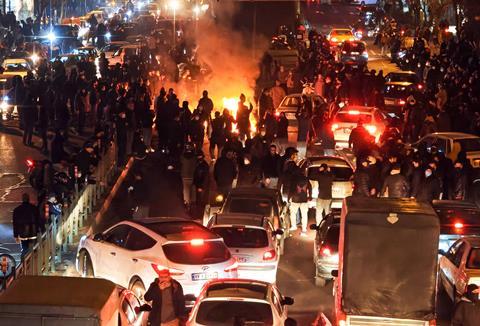
With Iran apparently once again beset by protests – though independent news and almost all internet communications are cut off – the global legal community is bracing itself for more ‘suspicious’ deaths.
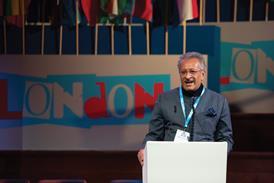
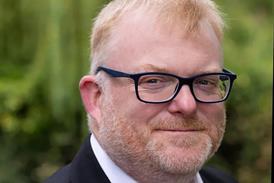
The International Bar Association’s Human Rights Institute this week joined the chorus of outrage against Tehran’s clampdown on protests. ‘The Iranian authorities are waging a campaign of terror against their own citizens,’ said co-chair Mark Stephens. ‘This is not law enforcement – it is the organised maiming and slaughter of civilians, with attempts to conceal evidence of these crimes. The international community must act to stop this cycle of rampant impunity, and states must urge the UN Security Council to refer the situation in Iran to the International Criminal Court to ensure perpetrators are held accountable.’
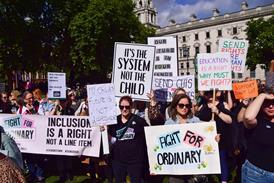
IBAHRI co-chair Hina Jilani noted that Iranian officials are calling for protesters to be condemned to death by special branches of the Revolutionary Courts. ‘We witnessed this same machinery of repression during the “Women, Life, Freedom” protests in 2022: expedited trials, forced confessions, executions and total impunity for those responsible,’ she said. ‘The Revolutionary Court systematically denies defendants access to independent lawyers, due process and even the most basic safeguards of justice.’
The lack of such safeguards and the scale of the threats facing Iran’s lawyers are laid bare in a report published last month by the IBAHRI and UK-based campaign group the Centre for Supporters of Human Rights*. Apart from many brief but gruelling individual case histories of imprisonment and murder, No Defence tells a story of the systematic persecution of a profession which had been legally independent since 1953, following the 1979 revolution.
'This is not law enforcement – it is the organised maiming and slaughter of civilians, with attempts to conceal evidence of these crimes'
Mark Stephens, IBAHRI co-chair
A particular feature of Iran’s justice system is control of the profession by the government-appointed judiciary, for example through a parallel bar association.
This ‘has undermined the independence of legal practice, allowing the judiciary not only to interfere in the selection of lawyers but also to use this parallel institution as a tool to control and oversee legal proceedings,’ the report observes. Successive laws have given the judiciary powers to vet lawyers’ practising rights: a 1997 measure restricts the issuing of a lawyer’s licence to individuals who have ‘demonstrated a belief in, and practical commitment to, Islamic principles and rulings’.
Predictably, women lawyers carry an especially heavy burden. According to the report, they face ‘social, cultural and legal restrictions that undermine their professional performance and independence’. The mandatory hijab, for example, ‘directly affects their presence and participation in public and professional life’.
But what, practically, can the international legal community do about the situation? With understatement, the No Defence report notes that: ‘Given the lack of genuine political will among authorities to improve conditions, broad structural reforms may not be immediately practical under current circumstances.’
However, the report offers a series of ‘short-term and practical measures’, including establishing supportive networks and oversight mechanisms. Exiled Iranian lawyers (the post-1979 diaspora is a largely unsung immigration success story in the UK) could play a key role.
However, in its statement this week, the IBAHRI suggests one area where pressure could be applied to the UK government. It calls for states to take coordinated action to proscribe the Islamic Revolutionary Guard Corps – the real power in the Islamic Republic – as ‘an out-of-control militia’. UK governments have so far resisted such moves on the grounds of wanting to keep diplomatic channels open – the UK’s embassy occupies a desirable patch of Tehran real estate, next to its Russian counterpart.
The IBAHRI also calls for the imposition of targeted sanctions against those responsible for the clampdown and for governments to ‘initiate criminal investigations under the principle of universal jurisdiction, with a view to pursuing arrest warrants and advancing justice and accountability for the serious crimes committed in Iran’.
That, for the moment, seems the limit to what the legal profession can do.
* No Defence: A Report on the Status of Lawyers and the Bar Associations in Iran, IBAHRI










1 Reader's comment