






















In a time of radical transformation, the Lawyers in Local Government spring conference urged members to embrace good governance, concentrate on the basics and respect the democratic mandate
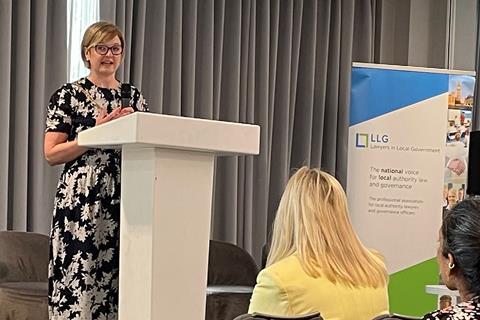
Local government reorganisation, devolution, new towns, planning, procurement changes, 25-year PFI contracts expiring and – following May’s local elections – political volatility. ‘We meet at a time of significant change for local government, perhaps unprecedented change. We face multiple challenges,’ Lawyers in Local Government president Helen Bradley told the membership organisation’s spring conference in Birmingham last week.
Lawyers are at the centre of it all. Asked to describe in one word how local government feels right now, ‘uncertain’ came up the most, followed by ‘chaotic’, ‘manic’, ‘busy’, ‘unstable’, ‘pressured’ and ‘challenging’.
Lawyers must sustain effective, lawful and trusted governance within systems that continue to evolve, the conference heard. But how? ‘Our work is not about directing outcomes,’ Bradley said. ‘It is about ensuring that decisions are taken properly – lawfully, transparently and with a clear understanding of risk and accountability. That requires more than just technical expertise. It requires judgement, confidence and the ability to engage constructively with members, colleagues and peers.’
Local government lawyers are governance lawyers, Bradley added. ‘Whatever your area of practice, you are contributing to lawful, accountable decision-making. Conversations about standards and ethics sit at the heart of your work, not because they impose constraints but because they build confidence. Good governance should not create fear or unnecessary caution. It should enable clear, informed decision-making.’
Most in the room saw local government reorganisation – Whitehall’s agenda to replace the two-tier system with single-tier unitary councils – as the biggest change affecting them over the next 12-18 months.
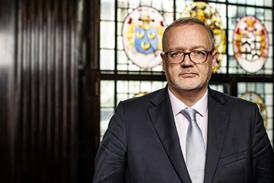
‘Do not lose sight of the basics of fundamentals,’ Owen Mapley, chief executive of the Chartered Institute of Public Finance and Accountancy, told the conference.
'Sometimes organisations and parties are looking to change things quite radically… Are we showing enough respect for their priorities, the democratic mandate? Many are new. Let’s be patient'
Owen Mapley, CIPFA
Mapley cautioned against transformation plans ‘that might have heroic assumptions in them but no indicators to say if they’re on track for delivery’. Consistent, shared and accurate data is essential. ‘Trawl through filing cabinets, look through the contracts, making sure everything is identified,’ he advised.
Capacity will be a challenge, but local government reorganisation ‘cannot be done as a side-of-desk add-on in addition to whatever else you have got going on’.
Mutual respect between elected councillors and officers will be vital. ‘Sometimes organisations and parties are looking to change things quite radically… Are we showing enough respect for their priorities, the democratic mandate? Many are new. Let’s be patient,’ Mapley said. Importantly, do not overreact. ‘Pick your battles. Focus on the ones that need to be addressed because they are corrosive.’
Those last two seem particularly relevant as lawyers navigate a fragmented political landscape following last month’s local elections.
‘Insurgent’ councillors, the conference heard, won’t belong to a mainstream party. They will have a strong self-belief and anti-establishment focus, operate outside traditional political structures, and value personal right to free expression over building relationships with others, especially officers.
‘Insurgent councillors will have a robust attitude to Article 10 (freedom of expression),’ said Wilkin Chapman Rollits’ Jonathan Goolden. He recommended lawyers read the Standards Commission for Scotland’s advice note on Article 10 and model code of conduct, and 2014’s Heesom v Public Services Ombudsman for Wales.
Discussing ethics for in-house lawyers, Sharon Bridglalsingh, Milton Keynes’ director of law and governance, said people ‘as humans act really weird when change takes place’. For instance, teams might be working fine one day, but then the next day their council goes into no overall control and things aren’t working.
Bridglalsingh said: ‘The minute you advise on a decision, the minute everything is out there – the court of public opinion works faster than anything else… We’re now seeing more extreme political positions. We’re apolitical, but we’re humans.’
Lawyers were advised to be consistent and predictable. ‘Observe. What are people really saying? What are they saying through their body language? What are they saying when they do not reply to an email? What are they saying when they reply incessantly?’ Bridglalsingh said.
Lawyers should be professionally curious. ‘Questions do not need to be difficult questions. Be someone who people want in the room.’ Though, she added, ‘there’s a fine line between independence and influence’. And ‘resist the need to answer in the moment – unless it’s a full council meeting and you have to give advice there and then’.
Lawyers were advised to read the Law Society’s in-house ethics framework, which includes interactive local government scenarios, to embed ethical thinking in their organisations, and to learn from others, such as LLG. At a time of unprecedented change, local government practitioners will need all the support on offer.













No comments yet