


















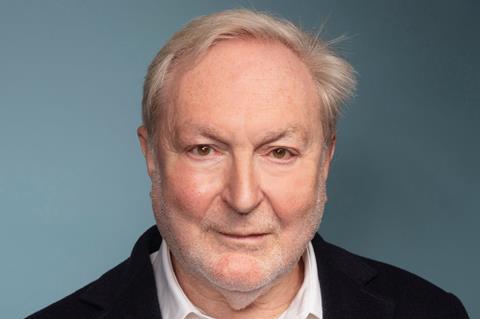
Paul was much more than a former principal to me. He was my mentor and one of the most important influences on my professional life. I can say without exaggeration that he played a decisive role in making me the lawyer I am today.
From the moment I began working with him, Paul gave me responsibility far beyond my years. He trusted me, stretched me, challenged me and, most importantly, taught me how to think. He had a remarkable ability to see both the fundamental principle at the heart of a problem and the unexpected lateral route to its solution. It is a rare gift and one that I have carried with me throughout my career.
He was also fiercely loyal to those who worked for him. Whenever difficulties arose, Paul never stood behind his team; he stood in front of them. Many years later, I still find myself drawing upon lessons I learned simply by watching him handle people, problems and pressure.
Two memories immediately came to mind on hearing the news. As his articled clerk, I found myself threatened with a complaint to the Law Society by an irate solicitor. Paul replied to him that, as I was not yet a solicitor, the Law Society had no jurisdiction over me. He then winked and said, 'Of course, they do have jurisdiction over me. Let’s see if he knows that?'
On another occasion, after I had rather summarily terminated a call with a solicitor which had become exceptionally heated, the solicitor rang Paul to complain. Paul’s response was that I had considered the caller so lacking in self-control that I had ended the call merely to spare him further embarrassment.
That combination of intelligence, courage, wit and loyalty was quintessentially Paul.
He forged a generation of lawyers by giving them their heads, trusting them with responsibility, and then backing them when they needed support. I was one of the many beneficiaries of that generosity.
Before he became the undisputed grandee of healthcare law, Paul had already built a remarkable career acting for some of the biggest names in British popular music, including Tom Jones, Engelbert Humperdinck, Gilbert O’Sullivan, Freddie and the Dreamers, Johnny Kidd & the Pirates, The Applejacks, Paul Jones, and Peter and Gordon. Paul always understood that law is ultimately about people. Whether the client was a pop star, a care home operator or a regulator, he combined practical judgment with an instinctive understanding of human nature.
Many lawyers acquire expertise. Paul acquired stories. His years in the music industry gave him a sense of theatre, timing and perspective that never left him. He knew when to fight, when to charm and when to let silence do the work.
Paul was proof that the best lawyers are not merely technicians. He had spent years advising some of the biggest artists of their generation before turning his formidable energies to healthcare law. He brought something of the music business with him: creativity, resilience, humour and an appreciation that personalities are often as important as legal principles.
The wonderful thing about Paul was that he could move seamlessly from discussing regulatory law at the highest level to recounting a story from his years representing music legends. His conversation was as eclectic as his career and all the richer for it.
Paul possessed a mischievous sense of humour that was never switched off. He enjoyed puncturing pomposity, exposing nonsense and rescuing tense situations with a perfectly timed observation. Often you did not realise quite how funny the remark was until several minutes later.
His humour was not something separate from his lawyering. It was part of it. Paul understood that disputes involve people, and people under pressure. A well-timed joke, a raised eyebrow or a wickedly phrased letter could often achieve more than a dozen aggressive ones.
He had a gift for making difficult situations bearable. Clients trusted him because he inspired confidence. Colleagues loved working with him because he made even the toughest days enjoyable. There was always laughter around Paul.
Paul’s wit was legendary. It was never cruel and never showy. It simply reflected a quick mind that saw the absurdity in life before anyone else did.
When I look back on my career, what strikes me is not simply how much Paul taught me, but how much fun he made it. He taught me that the law is a serious profession, but that lawyers need not take themselves too seriously. His intellect commanded admiration; his humour inspired affection.
Paul lived several professional lives in one. He represented chart-topping musicians, built a practice that helped define healthcare law, mentored generations of lawyers and remained curious, engaged and effective for more than fifty years in practice. Yet for all his achievements, what people will remember most is his generosity, his laughter and the unwavering loyalty he showed to those fortunate enough to be in his orbit.
Looking back, I now realise that Paul’s greatest achievement was not the practice he built or the clients he advised. It was the people he shaped. There are lawyers practising across the country who still hear his voice when confronted by a difficult problem. I know I do.
The law has lost a fine practitioner. Those of us who had the privilege of learning from him have lost something much greater. We have lost one of the people who helped make us who we are.
And long after the details of individual cases have faded, the lessons Paul taught, the confidence he instilled and the example he set will continue to shape lawyers who never even knew his name, but who were influenced by those he trained. That is the mark of a truly important life. Not merely that it was successful, but that its influence endures.
Paul’s career may have come to an end, but his impact will continue for many years to come. In that sense, his work is not finished at all. Indeed, it is still unfolding through the lives and careers of those he inspired.
- The family has advised that Paul's funeral will take place on Wednesday 9 September at 1pm, St Marylebone Parish Church, 17, Marylebone Road, London NW1 5LT. Mourners are invited to wear at least one item of bright clothing in celebrate of his full life. The family has requested no flowers, but donations to Care Workers Support will be welcomed.
Mark Stephens CBE, a consultant at Howard Kennedy, was Paul Ridout’s first articled clerk in 1979









3 Readers' comments