
























Government spindoctors are hard at work attempting to render controversial SEND reforms palatable to MPs and affected families. Fears about the authenticity of the government’s ‘listening’ exercises appear well founded

The Department for Education has been filming reels for Facebook in which ministers talk straight to camera, sometimes using props to aid the point they are making. Education secretary Bridget Phillipson has appeared in quite a few (pictured).
On 10 March, in a reel viewed more than 34,000 times, Phillipson explains DfE’s consultation on proposed reforms to support for special educational needs and disabilities (SEND). Seated beside a union flag, she says: ‘The consultation is our way to make sure we’re hearing your views before any final decisions are made and your feedback will make a huge difference to improving outcomes for children with special educational needs and disabilities. We want to hear from everyone with an interest in SEND.’
Achieving and thriving
On 23 February, DfE published its education white paper ‘Every child achieving and thriving’. Its guiding principle is a focus on local ‘mainstream’ education settings. In the foreword, Phillipson writes: ‘Children with special educational needs and disabilities must be able to attend their local mainstream school and have their needs met by highly trained teachers, leaders and support staff, driving the highest standards for all.’
She also cites the other driver for education reform: ‘We will not tolerate the blind eye that has been turned to the underperformance of white working-class children, and we will back aspirational school leaders to work in low-income communities.’
SEND and white working-class pupils are frequently mentioned in the same breath throughout the white paper. But other than understanding that the guiding principles of government education policy are ‘mainstream’ and ‘local’, the document does not shine much light on SEND reform.
Instead, the detail is set out in the accompanying consultation paper ‘SEND Reform: Putting Children and Young People First’.
In summary, the consultation paper makes clear, the government has decided that far, far fewer pupils will have an education, health and care plan (EHCP). There are to be three ‘layers’. If a pupil needs more than the ‘universal offer’ in education, they might receive, seemingly at the say-so of their school, ‘targeted support’, ‘targeted plus’ or ‘specialist’.
‘Targeted’ pupils are intended to get support for ‘ongoing and commonly occurring needs which cannot be met by the universal offer’ (the universal offer meaning standard education provision). ‘Targeted plus’ pupils will have an individual support plan (ISP) which ‘may include time-limited support on an alternative setting’. ‘Specialist’ is the category for children with complex needs – and the only category of pupil who will have an EHCP.
DfE has allocated funds to support the creation of a new SEND system: £3.7bn ‘to create over 60,000 more specialist places across early years settings, schools and colleges’. ‘Teachers will be trained to meet the needs of children with SEND, based on the latest evidence,’ DfE says, ‘backed by £200m of investment.’ That would, Guardian journalist John Harris has pointed out, amount to each teacher receiving two days’ training.
The Gazette has asked DfE if these sums are a one-off ‘investment’, but has not received an answer.
DfE has also pledged that 90% of councils’ ‘historic’ SEND deficits ‘up to 2025-26 will be written off through the largest intervention on SEND deficits ever’. This is subject to the condition that councils receiving help draw up a DfE-approved local SEND reform plan. Such plans, according to documents seen by Schools Week, should include ‘little to no’ measures to increase special school or alternative provision capacity.
The powers of the SEND Tribunal will be significantly weakened. While DfE insists that the tribunal will remain as a ‘backstop’, it will lose the power to determine in its judgment the educational setting in which a pupil with an EHCP will have their needs met. It will be able to quash a local authority decision on a setting – but that is all.
In the words of the consultation paper: ‘The tribunal will consider whether the local authority’s decision is reasonable; if they find against the local authority, they can quash the original decision and order the local authority to reconsider. However, the tribunal will not name the placement for the child.’
For pupils in the three layers, the SEND Tribunal will be able to direct that they should be placed in a different layer. But it is not a forum that will adjudicate on whether the contents of individual support plans are correct or are being met.
The consultation paper asks that submissions focus on the questions it has set. None of those questions relate to the remit of the SEND Tribunal. The reason for that omission has since become apparent – the secretary of state has already made a decision (see box, p12).
Saving money
DfE is insistent that the SEND reforms are not driven by the need to save money. But there is no doubting that an ever-increasing SEND bill has created enormous financial pressure on local authorities. The Institute for Fiscal Studies estimates the current annual funding shortfall at £6bn.
In that context, £3.7bn is welcome, but insufficient.
Over many years, a sustained campaign by the Local Government Association and the County Councils Network has highlighted their members’ spiralling ‘SEND deficits’, and urged government to replace legal protections for provision with a requirement that local authorities should use their ‘best endeavours’.
‘Do not,’ Labour MPs have been told, ‘accept that schools are cash-strapped… do not accept that a motive for the government’s changes is cost.’
Yet, when the white paper, long rumoured, was announced last summer, it was the chancellor of the exchequer, not the education secretary, who informed parliament of its preparation.
'Big numbers, which are hard to conceptualise, are clearly being used to baffle, rather than actually deal with the problems'
Ed Duff, HCB Solicitors
The SEND reforms lean heavily on what DfE describes as ‘New nationally defined “Specialist Support Packages” designed by experts, based on evidence…’. Throughout the white paper’s SEND consultation document, the words ‘expert’ and ‘evidence-based’ are leaned on heavily. It points to an intention to decide, centrally, categories and levels of support from the view of a single controlling mind.
And there are contradictions. DfE says it will ‘move away from the increased reliance on diagnosis’ in setting support. Yet experts will allow it to categorise and define support levels for ‘commonly occurring’ conditions (for which you can read, and I simplify only a little, autism and ADHD).
‘The resources, when broken down by the number of schools, or the number of LAs, are embarrassingly small,’ says Ed Duff, education law specialist at HCB Solicitors. ‘Big numbers, which are hard to conceptualise, are clearly being used to baffle, rather than actually deal with the problems.’
The layered system ‘is a really good idea’, Duff concedes. ‘With a proper system behind it whereby schools can access support, advice, assessment and expert guidance, this … absolutely could work. But the resources suggested are woefully inadequate, and it seems to be designed around the idea of encouraging mainstream schools for children with SEND. There already is a presumption in favour of that, so that whole “ethos” that the white paper claims is nothing new.’

Disputes
'I am clear in my view – these proposals will not strengthen rights, and they will leave children and parents without adequate rights of redress when things go wrong'
Polly Sweeney, Rook Irwin Sweeney
In its consultation paper, DfE says: ‘As we invest in the system, we will update the SEND Code of Practice and legal requirements for support to be provided in all mainstream education settings from early years to post-16, thereby strengthening the law to make sure children and young people receive the help and support they need.’
Public law experts who have now had the chance to consider the paper in full contest the assertion that the law has been strengthened, not least because the role of the tribunal has been weakened.
‘I am clear – these proposals will not strengthen rights, and they will leave children and parents without adequate rights of redress when things go wrong,’ says Polly Sweeney, partner at Rook Irwin Sweeney.
‘We all hope that all of the other measures being introduced by the government, many of which really are to be welcomed, will mean that it is less likely parents will need to enforce their legal rights or go to tribunal,’ she continues. ‘But parents need to have confidence that if things do wrong – and I think that there is a very real risk that they will – if their child doesn’t get the right support, or if the placement being proposed for their child won’t meet their needs, that they have enforceable legal rights and effective rights of redress which include the tribunal having effective powers.’

‘The proposals create serious concerns,’ says Duff. ‘Very preliminary issues seem to be that the provision that an EHCP can secure will be heavily directed by a pre-existing “package”. So the appeal will be about whether the right package has been selected, rather than whether that provision is actually adequate for the young person. It seems to me that that creates a massively incomplete remedy in terms of actually ensuring that a young person gets what they need.’
‘There needs to be a frank conversation about what is really being proposed here,’ Sweeney says. ‘There will be a move away from individualised support to a “seven-sizes-fits-all” system with fixed “lists” of settings and caps on funding for placements, and very limited rights to challenge decisions when they are made.’
The tribunal’s role, Sweeney notes, will be limited to ‘saying whether or not a local authority’s chosen setting is reasonable’, and ‘if it’s not, it goes back to the LA to decide again’.
She adds: ‘Any parent who has been through the process of trying to get a suitable school named in an EHCP and having to appeal to tribunal will immediately see the problem with that proposal. Why does the DfE think that it is a good idea to leave decision-making entirely for local authorities who currently get decisions wrong in 99% of cases that are appealed to tribunal?
‘There is a real risk that this will create an unacceptable situation where children are out of school, or placed in unsuitable settings, for prolonged periods as decisions on setting are bounced back and forth between a local authority and a tribunal.’
On the new Individual Support Plans, Sweeney notes, ‘it seems [ISPs] will not have the same legal rights to be enforced as EHCPs do’. The contents ‘won’t be able to be appealed to tribunal and parents will not have rights to request a particular placement is named by the tribunal, as they do with EHCPs. This leaves potentially hundreds of thousands of children across the country without any of the legal protections of an EHC plan.’
Hobbling the SEND Tribunal
A legal challenge to the government’s consultation paper ‘SEND Reform: putting children and young people first’ has shown that government positions on the future of the SEND Tribunal and education, health and care plans (EHCPs) are fixed.
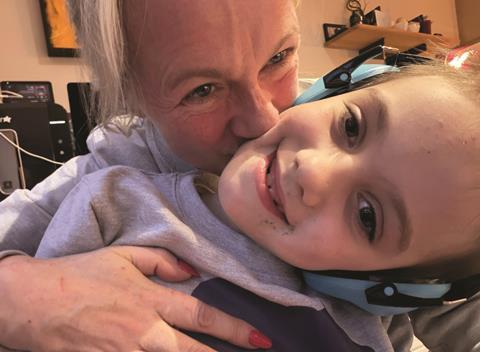
A letter before claim was sent on behalf of proposed claimant Jessica Hayhurst (pictured), a child who has complex special educational needs and has an EHCP. It asked the secretary of state to publish an amended version of the consultation to ensure it provides additional information for consultees and adds specific questions on key proposed changes.
At issue were policies relating to changes to the SEND Tribunal’s powers and the shift of duty to deliver EHCPs away from local authorities to schools.
The Government Legal Department has now responded, Jessica’s solicitor Polly Sweeney relates.
‘In headline terms, the education secretary’s position is that there is no duty to consult on these particular parts of the reforms (relating to the changes to tribunal powers and the shift of duty to deliver EHCPs away from local authorities to schools), in part because the decisions have already been made. Views on these issues are therefore deliberately not being sought as part of the consultation.’
This is seemingly at odds with the education secretary’s public line: ‘The consultation is our way to make sure we’re hearing your views before any final decisions are made.’
In a Facebook reel posted the same day as GLD sent its response to the letter before claim, Wednesday, schools minister Georgia Gould MP assured viewers: ‘Your voice matters. Get involved in our SEND consultation and help us shape a system that supports every child… we need to hear from you.’
Jessica’s mother Melissa observes: ‘Decisions on some of the most significant parts of these reforms appear to have been taken without any meaningful consultation.’
Big conversation
Does DfE ‘want to hear from everyone with an interest in SEND’? Everyone but lawyers, presumably, judging by remarks made at a press conference last Friday. Phillipson said she was unsurprised by criticism of proposed SEND reforms from ‘vested interests’ and lawyers who profit from ‘exploiting parents’.
‘It’s a fundamentally unfair system if parents who’ve got the money to hire lawyers end up getting a better deal than those who don’t,’ she said. ‘But it’s little surprise to me that the vested interests and the lawyers are opposed to change, because they’ve got a lot to lose from this,’ Schools Week reported.
The comments earned her a rebuke from Law Society president Mark Evans, who retorted: ‘It is important that children are able to secure the support they are entitled to. It is important that when they do not receive that support, they can effectively challenge the state to provide it. And it is important that lawyers can do their jobs without being needlessly criticised by government ministers for daring to support parents fighting to ensure the best for their children.’
Evans added: ‘Lawyers provide a valuable service for the public, providing legal advice and support, and should not be attacked for doing so.’
Feelings can run high in debates on SEND. Nevertheless, there has been a drive to engage families and other stakeholders from the start of this year, dubbed by ministers a ‘Big Conversation’. Ministers are keen to stress that changes will be gradual. But ministers hope that Labour MPs will, like them, go out and make the case for the reforms while providing space for families to speak and feel heard. Constituency ‘roundtables’ have been encouraged.
Many families and charities are engaging too. But will their responses be fed back unfiltered?
In fact, the Gazette can reveal, Labour MPs have received suggestions on what Phillipson would like to hear in their letters to the education secretary after meeting constituents on the topic of SEND reform. MPs should tell her there was ‘relief’ from parents that the government is committed to strengthening support rather than taking it away.
What else? MPs have been told it would be especially welcome to be told that families know reform is needed; that families know ‘the one-size-fits-all approach’ must end; that early years support is improving; and that the education secretary is protecting support and expanding provision – working together to build a new system.
Opponents of her reforms, one suggested line goes, ‘don’t believe in the life chances of every child’.
Omissions
Other points of concern to Sweeney are not covered in the consultation paper, but could be impacted by SEND reform. ‘There is so little detail in the consultation or the white paper about how many of these proposals will work in practice,’ Sweeney says.
‘What about 18-25-year-olds? What about children unable to attend a setting and require education otherwise than at school? What will the new test for an [education, health and care] needs assessment actually be? These are not minor details; they are essential aspects of any new system which need to be set out fully in order for people to properly participate in the consultation.’
The Department for Education was approached for comment.
This article is now closed for comment.













1 Reader's comment