


















An employment judge demonstrated ‘apparent bias’ in his conduct toward a barrister when rejecting both his applications at the tribunal, the Employment Appeal Tribunal has found.

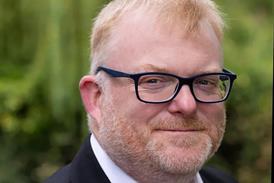
Practising barrister Daniel Matovu is a former member of chambers at 2 Temple Gardens. He was expelled from membership in 2019 after bringing two sets of proceedings in the employment tribunal. Those proceedings were dismissed and appeals were unsuccessful.
A third claim by Matovu alleges that ‘his expulsion had been an act of victimisation in response to an allegation of race discrimination that he had made against the senior clerk at his former chambers’. Matovu brought applications to amend and add new paragraphs to his particulars of claim at a preliminary hearing before employment judge Hodgson. The respondents did not oppose it.
The judge’s conduct at that hearing is the focus of Daviel Matovu v The Chambers of Martin Porter KC & Ors. Matovu appealed on the grounds of perversity and improper conduct and/or bias (actual or apparent) in the way the judge conducted himself.
Bruce Carr KC, a deputy judge of the High Court, said Hodgson’s ‘points on which he came to his conclusion were…in large part unsustainable’. Points suggested by the employment judge that the ‘scope of the factual inquiry would be broadened’ were not suggested by the chambers’ counsel and Hodgson himself ‘gave the same indication during the course of the hearing’, the judge said.
Read more
He added: ‘If the respondents, represented by highly experienced leading counsel did not think it appropriate to advance any argument as to any substantive change to the factual inquiry to be addressed at the full merits hearing, it is surprising to say the least, that the EJ took it upon himself to reject the application on that basis. All the more so when that basis flies in the face of his own observations made at the hearing and which observations were accepted by the parties.’
It was ‘difficult to see’ how Hodgson had reached the conclusion the respondents would suffer hardship if the amendment were allowed when counsel had not made any suggestion that was so, the judgment said.
As with the application to amend, the EAT said Hodgson ‘again…reached a conclusion which was not argued by the respondents and was even at odds with the arguments that they did make’.
Finding apparent bias in the conduct of the hearing, Carr said he had been ‘driven to that…conclusion’ when looking at the judge's conduct on a cumulative basis. The combination of significant questioning and criticism of the claimant in relation to unopposed matters, the determination of contested matters on bases that were not even argued by the respondents and which are in any event unsustainable, are in my view, sufficient to justify that conclusion.’
The appeal was allowed on both grounds. Hodgson was was barred from involvement in Matovu’s case ‘for as long as the claim is pursued in the employment tribunal’.