


















The absence of a single black judge in the Court of Appeal or Supreme Court is not good enough, the founding chair of a new criminal bar committee has said.
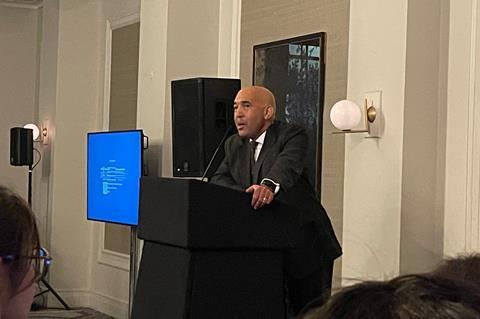
Garden Court Chambers’ Keir Monteith issued a rallying call for allyship to 350 people attending the official launch event of the Criminal Bar Association’s Black Barristers’ Committee on Friday evening in central London. Guests included Lady Justice Whipple, the lead judge for diversity and inclusion, and representatives from the Judicial Appointments Commission.
Monteith said: ‘How on earth, with all the black excellence in this room and going back over time, do we not have a single black Court of Appeal judge? How is it, with all the black excellence, we do not have even a single black Supreme Court judge? How is it, after all the diversity and inclusion strategies… all of the training, all of the reform to the Judicial Appointments Commission, that the percentage of Crown court judges stubbornly stays at 1%? How is it we have that, with all of this black excellence? I say the reason is institutional. A structural problem.’
Read more
Monteith said the committee cannot work alone. ‘It needs allyship, people in other parts of the system to speak up and support us. An example is [immediate CBA past president] Riel Karmy-Jones KC, who encouraged and supported this committee and our important, public launch. But it cannot be all on us.’
He called on chambers and law firms to look at their recruitment, retention and work allocation policies, advocates to call out racial bias in court submissions and judges to call out racial bias in judgments.
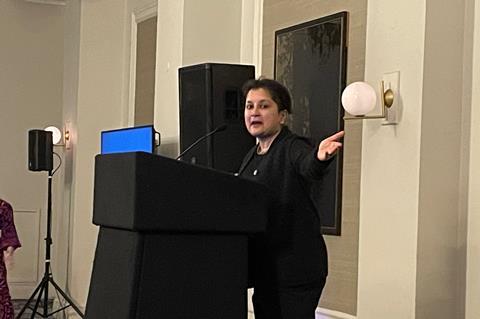
Guest speaker Shami Chakrabarti, former director of human rights group Liberty and now a Labour peer, said: ‘We have never had enough people of colour in the senior judiciary. We’ve never had one in the highest court. I never would have believed that to be the case in 2026. For us to be in 2026 and never have had a law lord or Supreme Court judge of colour – it is not good enough for me.’
On why it matters, Chakrabarti highlighted the need for public trust and legitimacy. ‘In many crucial cases, that perspective – whether a woman’s perspective or black person’s perspective – is crucial,’ she added.