





















How will ‘wealth’ respond to John Healey’s first budget? With clients ‘very frightened about wealth taxes’, moving to a jurisdiction with a more favourable inheritance tax regime could be alluring. Eduardo Reyes reports from the latest Gazette roundtable discussion
AT THE TABLE
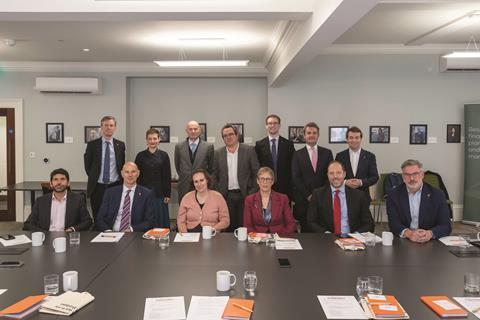
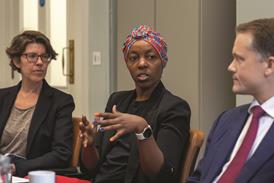
Back row (l-r) James Cooke Russell-Cooke; Claire Randall Farrer & Co; Sasha Erskine Winston Taylor; Eduardo Reyes Law Society Gazette; Jonty Rider Amber River; Oliver Embley Wedlake Bell; Will Cudmore Boodle Hatfield
Seated, front row (l-r) Andrew Goldstone Mishcon de Reya; Steven Smith Amber River; Katherine Forster Broadfield Law; Irene Wolstenholme Coutts; Phineas Hirsch Payne Hicks Beach; Christopher Groves Withers
Budgets do not just seek to raise sufficient tax revenue to match planned government expenditure. They also aim at altering the behaviour of taxed people and entities.
A chancellor hopes to attract investment to the UK and to create conditions that favour growth in business profitability, thereby growing the economy. Alongside headline tax rates, the Treasury devises incentives and penalties that aim to direct investment and prevent tax avoidance or capital flight.
As well as defence and welfare expenditure, how ‘wealth’ should be taxed and at what rates was a key talking point in the run-up to John Healey’s first budget. The effect of the budget on privately held wealth, much of it bound up with business ownership and investments that span national borders, is the focus of this roundtable discussion.
‘It was pitched as a stable budget, and there were no major announcements from a private client perspective which changed the underlying landscape,’ Wedlake Bell partner Oliver Embley begins. ‘But I think what we need to do is look at it from a holistic perspective. What happened before this budget and what wasn’t changed.’
'Budgets now are becoming much more about short-term policy'
Oliver Embley, Wedlake Bell
In Embley’s view: ‘The underlying changes to BPR [business property relief] and APR [agricultural property relief] and pensions in particular, coming in next year, are still the key problems for private clients.’ The former are inheritance tax reliefs that reduce the value of assets for tax purposes when they are passed as a gift or within a will. Both were made less advantageous by Rachel Reeves as chancellor, though she later raised the limit on APR following a campaign by farmers. Pensions will be included in estate valuation for the purposes of inheritance tax calculations from April 2027.
What affects the confidence and decisions of his clients, Embley notes, is that ‘budgets now are becoming much more about short-term policy’. That means long-term planning is a challenge.
Irene Wolstenholme, an accountant and tax planning specialist at Coutts, takes a cautiously positive view. ‘It was welcome that there weren’t any huge changes, because there have been so many in the last two or three years,’ she says. ‘We knew there were going to be a lot of changes two years ago, because it was a new government. We have now at least got enough “breathing space” for us all to be able to say to clients, “Right, we haven’t had huge changes this time. We can carry on working on the plans that we’ve got”.’
But like Embley, she is also concerned by short-termism: ‘Every single year there is a temptation for any chancellor to fiddle with things around the edges. Unless that changes, it’s always going to be very difficult to do really long-term planning.’
The security that surrounds the contents of a UK budget, combined with selective media briefings on ideas that may not be realised, also damages confidence and breeds insecurity.
'There’s no point in planning for five or 10 or 30 years, especially for inheritance tax, because this government seems to want to change it'
Christopher Groves, Withers
Claire Randall, partner at Farrer & Co, gives examples. ‘My clients are very worried about [an] exit tax. They don’t want to be stuck here,’ she says. That is especially true ‘where they’ve got large or potentially very volatile assets like crypto assets’. Under an exit tax, such assets may be assessed on a day they have seen a significant gain, only to drop the next day.
Randall’s clients are also ‘very frightened about wealth taxes’ and ‘ongoing rumblings about changes to the Inheritance Act [1975]’. Public policy talking points include the consultation on property and asset rights for cohabitants.
She adds that ‘quite a few’ of her clients have left the UK, with prospective changes to the Inheritance Act the biggest spur.
‘I think there’s a greater sense than at any time I’ve been doing this – which is too long! – that everything is now in play,’ observes Christopher Groves, a partner at Withers. ‘The problem is nothing is ruled out… There’s no point in planning for five or 10 or 30 years, especially for inheritance tax, because this government seems to want to change it. Conservatives want to change it. Everyone wants to change it.’

‘If you’re a business owner or investor, what you want is security, stability, some certainty and some simplicity,’ Boodle Hatfield senior associate Will Cudmore adds. ‘The more exceptions that are added to rules, the more the incentive [there is to] follow the legislation and follow the tax incentive, rather than to build the business you want to build and run it for the long term.’
Payne Hicks Beach partner Phineas Hirsch says ‘Founders’ Relief’, announced in the 2026 budget, is an example. ‘When you actually look at the qualifying criteria,’ Hirsch says, ‘very few founders, even genuine founders of businesses, will be able to qualify for this.’
‘No one’s going to set up and run their business so they can claim Founders’ Relief maybe in 10 years,’ Cudmore adds.
Founders’ Relief was announced as Business Asset Disposal Relief (BADR) was halved, from £1m to £500,000. ‘BAD relief… was not great anyway, but at least it encouraged some entrepreneurship,’ Embley observes.
‘The reality,’ believes Randall, ‘is no one’s going to be comfortable relying on [Founders’ Relief], ironically, other than the people who are really doing it for tax [purposes]. Genuine entrepreneurs are going to be very wary.’
Is there, I ask Randall, a tipping point at which clients will simply accept a higher tax rate if stability and certainty means they can plan for the future? ‘I think, yes,’ she replies. ‘A stable, understandable, higher tax rate would be more acceptable than this uncertainty, particularly around those capital taxes, inheritance tax, exit taxes, wealth taxes.’
‘Clients are worried about “what-ifs”,’ says Jonty Rider, financial adviser at Amber River. He says many changes are ‘tinkering around the edges’ of reliefs and exemptions, thereby further complicating the tax regime.
Judging the small print
‘The underlying changes to BPR [business property relief] and APR [agricultural property relief] and pensions in particular, coming in next year, are still the key problems for private clients.’
Oliver Embley, Wedlake Bell
‘The four-year FIG [foreign income and gains] regime is very generous, but it’s too short. But it attracts certain people who are maybe thinking about exiting their business.’
Phineas Hirsch, Payne Hicks Beach
‘No one’s going to set up and run their business so they can claim Founders’ Relief in, maybe, ten years.’
Will Cudmore, Boodle Hatfield
‘A stable, understandable, higher tax rate would be more acceptable than this uncertainty, particularly around those capital taxes, inheritance tax, exit taxes, wealth taxes.’
Claire Randall, Farrer & Co
‘I would like to see a Founders’ Relief which is effectively the old Entrepreneurs’ Relief but with a 25% minimum shareholding rather than 5%, so it really is broadly for founders.’
Andrew Goldstone, Mishcon de Reya
‘Another relatively quiet [budget] will at least give families the time to have those discussions and start planning.’
Steven Smith, Amber River
Footloose?
A key question for the Treasury is how potentially mobile such taxation targets are. And even if they can become resident in another jurisdiction, do they want to? Answers to these questions mark this out as a complex area.
Sasha Erskine, partner at Winston Taylor, explains: ‘You’ve still got to pick somewhere and the more astute clients will always ask, “Well, if I do go somewhere with a good [tax] regime, how long is it going to last? … Am I just going to be chasing my tail based on tax for the rest of my life? And if I’ve got enough money, do I really want to live that way?”.’
'UAE, Singapore, one or two other countries. It probably is stable, but do you want to live there?'
Andrew Goldstone, Mishcon de Reya
‘I do spend quite a bit of time talking to people about where they may or may not want to live,’ Coutts’ Wolstenholme relates. ‘The problem is that, much as you might like to think it, you do not just have the right to go and plonk yourself down anywhere you want to and live there. And of course, all countries are looking at their immigration regimes.’
‘Most of us would want to move to another western democracy,’ Mishcon de Reya partner Andrew Goldstone observes – but these are jurisdictions with the same public policy challenges as the UK and the same unpredictability around financial planning. ‘Otherwise, you’ve got to go to a regime where there isn’t really much democracy. UAE, Singapore, one or two other countries. It probably is stable, but do you want to live there?’

Randall says inheritance tax is the determining factor for many of her clients. ‘Many high-tax jurisdictions still have considerably less inheritance tax than we do,’ she says. ‘Norway has zero inheritance tax. And yes, you’d be paying high taxes on an ongoing basis. But it comes back to [this]: a lot of clients will accept that if what they really focus on is the inheritance tax.’
'The more astute clients will always ask, "Well, if I do go somewhere with a good [tax] regime, how long is it going to last?"'
Sasha Erskine, Winston Taylor
It is an area fraught with difficulty, she notes. ‘People have gone to Dubai, and then bombs started dropping.’ Or ‘clients have gone to Switzerland and they just say, “This isn’t London. We hate it.”’
‘A series of events over the last 15 years have made us less attractive while other countries have been reaching outwards,’ Withers’ Groves points out. ‘We’ve been through hostile environments for immigrants, with Brexit and all these things.’
Payne Hicks Beach’s Hirsch gives the example of a Jewish family who are clients. ‘They’ve been here for almost a couple of generations, and they’re really feeling uncomfortable living here and looking at other options – relocation. And it’s not driven by tax. It’s driven by [whether] the UK is a welcoming environment.’
Returning to taxation, the Foreign Income and Gains regime (FIG) is at least deemed attractive. Introduced in 2025, this allows eligible individuals to claim tax relief on foreign income and gains for up to four tax years following a return or move to the UK.
'Are we really in such a bad position that we are now going to throw in the towel and go and live in the Bahamas?'
Will Cudmore, Boodle Hatfield
‘The four-year FIG regime is very generous, but it’s too short,’ Hirsch says. ‘It attracts certain people who are maybe thinking about exiting their business. They can come and restructure the business in the UK and prepare it for sale completely tax-free… But it’s not long enough for them to set down roots and to put their children into schools here and buy homes.’

Boodle Hatfield’s Cudmore alludes to the UK’s continuing appeal for many: ‘There’s a lot of doom and gloom about the UK, but I assume we are all staying here, so it can’t be all bad. Clients of mine who own maybe a chunk of central London and have done for the last 150 years, they’ve weathered quite a lot of changes in tax regimes over that time, two world wars, various financial crises. Why would they leave now? Are we really in such a bad position that we are now going to throw in the towel and go and live in the Bahamas?’
Even where money is a motivation on location choice, taxation is not the only factor, Groves points out: ‘I think the most important thing is economic opportunity. We do best when businesses are growing and people want to do things. That’s the most important thing the government can deliver. The tax is just a detail around that. There are always people here; there will always be people coming here, because there are more important drivers.’
Trusts
Historically, many wealthy private clients have established trusts as, not least, tax-efficient vehicles to manage succession and protect assets, though they are also useful governance structures to manage family-wide affairs. In the past, they were commonly exempt from capital gains tax (CGT).
‘When the rules first changed, extending inheritance tax to trusts was a big reason why clients left [the UK],’ Randall says. ‘The capital gains tax attribution rules for trusts are so extensive that you really can’t get out of them by exclusions, because if just children or grandchildren benefit, you get capital gains tax attribution.’ That tax might be something that can be claimed back, but the process is complicated.
Yes, trusts remain relevant, Cudmore says: ‘Trusts are back, particularly now BPR has been capped.’ For a ‘settler’, trusts were traditionally conservative and restrictive, a reason for many to decide against their use.
‘There’s always a tension between the control they want to exercise and writing that into the trust instrument,’ Cudmore continues. ‘We would generally tend to advise them to appoint the trustees and try and control that way, rather than writing very specifically detailed trust restrictions that you’re just going to have to vary, frankly, in 50 years.’
Trusts are often a better choice than family investment companies, he adds.
‘I think we’re more sophisticated in how we draft them. We think differently in how we draft them than they did in the 1960s and 1970s,’ Groves says.
Cliff edge
Some aspects of the tax regime have a ‘cliff edge’ quality, with a hard application at a set figure. ‘If Labour were smarter,’ Goldstone says, ‘they would have made the BPR and APR changes in a tapered way. Then I don’t think the Tories would reverse it, if they ever get into power.’
What decisions, I ask the group, should the Treasury take that would see their clients doing more to create economic growth? And what, therefore, would they like to see in the 2027 budget?
‘Take the cap off BPR again, because it’s holding back business investment. People are waiting,’ Cudmore advises. ‘They’re not selling, they’re waiting to see what happens. In the meantime, there is no incentive to increase the value of that business.’
‘I’d like £10m Entrepreneurs’ Relief,’ says Broadfield Law partner Katherine Forster. ‘I’m putting on my letter to Santa, business rates exemption for private schools and exemption from VAT, like it used to be.’
Randall also cites Entrepreneurs’ Relief but would go further: ‘I’d like £100m.’
Wolstenholme focuses on ‘the £100,000 trap’, the earnings point at which a parent loses the entitlement to 30 hours of free childcare a week and tax-free childcare benefits, and a person also suffers a reduction in their personal tax allowance. ‘I do know quite a number of people for whom this is a real issue, this £100,000 trap, both for tax and for childcare. I think, at least in a small way, that is holding people’s ambitions back,’ she says.
‘I would like to see a Founders’ Relief which is effectively the old Entrepreneurs’ Relief but with a 25% minimum shareholding rather than 5%, so it really is broadly for founders,’ Goldstone urges.
In the absence of the arguments of those present winning through, Steven Smith, financial adviser at Amber River, concludes: ‘I’d like another budget similar to what we’ve just had. With the last two, we haven’t really started to get to grips with the planning required for [them]. So another relatively quiet one will at least give families the time to have those discussions and start planning.’
- The roundtable was kindly sponsored by Amber River
Photographs by Noah Da Costa












No comments yet