






















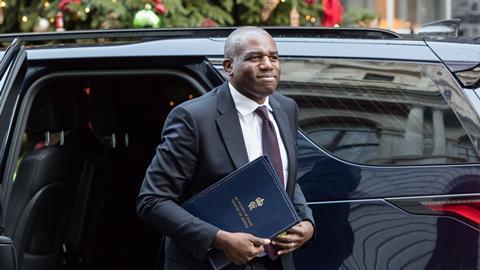
Justice secretary David Lammy yesterday doubled down on his controversial plan to axe a quarter of jury trials – releasing figures suggesting that, without 'bold reform', the Crown court backlog could hit 135,100 by 2030.
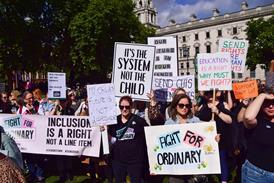
Despite rowing back on plans to axe juries for all but the most serious cases, Lammy's proposals to curb jury trials still attracted widespread concern, including from members of his own party.
Labour's Clive Efford, MP for Eltham and Chislehurst, told Lammy in the Commons chamber on Tuesday that he feared restricting trial by jury would 'put a certain class of people in judgment over the rest of us'. Andy McDonald, Labour MP for Middlesbrough and Thornaby East, asked why the government was pursuing the removal of jury trials 'without publishing any modelling to show that juries - rather than chronic under-resourcing - are responsible for backlogs'.
Prison population projections released by the Ministry of Justice yesterday state that the backlog could reach somewhere between 107,800 and 135,100 outstanding cases by March 2030. The 'central' estimate is 123,000.
Lammy said: ‘These figures set out the true scale of the court emergency we face - without bold reform the backlog is only going to go up. We simply cannot sit our way out of this crisis. Justice delayed is justice denied. That’s why I set out a blueprint for a modern justice system that works for - not against - victims, creating a system that is faster and fairer.
Read more
‘My plan combines reform, increased investment in legal aid, sitting days and the courts to help us turn the tide on the rising backlog, deliver swifter justice and put victims first.’
However, a LinkedIn post by barrister Simon Myerson KC, who sat as a judge between 2001 and 2024, suggests Lammy's reforms could make little difference to the backlog.
Myerson said Lammy's plans would require reasoned judgments. 'Very few circuit judges will feel that those can be produced off the cuff. And they will be right. That means they will have to be written.'
A written judgment in a three-day civil case might take half a day to prepare, a day in a five-day civil case and two days in an eight-day civil case, Myserson said. 'That is both because the judge has to work out what decision they are coming to, and because the judgment then has to be clear so that it can be appealed if the judge gets it wrong... At the moment, a jury goes out to consider its verdict and the judge gets on with something else. Stopping that will lengthen trials and take judges out of commission.'
This article is now closed for comment.




18 Readers' comments