




















The government has once again committed to anti-SLAPPs legislation, after open democracy campaigners alleged that ‘discreet lobbying’ by media lawyers had killed off the long-promised measures.
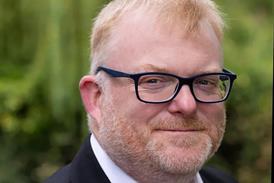
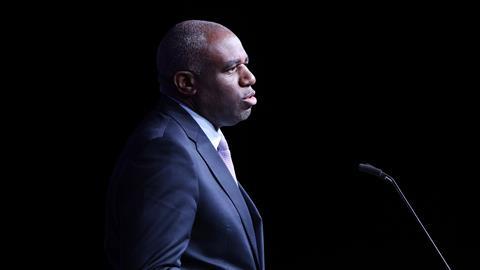
Lord chancellor David Lammy reiterated the pledge yesterday, in response to a question from Labour MP Brian Leishman, after anti-SLAPPs measures were absent from last week’s King’s speech.
‘I have concerns about the recent reports that the Society of Media Lawyers, who are against SLAPP [strategic litigation against public participation] reform, has had significant access to ministers and civil servants while lobbying against stronger protections for journalists, whistleblowers and campaigners,’ said Leishman. ‘Slapps continue to be used by the super-wealthy and super-powerful to silence investigative reporting and public-interest speech; will the government bring forward meaningful and undiluted anti-Slapp legislation?’.
’We cannot allow the rich and powerful to use their resources to stop proper investigation, and I will be bringing forward legislation as soon as time allows,’ Lammy replied.
Leishman’s question was prompted by an investigation by Democracy for Sale, a body that purports to expose ‘dark money and hidden influence’ in politics. In press articles last week, Democracy for Sale claimed that the society - ‘libel lawyers who have acted for oligarchs and the super-rich’ - had persuaded Labour to dump the new anti-SLAPPs law.
The society, whose members include solicitors from prominent firms including Carter-Ruck, Mishcon de Reya and Brett Wilson, described Democracy for Sale's portrayal of media lawyers as ‘cynical, cliched and inaccurate’.
‘The society’s position on the question of possible legislative reform has always been that this matter should be referred to the Law Commission for an independent and objective analysis of the evidence and, if reform is required, the formulation of workable proposals,’ a spokesperson told the Gazette. ‘It is a matter of great concern that campaigners are so reluctant to expose their arguments to proper scrutiny, and would rather rush through legislation that at best will create extra cost and delay and at worst will hand greater power to the unregulated press and weaken individuals’ rights.
‘We are disappointed, but unsurprised by the recent spate of articles by campaigners that have sought to discredit the society. They present a cynical, cliched and inaccurate view of media lawyers and a misleading picture of the so-called “SLAPP crisis”. Like much of the campaigning in this area, the language and anecdotes are emotive, but the arguments are not supported by empirical evidence.’
SML denies that it has ‘any significant influence within either the government or parliament’, stressing that it was denied a seat on the government’s SLAPP taskforce despite this including representatives of media organisations.
‘We have written a handful of letters to politicians which do no more that set out the society’s publicly stated position on the issue,’ the spokesperson added. ‘None of our committee members have met any ministers or MPs about this issue. Over three years we have had two short Zoom calls with civil servants (who we understand were canvassing the views of various stakeholders in this area). It would be absurd to suggest that the society had any influence over what was included in the King’s speech. In contrast…the media has a platform to advance its agenda and discredit its critics – as proved by the recent seemingly coordinated attack on the society.’
Please note: Anonymous comments will no longer be permitted on this site from 1 June. Please see our revised site terms here
This article is now closed for comment.





6 Readers' comments