
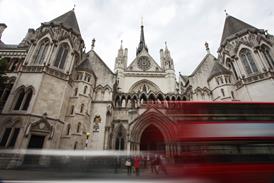




















The legal profession will be glued to proceedings in the Court of Appeal next week, as judges attempt to bring some clarity to the question of who has the right to conduct litigation.
The appeal in Mazur concerns the ruling of Mr Justice Sheldon last September which sent shockwaves through the sector and affected firms of all sizes.
The judge concluded that unauthorised individuals were not permitted to conduct litigation, even under supervision. His ruling has had wide-ranging ramifications for access to justice, costs and staffing in law firms, which had for many years relied on legal executives, paralegals and trainee solicitors to conduct litigation. The tightening of rules on fixed costs has only complicated matters further.
Lawyers from CILEX, which represents legal executives, will argue next week that the decision was wrong and should be overturned. CILEX said the consequences for its members have been profound.

Chief executive Jennifer Coupland added: ‘The shockwaves go far beyond CILEX, affecting the operation of law firms, local government and law centres. Further, given CILEX members are more likely to come from groups traditionally underrepresented in the legal profession, the judgment threatens diversity in the law as well as restricting competition and access to justice.’
The Association of Personal Injury Lawyers and the Law Centres Network will also make submissions challenging the Mazur ruling.
The Law Society will reaffirm the position it took in the High Court case, with which the judge agreed. Vice president Brett Dixon said: ‘Litigation is a reserved legal activity under the Legal Services Act 2007 that may only be carried out by authorised persons, even within regulated entities. However, non-authorised staff can provide extensive assistance to an authorised person who is conducting litigation.
‘Tasks can be delegated so long as the authorised person maintains overall responsibility for each matter, the work is actively supervised in line with wider regulatory obligations, and the key decisions and formal steps in the proceedings are referred to the authorised person, who exercises their professional judgement.’
The hearing, which will be livestreamed on the Court of Appeal YouTube channel, begins on Monday afternoon, then continues on Wednesday and Thursday. Visit lawgazette.co.uk for coverage.









8 Readers' comments