





















Lawyers must make their written submissions to court easily available to reporters to prevent proceedings effectively being held in secret, the judge in charge of transparency has warned.
Mr Justice Nicklin – who rejected Prince Harry’s privacy claim against the publishers of the Mail newspapers and last week ruled that comedian David Walliams could be named – told the bar conference on Saturday that lawyers had to be more open with skeleton arguments and witness statements entered as part of court proceedings.
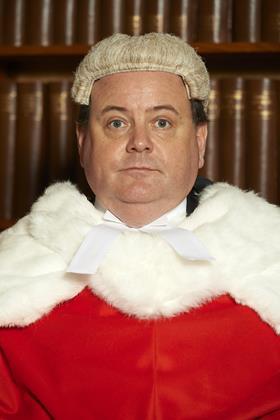
Two years ago, the lady chief justice, Baroness Carr of Walton-on-the-Hill, appointed Nicklin to chair the judiciary’s transparency and openness board.
The 56-year-old judge who was appointed to the High Court in 2017 and was made head of the media and communications list five years later, said that barristers needed to be encouraged to embrace openness: failure to make written submissions available to journalists was tantamount to 'secret justice'.
Lucy Reed KC, a family law specialist and founder of the campaign group, the Transparency Project, told the conference that many barristers were still wary of dealing with the media. And both Nicklin and Reed acknowledged that the rise of social media had complicated issues around court transparency as many bloggers were unfamiliar with contempt of court and other rules.
Nicklin also acknowledged that transparency was a particular problem in the administrative branch of the High Court, where judicial review and other public law cases are heard.
Nicklin said that there was no conscious attempt by the judiciary in that division to be secretive, but some areas of the High Court had been faster at moving away from historic paper-based systems to digital openness.
The judge highlighted to delegates the transparency board’s main efforts in making justice more open. An 'access to core documents' pilot in the civil division of the Court of Appeal was conducted last year and then relaunched in February for an additional 12 months. It aims to demonstrate that 'greater documentary openness can be achieved in a controlled and proportionate manner’.
That pilot created a presumption that documents will be published unless a party objects and that objection is supported by a judge.
The board launched another pilot last January aimed at improving public access to documents in the commercial court. The initiative requires parties to re-file key documents – such as skeleton arguments, witness statements, and expert reports – on the digital case management system.
Earlier this year, Nicklin noted that in the wake of the broadcasting of Court of Appeal hearings and some crown court sentencings, moves were underway to extend broadcasting to the administrative court. Parliamentary approval for extended broadcasting is expected early next year.





No comments yet