












The bitter row over who represents victims of the Mariana dam collapse in the English courts continued last week with a new challenge by a law firm.
Last month, Mr Justice Waksman ruled that class action firm PGMBM – formerly known as Pogust Goodhead – should retain control of the litigation, despite an alternative firm saying it had been chosen by a committee of claimants.
The mammoth action, involving some 420,000 claimants affected by the 2015 disaster in Brazil, is listed for a phase two trial on quantum next year.
Representatives for the committee said they have applied to the Court of Appeal to challenge the Waksman decision. The committee will argue that its members had the authority to end the retainer on the claimants’ behalf and that litigation friends had the authority to change solicitors for the claimants they represent. It therefore follows, the committee suggest, that it had authority to instruct new solicitors.
The committee says the effect of the High Court’s ruling is that the claimants, most of who live in Brazil and many in remote communities, can only change solicitors by acting individually, making it practically difficult to choose their representative.
The committee is represented by litigation firm Humphries Kerstetter and by Sa’ad Hossain KC and Benjamin Lewy of One Essex Court. Owing to the tight timescale, it has asked the Court of Appeal to hear the application to appeal and the appeal itself together and on an expedited basis.
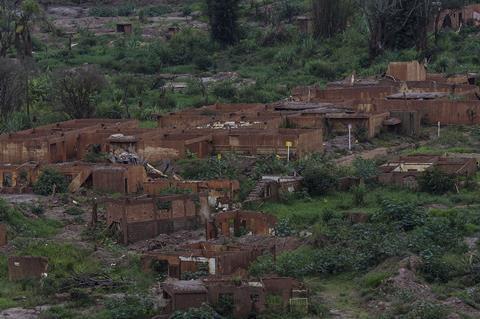
Toby Starr, partner at Humphries Kerstetter, said this appeal was not about which law firm runs the case, but rather whether the people whose lives were devastated by the Fundão disaster have a real say in how their claims are conducted.
‘These claimants were told when they signed up that the committee would be their voice,’ said Starr. ‘The High Court’s ruling means that voice cannot be used for the most basic decision a client can make. We believe that is wrong, and we are asking the Court of Appeal to put it right quickly, so that the claimants can go into next year’s trial with confidence.’
In a statement, Marcelo Krenak, chairman of the client committee, said: ‘When we entered into this action, we were advised to remain united in order to face [defendant] BHP on an equal footing. The committee was created to represent our voice and our interests.
‘It makes no sense for that representation to cease to be valid precisely when we need to make such an important decision for the future of the case. Those who suffered from this tragedy must have the right to decide who will fight for their reparation. That choice cannot be left in the hands of law firms or the funders of the proceedings.’





No comments yet