






















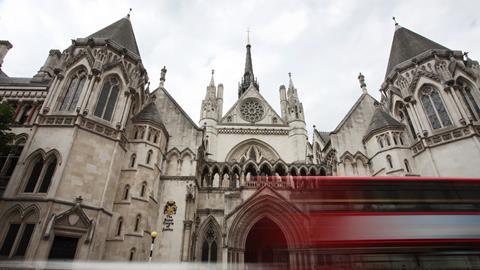
A claimant committee which voted to kick class action firm Pogust Goodhead out of the Brazil dam disaster claim was today granted permission to appeal a High Court ruling that it did not have the authority to do so.
The decision followed a half-day hearing in which 13 members of the 16-strong committee sought permission to appeal Mr Justice Waksman’s October judgment which found for Pogust Goodhead in its battle with rival firm Bailey Glasser International (BGI) over control of the ongoing Mariana dam litigation.
Lord Justice Fraser and Lord Justice Meade, in oral judgment, granted permission on all grounds of appeal, finding there was a ‘reasonable prospect of success’. No date for the appeal was made – though it will be expedited – but it is likely to be near the beginning of next term.
In oral submissions during the morning, Sa’ad Hossain KC, for the committee members, said: ‘Clearly it is more favourable to the consumer to have an effective right of informed termination rather than an ineffective one.' The committee was established to represent around 442,000 claimants in the litigation over Brazil's worst environmental disaster.
In written submissions Hossain said: ‘The result of Mr Justice Waksman’s decision is…that the [collective condition fee agreement] clients are (as a matter of commercial reality) locked-in to using [Pogust Goodhead], having no effective means of changing solicitor even when the committee, as the only body appointed to act on their behalf in the Mariana litigation and vis-à-vis PG, genuinely considers that there is cause to do so.
‘Such an outcome is contrary to the language and scheme of the agreements granting authority to the committee to represent the [collective conditional fee agreement] clients in relation to the Mariana litigation.’
Hossain told the court the committee was concerned about Pogust Goodhead’s main funder Gramercy and ‘its control over’ the firm, as well as the dismissal of certain barristers and solicitors from the claim'. ‘Those were concerns that led to the cure notice being sent and, eventually, termination.’
The committee’s three grounds of appeal are that the judge’s reasoning that it lacked the requisite authority was wrong; that the committee had authority to termination both the collective condition fee agreement and the litigation management agreement and the judge erred in concluding that the committee lacked the authority ‘as a matter of construction’; and the final ground that the committee had authority to instruct BGI and the judge erred in finding it lacked the authority to do so.
Alan Maclean, for Pogust Goodhead, now renamed PGMBM, said: ‘The client care latter is entirely in keeping with the structure of the CFA.’ He told the court the committee did not have ‘an ultimate power to change the agreement’. In written submissions, he added that permission to appeal should be refused ‘because…each of the proposed grounds of appeal is hopeless’ adding: ‘the judge was plainly right for the reasons set out in his carefully reasoned and detailed judgment’.
The substantive hearing, the phase 2 trial dealing with quantum, is unaffected by these proceedings and the trial remains listed for next April.




No comments yet