






















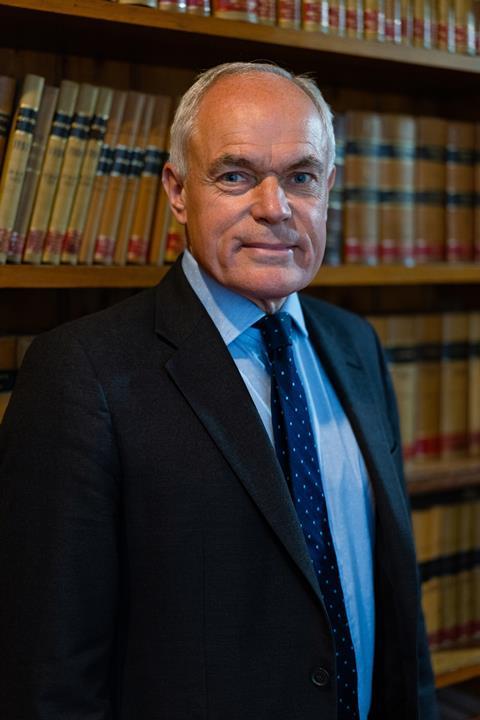
The senior president of tribunals, Lord Justice Dingemans, has spoken of ‘unwarranted’ media commentary, judges’ safety and a 2027 date for the Home Office’s plans for a body of assessors to take decisions on asylum appeals in his first annual report.
He also shared his aims for the upcoming year, which include addressing the backlogs, digitisation, transparency, and openness and inclusion.
Acknowledging that the tribunals hear ‘some of the most contentious issues of the day’ which are ‘often and rightly reported widely’ he noted that some judges, particularly those sitting in the First-Tier Tribunal (immigration and asylum chamber) (FTT(IAC)) and the Upper Tribunal (immigration and asylum chamber) had been subject to ‘unwarranted media commentary’.
He added: ‘In comments made below articles, some judges have been subjected to abusive language and explicit discriminatory abuse.
‘The lady chief justice and I have been working to deal with inaccurate reporting. The security taskforce, established by the lady chief justice, has been taking steps to address issues of security for judges. There has also been much hard work with UTIAC, FTT(IAC) and HMCTS on security issues.’
The report added that ‘significant media coverage’ of FTT (IAC) decisions over 2025 ‘very regrettably led to a heightened level of unwarranted abuse of individual judges’.
In his introduction, he referred to the Home Office’s announcement in August last year of plans to establish an independent body of professional adjudicators to take decisions on asylum appeals. Such a change would require legislation and no date was given for implementation.
The judge said: ‘Since the announcement was made, we have been told that the Home Office intend to have some appeals heard by the body of assessors in 2027. Legislation will be required to effect any changes but there are, as yet, no drafts of any legislative provisions.’
Read more
The report highlighted rising caseloads and work being done to target the backlogs in the FTT (IAC), the employment tribunals, social security and child support (SSCS) as part of the Social Entitlement Chamber (SEC), and special educational needs and disability (SEND), as part of the Health Education and Social Care Chamber (HESC).
‘Legislative changes under the proposed Employment Rights Bill 2025 and the Renters’ Rights Act 2025 are likely to increase the workloads, on a permanent basis, in the employment tribunals and in the First-tier Tribunal (Property Chamber),’ Dingemans added.
The Renters’ Rights Act 2025 is also expected to ‘add significantly’ to the number of rent appeals entering the tribunal system, the report said.
The Employment Appeal Tribunal reported an increase in new appeals from 1,760 in 2023/24 to 1,964 in 2024/25.
In the SEND jurisdiction there was ‘unprecedented demand’, the report added. There was a 34% increase in 2024/25, compared to the previous year, with 24,000 appeals registered and 19,000 disposed of. During that period, 65% of appeals were resolved within the 22-week target and 95% of decisions issued within 10 working days of hearings.
The number of outstanding cases in the First-Tier tribunal (tax chamber) totalled 14,112 during the reporting period, with 3,293 active cases, which was ‘a marginal increasing trend over the previous reporting period’.
In the immigration and asylum chamber, receipts increased by 36% in 2024/25. This ‘inevitably impacted the outstanding caseload’ which increased by 80% during the same period. Disposals also increased by 4%, ‘reflecting the consistently hard work of FTT (IAC) judges,’ the report said.
In the jurisdiction’s diversity data, it found 40% of all judges in the courts and tribunals were non-barristers. The figure increased to 53% for FTT (IAC) judges.