















Outlawed: Responding to the Global rise of Sovereign Citizens and Legal Conspiracies
Harry Hobbs and Stephen Young
£20.00, Icon Books
★★★★✩
I sometimes get enquiries from potential clients seeking support for their claims. They have suffered injustices, and one is sympathetic, but the law does not provide a remedy for everything. The enquirer quotes their assessment of the legal position and attaches lengthy documents setting out their understanding. The law is not always what one would wish for or expect.
Suppose someone said you can mould the law to suit you or stop any laws you do not like? You might think it would be great if you do not have to pay any taxes or do anything the local or national government says. You would not have to obey the police or courts because you have rights and it is a free country. This counterculture is more widespread than one might believe, and rests on a particular interpretation of law and citizenship.
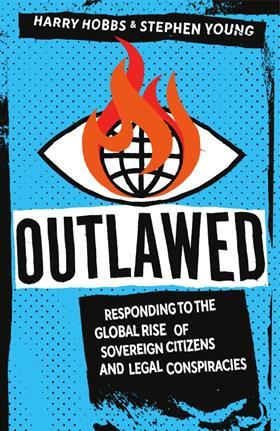
This book is about what it calls 'pseudo law', a growing movement started in America and which has spread around the world. Many of the ideas are based on old legal rights such as Magna Carta and the English Bill of Rights and the thesis that federal law is illegal, the government is a conspiracy and their employees and agents are pawns in the system.
Another expression for this phenomena is 'Sovereign Citizen', meaning individuals can opt out of any obligation by declaring themselves independent. Some of this movement started as a reaction to economic depression in America which led to mass foreclosures and repossessions and people desperate to survive. People felt that the government had failed and this was aggravated by botched federal raids on innocent homesteads or disproportionate, overbearing actions. This has led to an online industry pedalling these ideas, some of which are supplied by non-regulated advisors.
Another suggestion to opt out of modern life is to change one’s name, for example from John Smith to John : Smith, and that means the new person has no liability for the former identity. Not only has there been a sub legal campaign but protests and violence. The worst terrorist atrocity in the states was aimed at a federal government building.
Much of American history is founded on people heading west for asylum from central government or a better lifestyle. There is a tradition in America of opposition to federal law, a desire for states to have more power and the idea of just living in the backwoods undisturbed by anyone. It sounds good but what if you need any of the benefits of government? I suppose they would say they would pay for a doctor, do their own education and defend themselves. Some of this off-grid living was similar to 1970s hippy communes or is religious based, either mainstream or not.
One response to perceived government failings is 'paper terrorism', a phrase I had not heard before, meaning victims of perceived oppression would file 'liens' on properties owned by state or federal agents such as police officer and court officials. The term 'lien' in America can mean a charge or mortgage. Just how they did this is not clear but it caused chaos and misery for many federal officials who had to spend thousands clearing these forged documents from their titles.
There are groups around the world that claim to set up their own legal systems and arrest officials of what they see as agents of oppression and betrayal. The ideas have spread to Germany and the southern hemisphere. The book refers to two incidents that occurred in this country. One in 2011 when hundreds of protesters stormed a courtroom and allegedly attempted to make a citizens’ arrest on a judge in support of a man challenging his council tax bill. Another incident was in 2024 when members of an 'anti-establishment cult' were found guilty of trying to kidnap a coroner.
This is a fascinating and sometimes chilling account of counterculture.
David Pickup





No comments yet