




















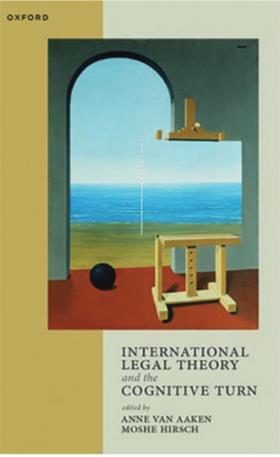
International Legal Theory and the Cognitive Turn
Editors: Anne van Aaken and Moshe Hirsch
£100, Oxford University Press
★ ★ ★ ✩✩
Man, of course, is the rational animal. The ability to use reason – and opposable thumbs, obviously – is what separates us from beasts. As Hamlet has it: ‘What a piece of work is a man! How noble in reason, how infinite in faculty! In form and moving how express and admirable! In action how like an angel! In apprehension how like a god! The beauty of the world! The paragon of animals.’
That said, in the 1970s, two Israeli economists – Amos Tversky and Daniel Kahneman – produced groundbreaking papers analysing decision-making. They identified several ‘heuristic biases’ – mental shortcuts used in making decisions – that cause systematic and predictable errors. These include Availability Bias, judging the likelihood of an event by how easily we can recall examples; and Confirmation Bias, by which we give excessive weight to factors which reflect our beliefs, and insufficient weight to those that do not. Apart from opening up the question about how rational we really are, this research led to new insights into numerous fields as part of the ‘Cognitive Turn’. This was a shift originally in academic psychology away from understanding behaviour by examining observable actions to research into internal mental processes. The impact of the Cognitive Turn has not been properly explored in the international law context, argue Anne van Aaken and Moshe Hirsch.
This intriguing collection of essays explores possible places where behavioural studies could assist in the understanding of international law. The work covers a wide sweep, from the effects of framing and ‘nudge’ theory in the high politics of international relations, to acknowledging cultural differences in dealing with transitional justice after conflict, down to the macro level of how System 1 – automatic – and System 2 – analytical – thinking affect the decision made by a particular official in an individual asylum claim.
The essays cover significant ground. I found the section on the shift from economic to behavioural understanding of international law particularly fascinating. Worth a read if law and the human brain are your thing.
James E Hurford is a solicitor at the Government Legal Department, London









No comments yet