























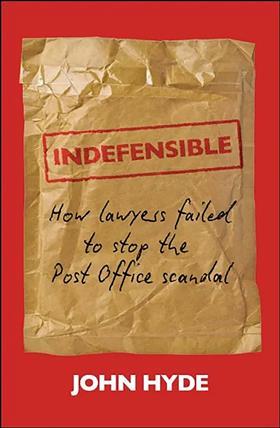
The first day Paula Vennells, Anglican priest and reviled former Post Office chief executive, gave evidence to the public inquiry was the day I knew there was a book to be written. Indefensible: how lawyers failed to stop the Post Office scandal was published this week by Bristol University Press.
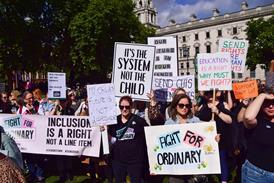
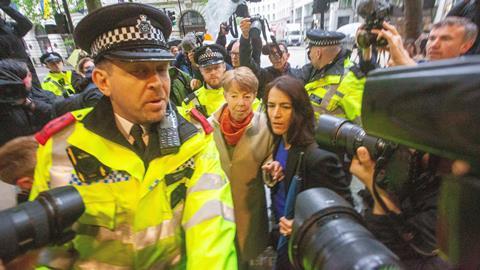
The media interest in the inquiry was phenomenal. As someone who had covered the scandal for years, I was asked to do three regional BBC radio interviews in one day. I turned down more. When she arrived at the inquiry building in London’s Aldwych, Vennells was confronted by an army of photographers, police officers and protesters. The inquiry room itself was packed long before the hearing started. Luckily, the staff had saved me my usual seat. The atmosphere was unlike anything I had experienced in my 20-year career.
Vennells was met with total silence when she came into the room. The dignity of the dozens of victims of this dreadful scandal made the hairs on the neck stand up, and clearly unnerved Vennells, who was probably geared up for pantomime boos.
What fascinated me was Vennells’ response to being asked who was responsible for her ignorance. She named her IT heads and the three general counsel who had worked under her, saying she was not given the information she needed to fully grasp the gravity of the affair.
It was an unconvincing explanation. Vennells knew, of course, that hundreds of people had been convicted and that for many years they had blamed the IT system that secured such outcomes. Her defence was effectively that she had trusted people too much, but she never seemed to grasp that her role was to lead and take responsibility for her organisation and its actions.
Vennells had also fundamentally misunderstood what her in-house lawyers were expected to do. In an incendiary handwritten note following a row with Post Office general counsel Susan Crichton, Vennells had said: ‘Susan was possibly more loyal to her professional conduct requirements and put her integrity as a lawyer above the interests of the business.’
Presumably intended as a slur, this might have inadvertently been the most positive thing anyone said about lawyers during the whole inquiry.
Mass negligence
For all her faults, though, perhaps Vennells had a point. She was right to have expected her subordinates (and others) to have done their jobs properly.
So many failed. From investigators to IT specialists, from auditors to board members. But none was subject to the duties to the administration of justice and to the rule of law that applied to her lawyers. Not just cogs in the Post Office machine, they were supposed to be ethical gatekeepers, applying caution and restraint to the incessant prosecutorial push. They were ultimately the ones who should have said ‘no’.
For the most widespread miscarriage of justice to have happened on their watch should be a source of shame for those involved and a warning to the rest of the profession.
The evidence was, at times, shocking. In one case, solicitors were told the day before a trial that bugs had been found in the Horizon system. That information was not disclosed to the defence team and the sub-postmistress on trial was jailed.
On another occasion, a trainee solicitor was instructed by her supervising partner to avoid disclosing a requested document and to ‘try to do so in a way that looks legitimate’. Another solicitor for the Post Office declined to share details of Horizon complaint logs – information that would have been gratefully received by the defence team – because of apparent concerns about not overwhelming the opposing side.
Lawyers spoke in private about the need to pursue prosecutions to make an example of those who sought to undermine the Horizon system. They celebrated prosecutions on the basis that they might stop the ‘Horizon-bashing bandwagon’ that Alan Bates and his comrades were trying to accelerate. Legal professional privilege was slapped onto internal exchanges to make sure they were never disclosed, while lawyers talked in disparaging terms about postmasters who protested their innocence. The concept of lawyers acting with independence appeared to be forgotten on numerous occasions.
Yet consideration also needs to be given to the litigation tactics of the Post Office itself during the pivotal Bates litigation. The Post Office talked in private about ‘attrition’ and appeared to want to fight claimants no matter what. In this respect, the lawyers leading the litigation were simply acting on instructions.
Yet still mistakes were made. The handling of the litigation was repeatedly criticised by trial judge Mr Justice Fraser (as he then was). An attempt to secure Fraser’s recusal was disastrous and the commitment to an earlier mediation scheme was lukewarm at best.
Be assured, I did not intend this book to be an attack on the lawyers involved. Rather, I hope it will serve as a wake-up call for those who might dismiss the Horizon scandal as a one-off or regard some of the lawyers involved as mere ‘bad apples’. It is true – as I am keen to stress – that most lawyers act ethically at all times. Those who choose not to do so either do not understand their duties to the administration of justice or ignore them.
Moral conflicts
The ethical dilemmas faced will be replicated in law offices across the country, every week. How does one deal with a questionable – but lucrative – client when one has staff salaries to pay? How can in-house lawyers balance their duties to the court and to their employer? How would you deal with a supervising solicitor asking you to bend your ethical responsibilities when you are months away from the end of your training contract?
Such questions are not always easily answered.
If certain lawyers acted unethically during the Post Office scandal, we must assume that others in the profession are doing the same, albeit undetected. Is mandatory ethical training – both at entry level and during careers – required? Does the SRA provide a safe (enough) space for reporting misconduct? Do boards and other senior executives fully understand where their in-house lawyers’ priorities should lie?
The profession should be asking itself these questions, and more besides. Given the rise of unregulated providers and DIY law facilitated by artificial intelligence, the sector can ill afford further scandals to erode public trust.
To end on a positive note, a word for Issy Hogg, defence solicitor for several of those prosecuted. I spoke to victims who recalled their own defence lawyers being suspicious and cynical, giving their pleas of innocence short shrift. Hogg was a shining exception. She fought for her clients tenaciously but compassionately, and continued that fight for many years.
Jo Hamilton, one of the highest-profile campaigners and one of hundreds whose conviction were quashed, recalled how Hogg organised almost her entire village to turn up in court for her sentencing. She attended numerous campaign groups long after her instructions ended. After Hogg died in 2024 from cancer, another former sub-postmistress, Seema Misra, wrote: ‘Her dedication and support were invaluable, and she will be greatly missed.’
Hogg was an example of a lawyer who was a credit to her profession – and there were not many of those in evidence during this sorry affair. For those who want the public to see the best in the legal profession, the Post Office should be an opportunity to reset and do better.
John Hyde is Gazette deputy news editor












5 Readers' comments