












I had the absolute privilege of sitting in the public gallery and watching the assisted dying debate in the House of Commons on Friday 11 September. This was both a personal treat (the last time I had been to watch parliament in action was as a student), a professional one (as a mental capacity solicitor who has been working with the Law Society team on the consultation) but above all, as a citizen. If every day in parliament was as engaging as this we could indeed be able to achieve great things; the quality, and the quantity of contributions was very high and of course, against the most spectacular of interiors and tradition.
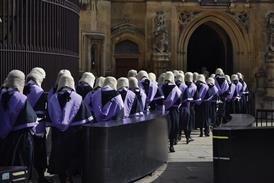
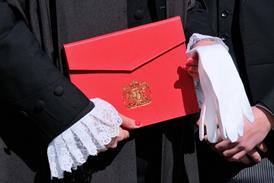
As I waited in line to go into the chamber I had a number of interesting conversations with people of different opinions and views and with a variety of agendas. A palliative care nurse whose husband had died of cancer, a politics student interested in the constitutional process and even Baroness Ilora Finlay who I know from her work at the Mental Incapacity Forum and who herself introduced a Private Members Bill in 2007 that also failed but began the process for opting out instead of opting in for organ donation. I was struck by our variety of dress; tourists in shorts and t-shirts whilst the
Speaker’s procession that slow marches through Westminster Hall to open the session is one of 18th century dress and a police officer calls out 'Hats off Strangers!'.
The bill was proposed, again as a Private Members’ bill, by Lauren Edwards, Labour MP for Rochester and Strood. Aside from the well-rehearsed arguments for the principle of assisting those with terminal illnesses to die, she emphasised that in her view the will of the people had been frustrated by the House of Lords. This was a theme raised by almost all of those who spoke in favour of the bill; that 'the other place' had (in the words of Kit Malthouse, Conservative MP for North West Hampshire for who seconded the bill) 'made a mockery of a proper parliamentary process' and that our democracy was at stake as a result. Many said that they would accept the vote of 'this house' as a democratic one but not one of a group of unelected peers.
It is a rare thing perhaps to watch a Commons’ debate that switches so frequently from one side of the house to the other. It was clear from early on that this was not a party political issue and there was no theme from a particular party and no point scoring in that sense. It was apparent that there was unity and some strategising within the room as to who was supporting others but for those of us in the gallery it was almost like watching a game of tennis where our heads turned from side to side as we looked to see who was speaking for the requisite five minutes at a time.
The personal stories were emotive; that of Clare Hazelgrove who spoke of her mother’s recent death and who would have wished to have had the choice for an assisted death. That of Zubir Ahmed (Labour MP for Glasgow South West) a cancer surgeon who bared his professional conscience stating that it would change the patient/doctor conversation and that he knew he had got some prognoses wrong. Jess Phillips, who spoke of her own mother’s early death, of how the status quo is just not good enough.
We saw MPs passionate and vulnerable and revealing their life outside of their political one. But none so brutal as that of Ashley Dalton (Labour MP for West Lancashire) who spoke so bravely about her own diagnosis and suffering as someone diagnosed since the last vote and who pleaded that scaremongering of horrific deaths cease.
The conversation around palliative care was a common theme and well made throughout the morning. More funding, more determination to improve our health and social care and therefore that of palliative care was sought by all with opinion divided as to whether this needs to be fixed first or alongside this new world of proposed assisted dying. Our new prime minister Andy Burnham’s absence in the chamber was felt alongside his pledge to fix it. Perhaps on reflection now that the outcome of the vote is known his absence and influence had a bigger bearing that I realised during the morning.
As a previously mental health solicitor, the many references made to suicidal ideation and the difference between mental capacity (dealt with in the bill) and mental health (not dealt with in the bill) were valid and well put including by Dr Ben Spencer (Conservative MP for Runneymede and Weybridge) who made the point that mental disorder can be difficult to identify and particularly so when exacerbated by a terminal diagnosis. The proof of this was by the said Ashley Dalton who spoke openly of how she was at risk of suicide, believing that to end her life would be fairer on everyone, until she was treated for depression as part of her journey. Again, in hindsight, was it this moment that swung the vote?
It was something to hear Sir Edward Leigh, the Father of the House and Conservative MP for Gainsborough, speak of how he is in favour of assisted dying - but dying so with dignity and with the assistance of excellent palliative care. He spoke passionately about our disabled community, black and ethnic minorities and those suffering with external or internal coercion. He spoke of respecting all human life and that the love of life is most important. It felt an important speech.
I arrived at the House of Commons on the morning of 11 September 2026 believing that the bill would pass but, as the morning progressed and I listened the highest level of debate, I felt the mood in the House change and the result (including the closeness of it) did not surprise me.
Melinda Giles is partner at Fisher Jones Greenwood LLP









1 Reader's comment