





















Read an excerpt from John Hyde’s Indefensible. Here Lee Castleton recalls his first contact with a Post Office lawyer
Lee Castleton remembers exactly when he had his first in-person interaction with a Post Office lawyer.
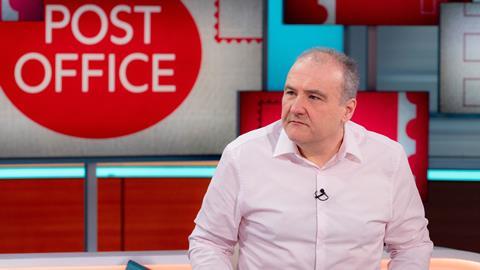
The Yorkshireman already felt out of his comfort zone walking through the alien, imposing streets of London’s legal district. Castleton (pictured above) had arrived at the start of the week in advance of a hearing that was due to start on the Wednesday at the Royal Courts of Justice. Post Office barrister Richard Morgan had arranged to meet him outside his chambers to hand over a court bundle: Castleton had to ask for directions just to find the office, lost as he was in the labyrinthine lanes of the Inns of Court.
‘When we arrived he pulled me aside and told me not to go on Wednesday,’ Castleton recalled in his evidence to the public inquiry. ‘"You don’t need to go. Let us finish this and make it all go away, then you can just get on with your lives." I told him I had done nothing wrong and wanted answers. I couldn’t just get on with my life.’
Later, Castleton alleged in his written statement, his father-in-law was checking them into a hotel when the phone rang. It was Stephen Dilley, a solicitor from Bond Pearce working for the Post Office. Castleton said that Dilley told him: ‘Lee you must understand you don’t need to go on Wednesday. We were surprised to see you today.’ When Castleton reiterated that he wanted to push ahead as he had not taken a penny, he remembers Dilley saying: ‘But Lee, we are the Post Office, we will ruin you.’
On Castleton’s account, Dilley then added: ‘Lee just listen, we will ruin you. Think of your family.’
When he appeared before the inquiry, Dilley disputed whether this account was accurate. But if those were his choice of words, they were certainly prescient.
Castleton’s biggest mistake, ultimately, was to fight back and to try to expose the IT system. The Post Office said that he owed £26,000 which had showed up as missing on the Horizon system.
While others in Castleton’s position were made subject to criminal proceedings, the tactics were different in his case. He was pursued through the civil courts as the Post Office sought to recover the missing money. The case was first listed for Scarborough County Court but the Post Office did not appear for the hearing and Castleton successfully counterclaimed for the money he had paid out.
Little did Castleton know, but his case was being noticed at the Post Office’s headquarters.
Castleton was walking into something bigger than the handling of his picturesque Post Office branch in Bridlington. The Post Office needed to set an example and his head was primed for the spike. In fighting his corner and trying to recoup his losses – and regain some semblance of the life he once led – he was unwittingly involved in a political game of high stakes that the Post Office could not lose. Sensing the importance of the case, the organisation appealed the Scarborough court’s decision and sought to relitigate the original claim.
On the application of the Post Office, his case was moved from Leeds to the Royal Courts of Justice in London. This was because the Post Office’s legal team was based in the capital, so they were able to convince the courts that the hearing should be held on ‘home’ ground. Castleton feels now it was a calculated application on the Post Office’s part to make him feel uneasy and stretch his resolve to the limit. If that was the goal, it certainly worked.
‘I was now having problems with my blood pressure. I felt like I could burst. I had started to black out. The blood pressure on my vagus nerve was stopping my body and causing me to black out. I had no money, but it was time to go to court.’
By the time the case reached a hearing date, Castleton had spent £80,000 on legal costs, having remortgaged his home to raise enough money. But the funds did not stretch to another trial and his legal expenses insurance had run out. While the Post Office arrived at the High Court armed with a full legal team, Castleton had just his father-in-law with him for moral support when he travelled down on a Monday morning.
Castleton says he emerged from court a broken man in every way. During the hearing, he alleged that Morgan had referred to him as ‘thief’, despite this being a civil rather than criminal court. It was a label which caused Castleton a deep and lasting wound. Judge Harvery ordered that he repay the missing money and cover the Post Office’s costs of £321,000 – effectively bankrupting him.
Indefensible is published by Bristol University Press