














My journey into the legal profession
My late father Abdul Muquith Choudhury arrived in the UK as a young man in 1957 from what became Bangladesh. He opened up a restaurant after my birth and named it 'Nazmin' Curry Inn after me. It is still there, three doors from my office.
We lived on top of the restaurant and the one thing he yearned was qualifications, which he was unable to attain coming from a family of 13 where his mother was widowed.
Growing up, he drilled in the need to work hard at school and achieve, as, although he was a smart, savvy, and an incredible businessman, he always said money cannot buy education.
At a time when girls were told they should be married and be housewives, he had a different dream for me. Our toys were educational and he enrolled me into a touch-typing course aged 11 with adults. He made me read incessantly.
At school, I suffered from extreme racism: name calling, people not willing to hold my brown hands at country dancing, told I smell of curry, accosting me in the streets and even setting a dog on me at times. I accepted this as I was not white, and was an interloper.
I cannot explain the sheer determination he had for me, and me for myself.
In my teenage years, he opened another restaurant in Barnes and gave a chance to a relative who had been working as a chef to be a partner. That relative stole profits and there ensued a long lengthy legal battle.
He paid substantial legal fees and did not really understand or comprehend the legalities of the case. I was by his side as a teenager at every solicitors briefing, every meeting with a barrister and every court hearing. I recall thinking how hard this time was for him, and us as a family. He used to say 'If only I had a lawyer in the family'.
There were no south Asian female lawyers and so I took the step to read Law. My comprehensive school sixth form tutor told me I would not make it as I was brown and had no connections. I carried on regardless.
I have just realised that I am most likely the first female of Bangladesh heritage born in the UK to qualify as a solicitor. I owe it all to my later father that I qualified and run my own practice.
My father inspired my interest in justice and public service from a young age. I would accompany him to meetings at the bank, where he taught me financial responsibility, and I watched him write letters to local MPs to advocate for change in our community. Those experiences taught me the importance of standing up for what is right and using education to make a difference.
How my South Asian heritage has influenced my approach to work
My South Asian heritage has shaped the way I approach both my clients and my business. Growing up in an immigrant family taught me the importance of hard work, integrity, resilience and serving the community. These values remain at the heart of everything I do.
My late father taught me that education is the key to being able to stand up and that education will give you a voice, a seat at the table. My South Asian heritage and the racism I suffered taught me to be determined and not to let others bully me. That gave a determination to not only make my father proud but to be able to help others understand the law. My father taught me to read and write Bengali fluently and this has also helped many from my heritage to be confident speaking their mother language - whether it is for buying a house, business or litigation.
Being of South Asian heritage teaches you to be tenacious, determined and strong willed to beat the system or try to, because that is all you have. My paternal grandmother was a strong female and so are the girls in our family. My heritage has helped me because the world did not owe me anything, I had to fight and survive each step of the way in a foreign country - despite the fact I was born here.
As I have grown older I hear my father whispering 'do more, do not forget your heritage and just try and do goodwork and not just be a solicitor'. I used to think he was so demanding, but I now get him. My South Asian heritage gives me imposter syndrome rampantly and I still think I am not worthy. However, within the last few years, I have been shortlisted for Wandsworth and Merton Business Owner of the year, I am on the Law Society small firms committee, and Law Society council member for ethnic minorities, on the board and of the Civil Liberties Trust and chair of the property sub committee.
What would my father say? He would say 'but you are not a judge?' That makes me smile.
I understand that seeking legal advice can be daunting, particularly for people who may face language, cultural or financial barriers. I believe every client deserves to be treated with respect, patience and compassion, regardless of their background. That is why we take time to explain legal matters in plain English, provide home visits for those who cannot travel, and, where possible, offer free legal guidance to those who need it most.
My heritage has also strengthened my commitment to giving back. Through my charity, SWANSONG (Supporting Women And Newborns and Supporting Other Necessary Groups), and through regular charitable work in Bangladesh, I have remained committed to supporting vulnerable communities both locally and internationally. I believe success should always be measured not only by professional achievement but also by the positive impact we have on others.
Why it is important to celebrate South Asian solicitors
South Asian Heritage Month is an important opportunity to recognise the achievements and contributions of South Asian professionals while inspiring the next generation. It is vital to recall those like my father that left home as a young man to an unknown country who came and forged a life when it must have been so scary and lonely. It is also a chance to acknowledge the sacrifices made by previous generations. Many immigrant families worked incredibly hard to create better opportunities for their children.
Celebrating South Asian solicitors honours not only individual achievements but also the resilience, determination and values that helped make those achievements possible.
When I qualified in 1992, there were very few Bangladeshi heritage solicitors in the UK or even people who went to university. Representation matters because seeing people from similar backgrounds succeed helps young people believe those opportunities are available to them too. It is a given now that girls from my heritage go to university and forge a career - it was not so back then and if I had not had a father who pushed and made it happen I would not be who I am today. My daughter takes this somewhat for granted as she is lucky not to have had the hurdles I had - and so it should be.
The legal profession continues to benefit from greater diversity. Different cultural perspectives strengthen our understanding of clients, improve access to justice and help ensure the profession reflects the communities it serves.
Advice for aspiring South Asian legal professionals
Never let anyone define what you are capable of achieving. There may be times when you feel underestimated or face barriers because of your background, gender or circumstances, but perseverance, hard work and integrity will always serve you well.
Seek out mentors, continue learning throughout your career and never be afraid to ask questions. Build your reputation on honesty, professionalism and compassion, because technical knowledge alone does not make an exceptional lawyer.
Most importantly, stay true to your values. Your heritage is something to be proud of and brings a unique perspective to the legal profession. Use your experiences to connect with people, advocate for others and make a positive difference in your community.
As my father always reminded me, 'the pen is mightier than the sword' and 'no matter how wealthy you become never forget your roots and where you originate from'. That lesson has stayed with me throughout my career and continues to inspire everything I do.
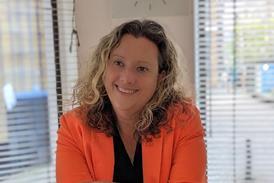
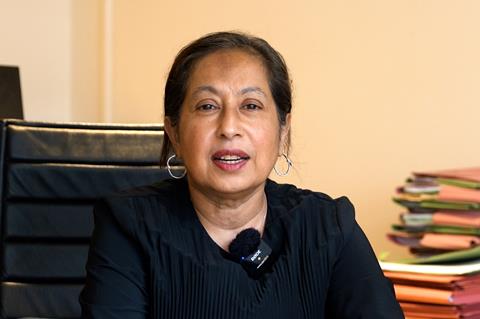
Nazmin Choudhury set up her practice NC Law in 2010. She is Law Society council member for Ethnic Minority Solicitors and a member of the Law Society small firms committee