




















The Commons justice committee has called on the government and Solicitors Regulation Authority to consider more prescriptive rules on the use of threats and misleading legal claims in correspondence by solicitors.
The appeal comes in a letter from the Commons justice committee to Sarah Sackman, minister for courts and legal services, following the committee’s one-off evidence session on 17 November to examine how the law is being used to silence victims and survivors. ‘We are concerned that the legal system in England and Wales does not have adequate safeguards to protect vulnerable victims and survivors from SLAPPS,’ writes committee chair Catherine Atkinson MP.
Atkinson outlines the committee’s ‘primary areas of concern’ ahead of Sir John Whittingdale’s SLAPPs bill coming before MPs today.
’We would ask that the government works with the SRA to ensure that it has the powers needed to investigate allegations that solicitors have engaged in misconduct,’ it goes on to say. The government is also urged to work with the SRA and the Law Society to consider whether the regulatory framework should take into account the vulnerability of respondents when acting on behalf of their clients.
SLAPPs cases brought against victims and survivors mean that defendants need significant costs protection, the committee acknowledges. MPs are concerned that the measures proposed in Whittingdale’s bill, which include providing that in a SLAPP claim a court cannot order a defendant to pay a claimant’s costs (unless there is misconduct by a defendant), do not go far enough.
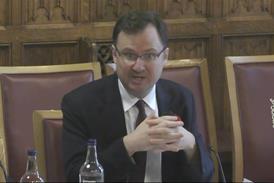
At this month’s evidence session Verity Nevitt, co-founder of the Gemini Project, said that for many survivors the cost risk is so great that they stand to lose everything if they decide to fight a claim. RPC partner Rupert Cowper-Coles outlined options for reducing the cost risk for defendants: capping the costs that could be recovered from the other side, enabling a public interest defence to be considered at an earlier stage in proceedings, and a bespoke low-cost procedure, modelled on the Intellectual Property Enterprise Court, to even the balance between the sides.
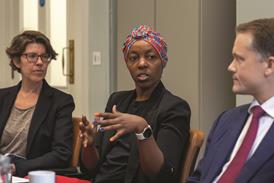
The committee also calls for an update on the government’s consultation on oversight and regulation of private prosecutors in the criminal justice system, which closed 18 months ago. Harriet Wistrich of the Centre for Women’s Justice told the committee that private prosecutions can be used by perpetrators of abuse to silence victims and survivors.







No comments yet