







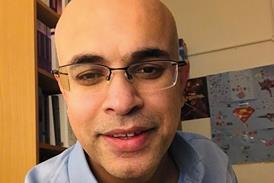













Civil courts moderniser Lord Briggs of Westbourne (Michael Briggs KC) was today confirmed as the next president of the Supreme Court of the United Kingdom. He willl take up his role in January on the retirement of current president, Lord Reed of Allemuir.
Briggs, 71, willl be the fifth president of the highest court since its establishment in 2009. He said: ’It is a great privilege to be appointed president of the Supreme Court and to serve the public by upholding the rule of law. I look forward to working with colleagues across the Supreme Court and the Judicial Committee of the Privy Council to deliver justice of the highest quality, transparency and accessibility.’
Michael Townley Featherstone Briggs grew up around Portsmouth and Plymouth, following his naval officer father between ships, before spending his later childhood in Emsworth in Hampshire. He read history at Magdalen College, Oxford. A keen sailor, singer and the first lawyer in his family, he practised in Lincoln’s Inn from the chambers of Charles Sparrow QC which later became Serle Court, specialising in business and property litigation.
Briggs took silk in 1994. He served as chair of the Bar Council’s law reform committee and, from 2001 to 2006, as attorney general to the Duchy of Lancaster, before being appointed to the High Court in 2006. He was the judge in charge of the litigation from 2009 to 2013 following the Lehman Brothers collapse.
Briggs was appointed as a lord justice of appeal in 2013. He was the judge in charge of the Chancery Modernisation Review in 2013 and led the Civil Courts Structure Review in 2015 to 2016, which recommended the establishment of an online civil court. In January 2016 he was appointed deputy head of civil justice, and in that capacity served as the de facto head of the Civil Procedure Rules Committee.
Lord Briggs was appointed as a justice of the Supreme Court in 2017. The announcement of his appointment notes that ’he has maintained a keen interest in modernising court procedures and increasing the transparency of the court’s work, most recently exploring the careful adoption of artificial intelligence in its administrative processes’.
His interests include classic wooden yacht racing and cruising, and choral singing.





No comments yet