





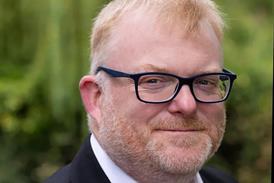














The legal consumer watchdog has urged regulators not to shelve plans to make firms publish more information about their services. Tom Hayhoe, chair of the Legal Services Consumer Panel, accused the Solicitors Regulation Authority of ‘burying’ plans to halt its transparency agenda as part of an overhaul of its workload.
In its proposed business plan for 2026/27, the SRA said it would prioritise work to safeguard client money and pause further work on transparency rules, quality indicators and digital comparison tools.
That would be a change from recent years when the SRA – under pressure from the Competition and Markets Authority – imposed new rules on what should be displayed on firms’ websites and issued fines when those rules have been breached.
The regulator has not given up completely on the transparency agenda and stresses this is important work, but it wants to focus on areas where it can make the biggest impact.
In a post on the LSCP website, Hayhoe accepted the SRA was under pressure to go back to basics after client monies were lost following firm collapses, but rejected the idea that transparency should be seen as expendable.

‘What we cannot accept is the implicit logic: that this work is something you set aside, without a clear plan to pick it up again, when times get difficult,’ said Hayhoe. ‘The evidence of the past two years makes precisely the opposite case.
‘Consider what Axiom Ince, SSB Group and PM Law have in common. In each case, consumers were operating in the dark. They could not understand the terms on which they had engaged a firm. They could not assess the risks they were bearing. They had no realistic means of making an informed choice.
‘In the case of SSB, they were told they faced no financial risk. These failures were not purely enforcement failures. They were failures of a market that did not give consumers the information and transparency they needed. A regulator responding to that pattern of harm by deprioritising work on whether its own transparency framework is functioning has misread its own evidence.'
Read more
Hayhoe pointed out the SRA’s business plan does not specify which areas of legal practice are affected by the pause. His organisation wants transparency rules to apply across reserved legal activities, including family and employment law where consumers report difficulty understanding fees and risk before instructing a solicitor.
The SRA embarked on a five-year evaluation after introducing new transparency rules in the late 2010s, and has committed to publishing its final report this year. Interim evidence published in 2023 showed widespread non-compliance with the the rules, as only 42% of firms claimed to be publishing all the information required by the regulator.
Hayhoe said evaluation was different to action, and without any programme for making changes based on the review was a ‘filing exercise’ rather than a proper response. He added: ‘We understand that a regulator under formal enforcement action, managing a caseload crisis and dealing with the fallout from multiple large firm failures, faces genuine prioritisation choices. We are not asking for everything at once.
‘What we are asking for is this: a clear, published timeline for when the paused work on building on the transparency rules evaluation will resume.’
This article is now closed for comment.





7 Readers' comments